
First Aid Kit Requirements in Ontario Workplaces 2026 Guide
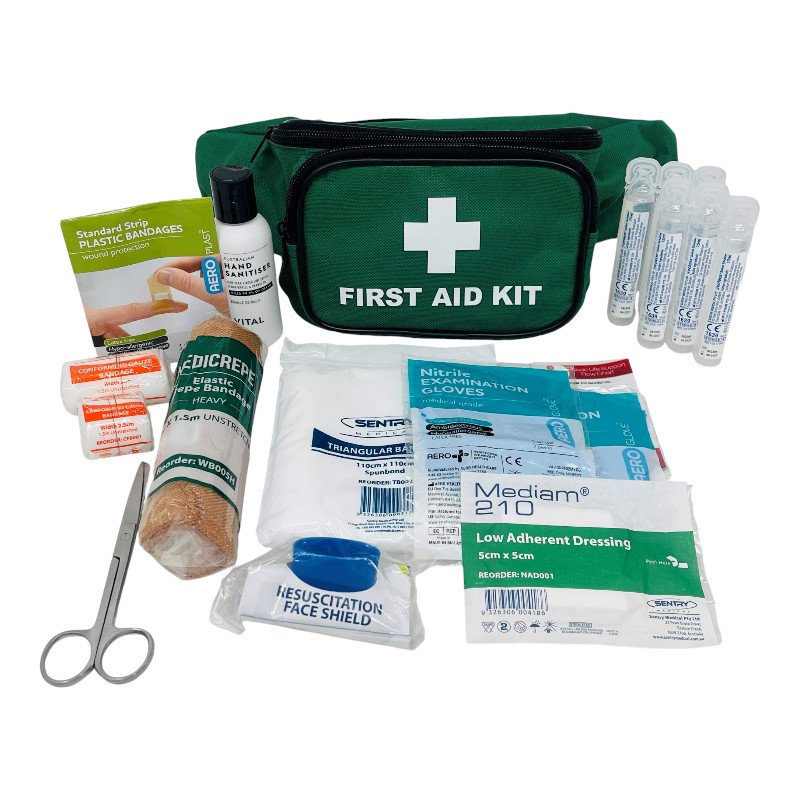
A workplace first aid kit in Ontario must match the number of workers employed on a shift at that location. Employers covered by Ontario’s Workplace Safety and Insurance Act must follow Regulation 1101. The regulation establishes minimum requirements for first aid supplies, trained personnel, station locations, inspection records and first aid treatment records. […]
Machine Guarding Training Course and Regulation 851 Requirements
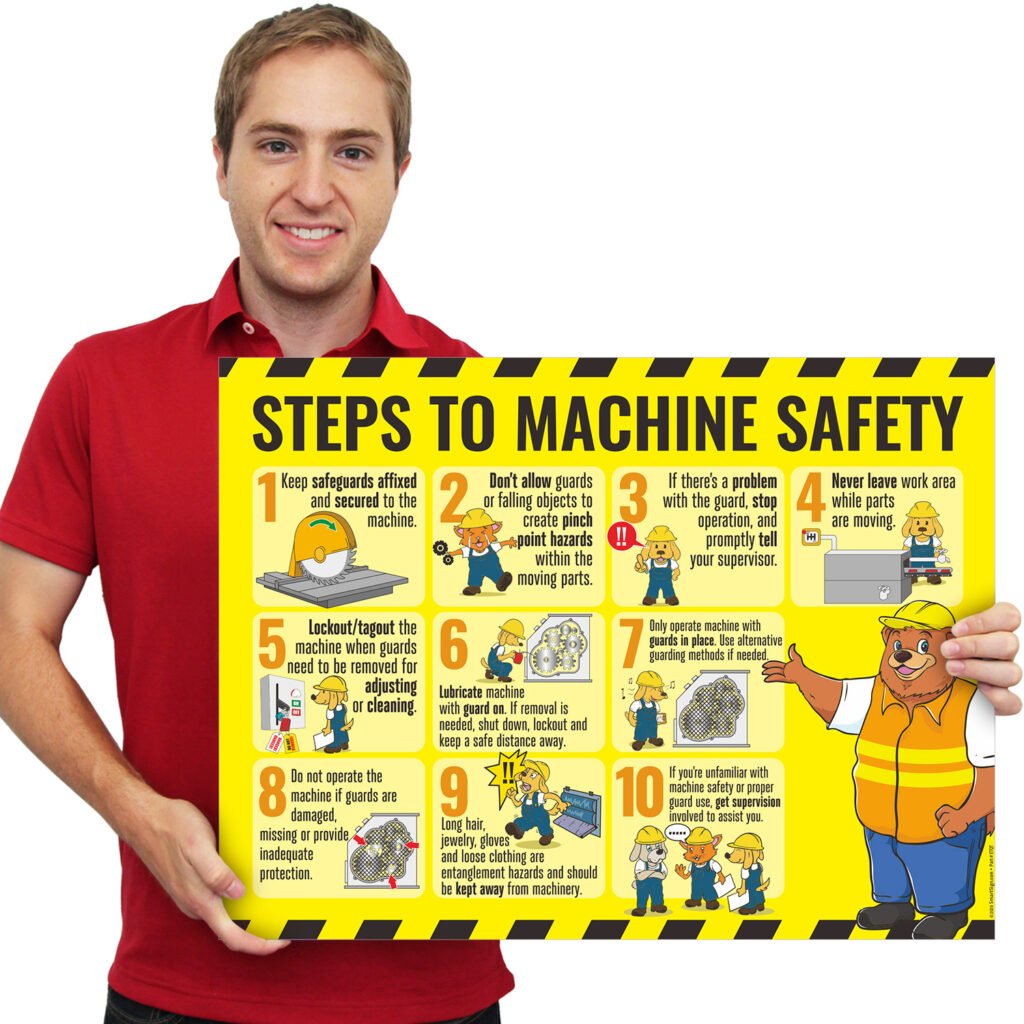
Moving machinery can pull in clothing, trap fingers, crush hands or eject material before an operator has time to react. Effective machine guarding places a physical or functional barrier between the worker and that hazardous movement. Ontario employers must ensure dangerous moving parts, pinch points and processing hazards are properly guarded. They must also […]
Confined Space Rescue Training Ontario: Requirements
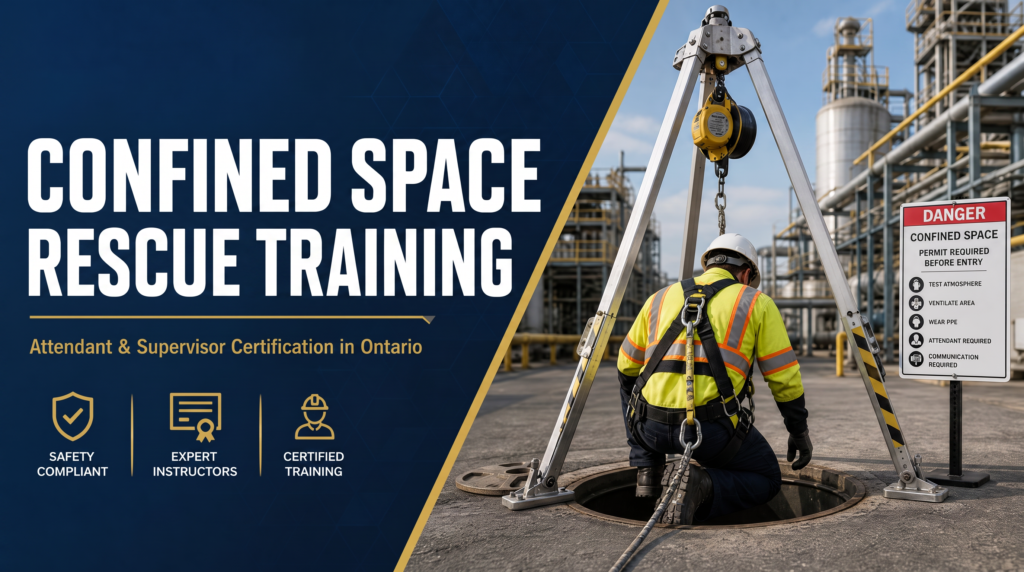
A confined-space emergency can leave little time for improvisation. The rescue team needs a workable procedure, suitable equipment and clearly assigned roles before anyone enters the space. Achieve Safety provides eight-hour Confined Space Rescue Training at the client’s facility. The course covers both entry rescue and non-entry rescue through instructor-led exercises. Participants complete a […]
Can an Employer Require WAH Retraining Before Certification Expires?

An employer may require additional Working at Heights instruction, hands-on practice, or competency reassessment before a worker’s certificate expires when the work, equipment, hazards, or worker performance changes. This does not necessarily renew or replace the worker’s CPO-approved certificate. Ontario Working at Heights certification remains valid for three years, while employers must also ensure […]
Scissor Lift Training Requirements & Certification Course Ontario
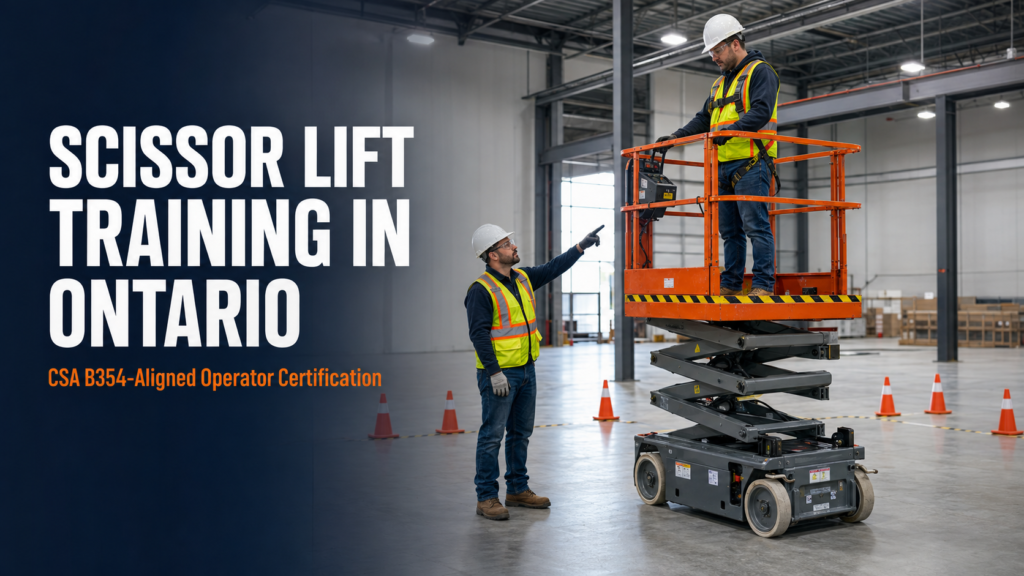
Workers who operate scissor lifts in Ontario need Aerial Lift equipment training that covers the equipment they will use, its operating limitations, workplace hazards and emergency procedures. MEWP Operator training should include theory instruction, practical experience and an evaluation of the worker’s ability to operate the lift safely. Scissor lift training is not simply […]
Boom Lift Operator Training Course Ontario: CSA-Compliant
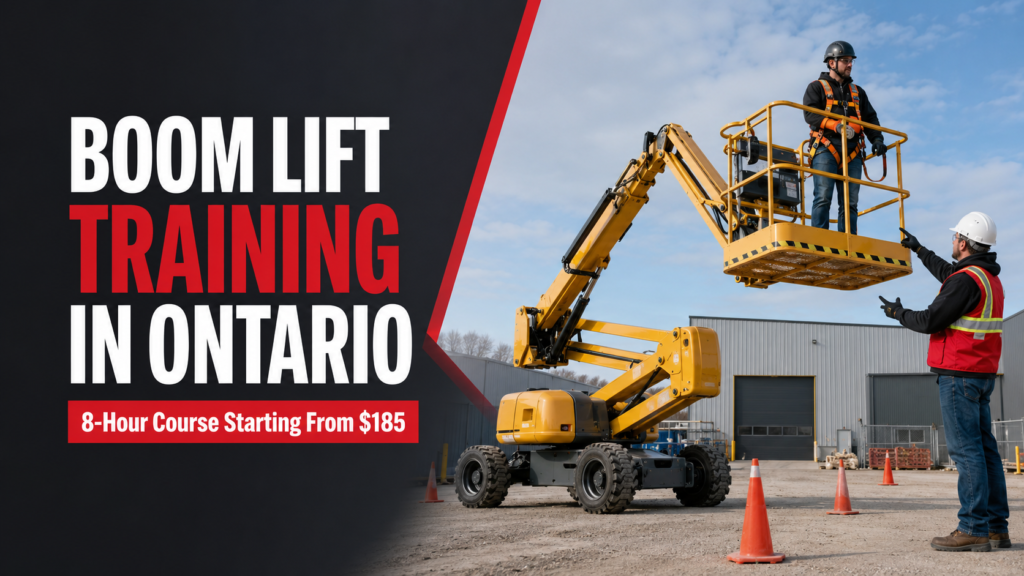
Boom lift training teaches workers how to inspect, position and operate boom-supported elevating work platforms safely. Achieve Safety’s Boom Lift Training course is a part of EWP training that starts from $185. Participants complete theory instruction, hands-on training and a practical operator evaluation. Successful participants receive an Achieve Safety Record of Training. The […]
Hoisting and Rigging Training Certification Course In Ontario
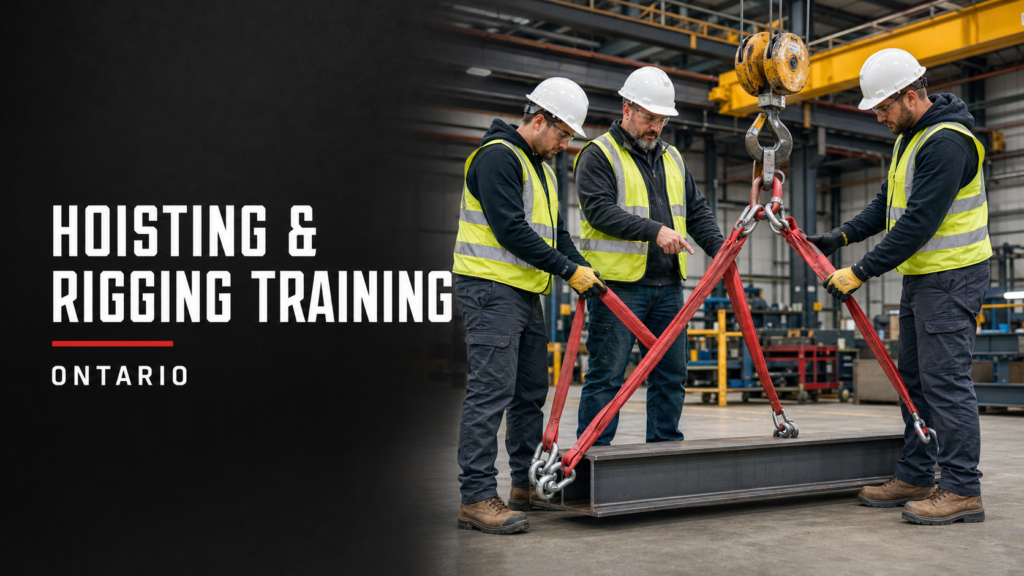
Safe lifting depends on more than the person controlling the crane. Workers must know how to select suitable rigging equipment, inspect slings and hardware, secure the load, communicate during the lift and keep people outside the danger zone. Achieve Safety provides Hoisting and Rigging Training Course for Ontario workplaces. The basic course combines theory […]
Workplace Heat Stress Prevention in Ontario Guide 2026
Heat stress prevention in Ontario is not based on one outdoor temperature. Employers must evaluate the total heat load created by temperature, humidity, radiant heat, physical workload, clothing, personal protective equipment, air movement and worker acclimatization. Ontario employers can manage heat stress at work by assessing workplace heat exposure, monitoring changing conditions, controlling […]
Overhead Crane Operator Training Ontario
Overhead cranes move heavy and awkward materials that cannot be handled safely through manual lifting. However, a suspended load, damaged sling or uncontrolled crane movement can expose operators and nearby workers to severe hazards. Achieve Safety’s Overhead Crane Operator Training course helps Ontario workers develop the knowledge and practical ability needed to inspect, control and […]
Who Needs JHSC Training in Ontario? (Employer Requirements)
If you are running a business in Ontario, one question comes up quickly once your team grows: Do we need JHSC training, or not yet? This is where many employers get it wrong. Some assume safety training is optional. Others delay it until an inspection forces the issue. The reality is more […]