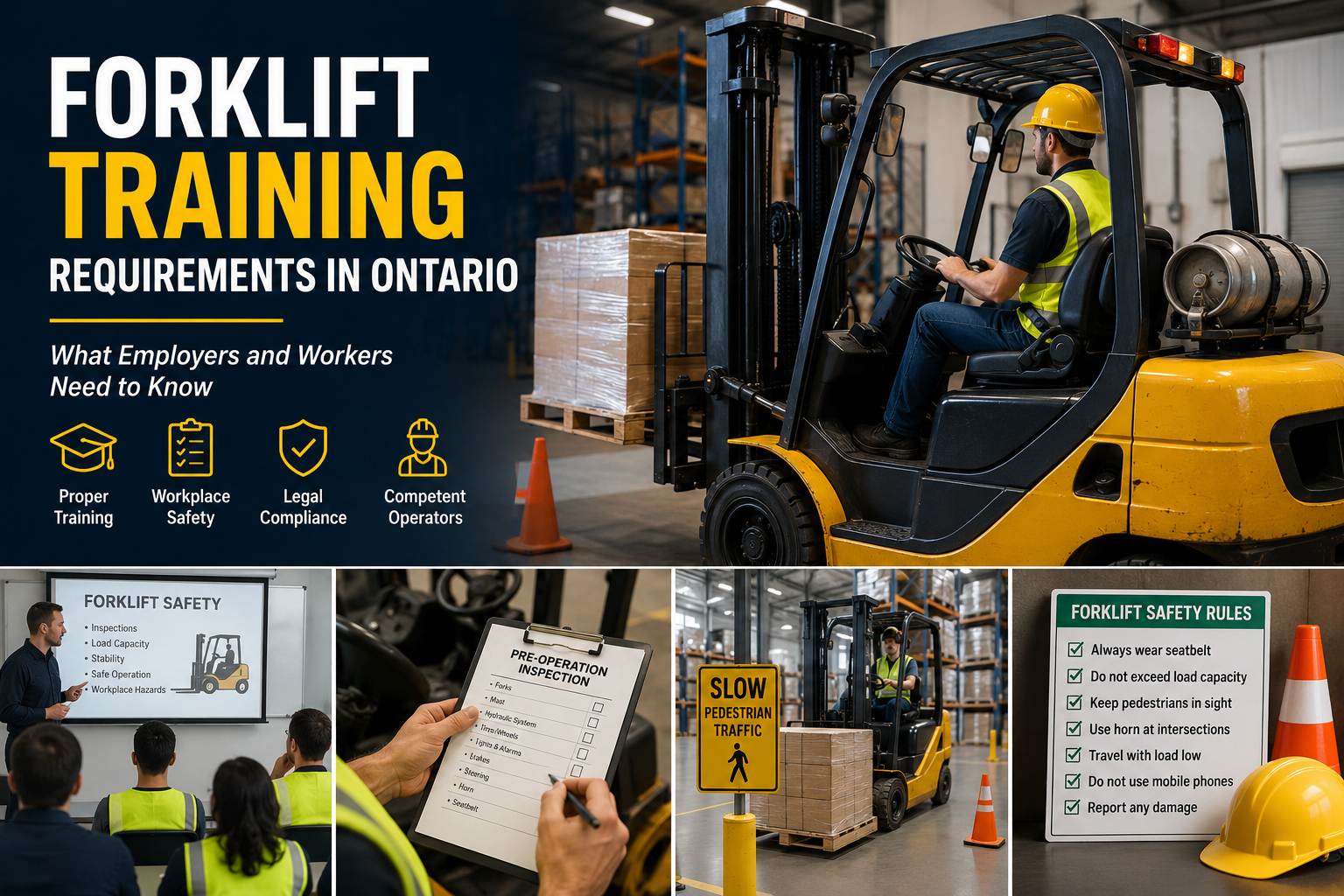
- What Ontario Employers and Workers Must Know About Forklift Training Requirements
- What Proper Forklift Training Includes in Ontario
- Do Forklift Operators Need Certification or Licensing in Ontario?
- Forklift Types Covered in Ontario Training Programs
- Who Needs Forklift Training in Ontario?
- Warehouse vs Construction Site Forklift Hazards in Ontario
- Construction Forklift Risks
- Most Common Forklift Accidents in Ontario Workplaces
- When Forklift Refresher Training Is Required in Ontario
- Employer Duties for Forklift Safety Compliance in Ontario
- Why Forklift Safety Training Matters in Ontario Workplaces
- Choosing a Forklift Training Provider in Ontario
- References
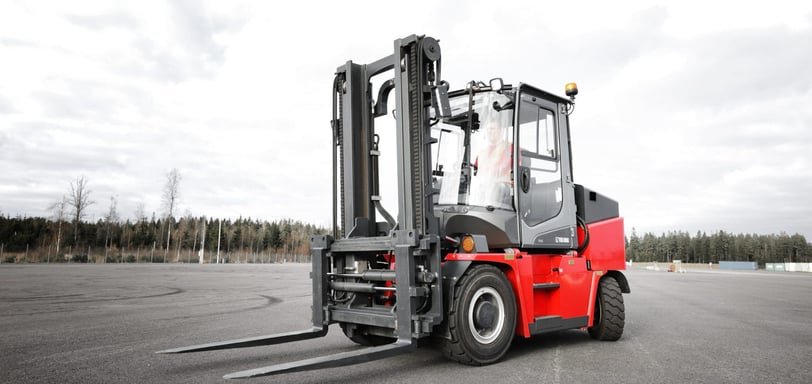
Ontario forklift training requirements require employers to ensure forklift operators are properly trained, evaluated, supervised, and competent to safely operate powered industrial trucks in workplace environments.
Forklift training typically includes both theory and practical evaluation. Workers usually learn equipment inspection procedures, load handling, pedestrian awareness, stability principles, hazard recognition, and safe operating practices. Many workplaces also require equipment-specific and site-specific familiarization.
Ontario forklift training requirements are commonly supported by Occupational Health and Safety Act (OHSA) duties and CSA B335 lift truck safety standards.. A forklift certificate alone does not automatically make a worker competent for every workplace or forklift type. Employers are expected to ensure forklift operators receive proper instruction, supervision, and competency evaluation under workplace safety requirements.
Proper forklift training helps reduce workplace injuries involving tip-overs, struck-by incidents, falling loads, pedestrian collisions, and warehouse accidents across Ontario construction, warehousing, manufacturing, and industrial environments.
What Ontario Employers and Workers Must Know About Forklift Training Requirements
One of the biggest misunderstandings in Ontario workplaces is assuming forklift training is just about getting a certificate.
It is not.
Ontario workplace safety requirements focus on worker competency, safe operation, supervision, and hazard awareness, not simply possessing a wallet card.
That distinction matters.
A worker may technically hold a forklift certificate but still be unsafe operating equipment in a busy warehouse, narrow aisle environment, loading dock, or outdoor industrial site.
Ontario Employer Responsibilities for Forklift Safety and Training
Under Ontario workplace safety laws, employers must ensure workers are:
- Properly trained
- Adequately supervised
- Informed about workplace hazards
- Competent to safely perform assigned tasks
That includes forklift operation.
Employers are also expected to take reasonable precautions to protect workers and others around powered industrial trucks.
In real workplaces, that often means:
- Formal forklift training
- Practical operator evaluation
- Site-specific orientation
- Equipment familiarization
- Ongoing supervision and monitoring
Many workplace incidents happen after employers assume a basic certificate is enough without evaluating actual competency on the job site.
What Proper Forklift Training Includes in Ontario
Forklift training generally involves two major parts:
Forklift Theory Training Requirements
The classroom or online portion usually covers:
- Forklift stability principles
- Load capacity limits
- Pedestrian safety
- Hazard awareness
- Workplace traffic management
- Battery and propane safety
- Inspection procedures
- Safe lifting techniques
- Ramps and incline operation
- Dock safety
- Refueling and charging procedures
Workers also learn how different workplace conditions affect forklift safety.
For example:
Operating a forklift inside a narrow warehouse creates very different risks compared to using one outdoors on uneven terrain.
Practical Forklift Operator Evaluation Requirements
This is the part many workers underestimate.
A forklift operator normally needs hands-on evaluation demonstrating they can safely operate the equipment in realistic workplace conditions.
That may include:
- Pre-use inspections
- Safe maneuvering
- Load handling
- Parking procedures
- Pedestrian awareness
- Reverse travel
- Stacking and unstacking
- Dock approach procedures
A written test alone is not enough to confirm real-world competency.
Practical evaluation is what separates actual forklift training from basic awareness instruction.
Do Forklift Operators Need Certification or Licensing in Ontario?
Ontario does not use a government-issued “forklift licence” system like a driver’s licence.
Instead, employers are expected to ensure workers are properly trained and competent before operating powered lift trucks.
Most workplaces still require proof of training documentation because:
- Insurance providers may require it
- Safety audits may review it
- Employers need due diligence records
- Job sites often request operator verification
That is why workers commonly refer to forklift training as “forklift certification” even though competency and workplace-specific safety remain the real priority.
Forklift Types Covered in Ontario Training Programs
Not all forklifts handle the same way.
Different equipment creates different operational hazards.
Common forklift categories include:
- Counterbalance forklifts
- Reach trucks
- Order pickers
- Walkie stackers
- Pallet jacks
- Rough terrain forklifts
A worker experienced on one machine may still require familiarization or additional evaluation before operating another type safely.
Who Needs Forklift Training in Ontario?
Anyone operating a powered industrial truck in the workplace generally requires proper forklift training and evaluation before using the equipment.
That includes far more workers than most people realize.
Ontario Jobs That Commonly Require Forklift Training
Forklift training is commonly required for:
- Warehouse workers
- Shipping and receiving staff
- Construction workers
- Manufacturing employees
- Dock workers
- Material handlers
- Retail warehouse staff
- Distribution centre operators
- Industrial maintenance teams
In many Ontario workplaces, even temporary or seasonal workers may still require proper forklift instruction before operating equipment.
A common mistake happens when employers assume experienced workers from another company automatically understand the hazards of a new workplace.
They may not.
Every workplace creates different risks.
Warehouse vs Construction Site Forklift Hazards in Ontario
Forklift hazards change dramatically depending on the environment.
A worker operating indoors in a warehouse faces completely different risks compared to a worker using a rough-terrain forklift outdoors on a construction site.
Warehouse Forklift Risks
Warehouses create constant interaction between forklifts, pedestrians, shelving systems, and tight operating spaces.
Common Warehouse Hazards
- Blind corners
- Congested aisles
- Pedestrian traffic
- Falling inventory
- Loading dock edges
- Overhead obstructions
- Narrow maneuvering areas
One of the biggest warehouse risks is complacency.
Operators often repeat the same routes daily and slowly become less alert to changing traffic patterns or pedestrian movement.
Many struck-by incidents happen during reversing operations or while approaching intersections inside busy facilities.
Construction Forklift Risks
- Uneven terrain
- Mud and gravel
- Excavations
- Weather exposure
- Unstable loads
- Sloped surfaces
- Multiple trades working simultaneously
Outdoor forklifts also face visibility issues during rain, snow, fog, or poor lighting conditions.
A machine that feels stable on dry compact ground can quickly become dangerous after weather conditions shift.
That is one reason rough-terrain forklift operation requires additional awareness compared to standard warehouse equipment.
Most Common Forklift Accidents in Ontario Workplaces
Most forklift incidents follow the same patterns repeatedly.
The problem is rarely the machine itself.
It is usually unsafe operation, poor training, rushed work, or ignored hazards.
Tip-Overs
Forklift tip-overs are among the most serious workplace incidents.
These often happen because of:
- Excessive speed
- Sharp turning
- Elevated loads during movement
- Uneven surfaces
- Overloading
Many operators do not fully understand how quickly a forklift’s centre of gravity changes while carrying loads.
Pedestrian Collisions
Forklifts and pedestrians sharing the same workspace create major injury risks.
Common causes include:
- Blind spots
- Poor visibility
- Reversing without checking surroundings
- Distracted workers
- Lack of traffic controls
Warehouses with heavy foot traffic are especially vulnerable.
Falling Loads
Improper load placement can cause materials to shift or collapse during transport.
This often results from:
- Unbalanced pallets
- Damaged loads
- Excessive stacking height
- Incorrect fork positioning
Falling inventory can seriously injure both operators and nearby workers.
Loading Dock Incidents
Loading docks remain one of the highest-risk areas for forklift operation.
Common incidents include:
- Driving off dock edges
- Trailer movement during loading
- Dock plate failure
- Slippery surfaces
Many serious injuries happen during rushed shipping operations where visibility and communication break down.
When Forklift Refresher Training Is Required in Ontario
Ontario workplace laws do not assign one universal expiry date for forklift training.
However, refresher training and reevaluation are often necessary when:
- A worker demonstrates unsafe operation
- An incident or near miss occurs
- Workplace conditions change
- New equipment is introduced
- The operator lacks familiarity
- The employer identifies competency concerns
Many employers also implement internal renewal schedules every few years as part of their health and safety program.
The important thing is not simply renewing a certificate.
It is ensuring workers remain competent under real workplace conditions.
Employer Duties for Forklift Safety Compliance in Ontario
Ontario employers are expected to actively manage forklift safety, not just hand workers a certificate and move on.
Strong forklift safety programs often include:
- Operator training
- Practical evaluations
- Site-specific orientation
- Traffic management systems
- Pedestrian controls
- Equipment inspections
- Maintenance programs
- Incident reporting procedures
Supervisors also play a major role in identifying unsafe behaviour before incidents happen.
In many workplace investigations, inspectors look beyond training records and examine whether employers actually enforced safe operating practices on site.
Why Forklift Safety Training Matters in Ontario Workplaces
Forklifts may seem routine in warehouses and industrial facilities, but they remain one of the most dangerous pieces of workplace equipment when used improperly.
Proper training helps workers understand:
- Stability limits
- Load handling
- Hazard recognition
- Pedestrian awareness
- Workplace traffic systems
- Safe operating techniques
It also helps employers strengthen due diligence and reduce operational risk across warehouses, construction sites, manufacturing plants, and industrial facilities throughout Ontario.
Achieve Safety Forklift Training in Ontario provides forklift operator training designed to help Ontario workplaces improve worker competency, reduce workplace hazards, and support compliance across industrial, warehouse, and construction environments.
Choosing a Forklift Training Provider in Ontario
Not all forklift training programs provide the same level of instruction, practical evaluation, or workplace preparation.
Ontario employers should look beyond basic certification pricing and focus on whether the training helps workers operate powered industrial trucks safely under real workplace conditions.
A strong forklift training provider such as Achieve Safety and compliance, includes both theory instruction and hands-on operator evaluation.
That matters because workplace competency involves far more than simply passing an online test.
What to Look for in a Forklift Training Provider
A quality forklift training program often includes:
- Classroom or online theory instruction
- Practical forklift operator evaluation
- Equipment-specific familiarization
- Workplace hazard awareness
- Load handling procedures
- Pedestrian safety training
- Pre-use inspection instruction
- Training documentation and records
- Refresher training options
Employers should also confirm whether the provider evaluates operators using the same type of equipment used in the workplace.
Operating a counterbalance forklift differs significantly from operating reach trucks, order pickers, or rough-terrain forklifts.
Online vs In-Person Forklift Training
Online forklift training may help workers complete theoretical instruction efficiently, especially for basic safety awareness and regulatory concepts.
However, practical operator evaluation remains an important part of workplace competency.
Many Ontario workplaces still require hands-on assessment to confirm operators can safely:
- Maneuver equipment
- Handle loads properly
- Operate around pedestrians
- Work near loading docks
- Navigate tight warehouse environments
Practical evaluation helps employers verify workers can apply forklift safety procedures under actual operating conditions.
Why Training Quality Matters
Low-quality forklift training may leave operators unprepared for real workplace hazards.
Proper forklift instruction helps improve:
- Operator competency
- Workplace hazard awareness
- Pedestrian safety
- Equipment handling
- Incident prevention
- Employer due diligence
For Ontario employers, forklift training should support long-term workplace safety rather than simply issuing a certificate.
References
Ontario Ministry of Labour, Immigration, Training and Skills Development
- Ontario Occupational Health and Safety Act (OHSA)
- Powered Lift Truck Health and Safety Guidelines (Ontario)
- Workplace Safety and Prevention Services (WSPS) – Forklift Safety Resources