- Elevating Work Platforms in Ontario: Reaching New Heights Safely
- Does EWP Certification Expire in Ontario?
- How Long Do EWP Training Providers Make Certificates Valid?
- Does Scissor Lift Training Expire?
- Does Boom Lift Training Expire?
- Practical Evaluation Requirements
- Standards and Best Practices for Safe EWP Use
- EWP Operator Training Requirements
- Stay Compliant with Achieve Safety
- FAQs – EWP Safety Ontario
Learn Ontario’s OHSA requirements for safe EWP use. Explore CSA standards, training, does EWP Training Expire in Ontario and best practices for scissor lifts, boom lifts, and aerial platforms.
Elevating Work Platforms in Ontario: Reaching New Heights Safely
Elevating Work Platforms (EWPs), including scissor lifts and boom lifts, enable safe work at height across Ontario industries. This guide explains what EWPs are, where they are used, and how Ontario’s OHSA and CSA standards ensure operators are trained, inspected, and certified for safe, compliant operation.
Aerial work platforms make working at heights faster and more efficient, but one wrong move can turn efficiency into tragedy.
From construction to maintenance, EWPs are among the most powerful tools on the job site, yet they remain one of the leading causes of serious workplace injuries when operated improperly.
With Ontario’s strict Occupational Health and Safety Act (OHSA) requirements and CSA training standards, understanding how to operate and maintain these machines safely is not optional, it is essential.
What Is an Elevating Work Platform (EWP)?
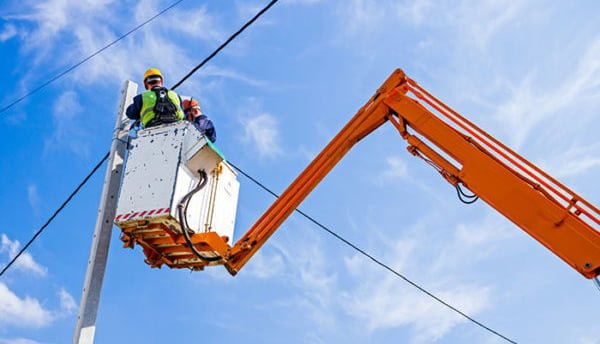
An Elevating Work Platform (EWP), also known as an Aerial Work Platform (AWP), is a mechanical device designed to raise workers, tools, and materials to elevated work areas.
EWPs can be stationary or mobile, depending on the model, and are equipped with features such as:
-
Guardrails and gates to prevent falls
-
Emergency stop buttons for immediate shutdown
-
Tilt and overload sensors to detect unsafe conditions
-
Platform controls that allow safe and precise maneuvering
Common types include:
-
Scissor lifts: Ideal for vertical elevation tasks like ceiling work and electrical installation.
-
Boom lifts: Offer horizontal reach for construction, painting, and exterior maintenance.
-
Vertical mast lifts: Compact lifts suited for tight indoor spaces such as warehouses and retail environments.
Where Are EWPs Used?
EWPs are found in nearly every major industry across Ontario.
Some of the most common applications include:
-
Construction: Installing cladding, windows, roofing, and signage.
-
Maintenance: Accessing lighting, HVAC systems, or high surfaces.
-
Tree care: Pruning, trimming, and arborist operations.
-
Warehousing: Stock access and overhead inventory checks.
-
Film and television: Reaching elevated lighting or camera rigs safely.
Each use case requires specialized training and inspection to ensure compliance with Ontario’s OHSA and Regulation 851 for Industrial Establishments.
Legislation Governing EWP Use in Ontario
The use of Elevating Work Platforms is strictly regulated under Ontario’s Occupational Health and Safety Act (OHSA) and related safety regulations. Employers, supervisors, and workers each have legal responsibilities to ensure EWPs are operated safely and that only trained and competent operators use the equipment.
1. Occupational Health and Safety Act (OHSA)
The OHSA sets the foundation for worker protection in Ontario. It requires employers to provide information, instruction, and supervision necessary to protect a worker’s health and safety. This includes EWP-specific training, maintenance, and hazard control measures.
2. Regulation 851 for Industrial Establishments
Regulation 851 outlines detailed material handling and machine operation requirements, including pre-use inspections, maintenance, and safe operating procedures for aerial devices. Employers must ensure every EWP is maintained in good condition and inspected before each use.
3. Fall Protection and Rescue Planning
Anyone operating or working from an EWP must use an approved fall protection system. Employers are also responsible for maintaining an emergency rescue plan that can be activated immediately in case of mechanical failure or medical emergency.
Does EWP Certification Expire in Ontario?
An EWP training certificate may expire according to the validity period established by the training provider, employer, project owner or workplace safety program.
However, Ontario does not issue one general EWP operator licence with a universal expiry date that automatically applies to every scissor lift, boom lift and workplace.
Ontario’s safety requirements focus on whether the worker has been properly instructed and trained to operate the class of elevating work platform being used.
Employers should confirm that an operator:
- Understands the manufacturer’s operating instructions
- Can identify the platform’s limitations and rated capacity
- Knows how to complete a pre-use inspection
- Can operate the applicable controls
- Understands workplace and site-specific hazards
- Knows the emergency-lowering procedure
- Can recognize overhead, electrical and crushing hazards
- Uses required fall-protection equipment correctly
- Has demonstrated practical operating ability
A certificate supports the employer’s training records. It does not permanently prove that the operator remains competent under every future condition.
When training may need to be renewed before expiry
Refresher training or reassessment may be needed when:
- The operator is involved in an incident or near miss
- Unsafe operating behaviour is observed
- The worker changes from one EWP class to another
- New equipment or controls are introduced
- Workplace conditions or traffic routes change
- The platform will be used on unfamiliar terrain
- The worker has not operated an EWP for an extended period
- The operator cannot complete a safe pre-use inspection
- An audit identifies a training or competency gap
An unexpired certificate should not prevent an employer from arranging retraining when the operator can no longer demonstrate safe performance.
References
- Ontario Regulation 213/91, Construction Projects:
https://www.ontario.ca/laws/regulation/910213 - Ontario, Elevating Work Platform Crushing Hazard Alert:
https://www.ontario.ca/page/alert-elevating-work-platform-crushing-hazard
How Long Do EWP Training Providers Make Certificates Valid?
Many Ontario training providers make EWP certificates valid for three years.
This is a common industry renewal cycle rather than a universal expiry period written into Ontario law for every operator.
Certificate periods can vary based on:
- The training provider
- The equipment category
- The employer’s safety program
- A general contractor’s site rules
- Client or project requirements
- Industry standards
- The worker’s operating history
Employers should check the actual date printed on the certificate instead of assuming every EWP card follows the same schedule.
Why providers commonly use three years
A three-year renewal cycle gives employers a practical opportunity to:
- Review changes to operating procedures
- Revisit common EWP hazards
- Confirm that operators understand current equipment
- Update practical evaluations
- Identify unsafe habits
- Review emergency and rescue procedures
- Replace expired or outdated training records
The renewal date is useful, but employers should not wait three years when earlier reassessment is justified.
Provider validity versus employer responsibility
A provider-issued certificate answers one question:
Is the training credential still within the period selected by the provider?
The employer must answer a different question:
Can this worker safely operate the EWP being assigned under current workplace conditions?
An operator may have a valid three-year card but still require additional training because the equipment, site or assigned duties have changed.
Likewise, renewing a wallet card without evaluating practical performance may not provide enough evidence that the operator remains competent.
Does Scissor Lift Training Expire?
Scissor lift training certificates commonly expire according to the training provider’s stated validity period. Many providers use three years.
Ontario does not establish a separate universal expiry period that applies only to scissor lift certificates.
A scissor lift operator must still be trained and competent to operate the type of platform being used.
Training should address the hazards associated with:
- Slab and rough-terrain scissor lifts
- Platform capacity
- Extension decks
- Guardrails and entry gates
- Ground conditions
- Slopes and drop-offs
- Potholes and floor openings
- Overhead obstructions
- Electrical hazards
- Wind and weather limits
- Crushing and entrapment
- Emergency lowering
Does a worker need new training for a different scissor lift?
Not every change in make or model requires the operator to repeat an entire EWP course.
However, the worker should receive familiarization before operating unfamiliar equipment. Familiarization should cover the controls, safety devices, operating limits, emergency systems and manufacturer-specific features.
Another practical evaluation may be appropriate when:
- The new platform has substantially different controls
- The worker moves from an indoor slab lift to a rough-terrain unit
- Outriggers or stabilizers are introduced
- The equipment has different travel or steering characteristics
- The operator cannot demonstrate safe use
- The employer has concerns about previous performance
A scissor lift certificate also does not automatically qualify a worker to operate a boom lift.
The two machines have different movement patterns, hazards and operating characteristics.
Does Boom Lift Training Expire?
Boom lift training certificates may also carry a provider-defined expiry date, commonly three years.
As with scissor lift training, the printed date is only one part of determining whether an operator is ready to work safely.
Boom lifts present hazards that may not exist, or may be less pronounced, on vertical scissor lifts.
These include:
- Platform movement beyond the machine’s base
- Articulating and telescoping boom functions
- Tail swing
- Increased tipping forces
- Entrapment between the platform and overhead structures
- The catapult effect
- Greater sensitivity to ground conditions
- Wind exposure
- Electrical contact
- Complex emergency-lowering procedures
Does scissor lift training cover a boom lift?
Scissor lift training alone should not be treated as proof that a worker is competent to operate an articulated or telescopic boom lift.
A worker moving from a scissor lift to a boom lift should receive training and practical evaluation appropriate to the boom-lift category.
The evaluation should confirm that the operator can:
- Identify the machine’s operating envelope
- Use ground and platform controls
- Position and travel the equipment safely
- Manage boom swing and platform movement
- Recognize crushing and entrapment risks
- Use required fall protection
- Follow emergency-lowering procedures
- Maintain safe clearance from electrical hazards
The same principle applies when a worker changes between substantially different boom-lift types.
A current EWP card should not be interpreted as unrestricted authorization to operate every aerial platform.
Practical Evaluation Requirements
EWP theory training explains hazards, regulations, inspections and operating principles. A practical evaluation confirms whether the worker can apply that knowledge while operating the equipment.
Theory training by itself does not show that an operator can safely control a scissor lift or boom lift.
A practical assessment should be completed on the class of equipment the worker will operate.
What should an EWP practical evaluation cover?
The evaluator should confirm that the operator can perform tasks such as:
-
Complete a pre-use inspection
The operator should inspect the platform, guardrails, tires, controls, alarms, emergency systems, fluid levels and visible structural components.
-
Review the work area
The worker should identify slopes, floor openings, overhead obstructions, pedestrian traffic, electrical hazards and unstable ground.
-
Use the controls correctly
The operator should demonstrate safe use of ground controls, platform controls, emergency stops and function-enable devices.
-
Travel and steer safely
The worker should control speed, direction and stopping distance while maintaining awareness of blind spots and nearby workers.
-
Position the platform
The operator should raise, lower and position the platform without creating crushing, collision or stability hazards.
-
Respect capacity and operating limits
The worker should understand platform capacity, occupancy limits, wind restrictions and manufacturer instructions.
-
Use fall protection where required
The evaluator should confirm that the operator understands the required system, approved anchorage points and equipment limitations.
-
Respond to an emergency
The operator and designated ground personnel should understand emergency stopping and lowering procedures.
-
Shut down and secure the equipment
The worker should park, lower, isolate and secure the machine correctly after use.
When should another practical evaluation be completed?
A practical reassessment should be considered when:
- The operator begins using another EWP class
- Equipment controls or operating characteristics change
- The worker has been absent from EWP operation for a long period
- Unsafe operation is observed
- An incident or near miss occurs
- The workplace layout or hazards change
- The original certificate expires
- The operator cannot demonstrate continued competency
- A supervisor, employer or site owner requires reassessment
What should the employer document?
The practical evaluation record should identify:
- Operator’s name
- Evaluation date
- Equipment class
- Equipment make and model
- Evaluator’s name
- Tasks assessed
- Evaluation outcome
- Restrictions or additional training required
- Certificate or training-record number
- Recommended review date
Key distinction: A training certificate records course completion. A practical evaluation demonstrates whether the operator can safely use the assigned equipment.
References
- Ontario Regulation 213/91, Construction Projects:
https://www.ontario.ca/laws/regulation/910213 - Ontario Regulation 851, Industrial Establishments:
https://www.ontario.ca/laws/regulation/910851 - Ontario, Elevating Work Platform Crushing Hazard Alert:
https://www.ontario.ca/page/alert-elevating-work-platform-crushing-hazard
Standards and Best Practices for Safe EWP Use
Several recognized organizations provide technical and operational standards that complement Ontario’s legislation:
-
CSA Group: Develops national standards for design, inspection, and training, including CSA B354 series for EWPs.
-
ANSI (American National Standards Institute): Publishes safety standards used across North America and the Manual of Responsibilities, which outlines operator obligations.
-
ISO (International Organization for Standardization): Sets global benchmarks for equipment design and safety management systems.
Employers should ensure that training, inspection routines, and maintenance practices meet or exceed these standards.
EWP Operator Training Requirements
Before operating any lift or aerial device, workers must complete approved EWP operator training that includes:
-
Theory Instruction: Understanding EWP types, hazard awareness, stability principles, and fall protection requirements.
-
Practical Evaluation: Hands-on demonstration of safe operating techniques under supervision.
-
Equipment-Specific Training: Familiarization with the actual model used, including controls, safety features, and limitations.
-
Refresher Training: Required when a worker’s performance indicates unsafe operation, after incidents, or when new equipment is introduced.
Documentation of all training must be retained by the employer and made available to the Ministry of Labour upon request.
Employer Responsibilities
Ontario employers must:
-
Provide certified EWP operator training through a competent provider.
-
Conduct daily inspections and scheduled maintenance.
-
Ensure proper use of personal protective equipment.
-
Implement written rescue procedures.
-
Maintain accurate training and inspection records.
Failure to meet these obligations may result in significant fines, work stoppages, or liability under the OHSA.
Reliable Resources for EWP Safety
Employers and operators can access authoritative resources from:
-
Ministry of Labour, Immigration, Training and Skills Development (MLITSD): Safety Guidelines for Live Performance Industry – Elevating Work Platforms
-
Canadian Standards Association (CSA): CSA Standards Portal
-
Canadian Centre for Occupational Health and Safety (CCOHS): Elevating Work Platforms Safety Guide
Stay Compliant with Achieve Safety
Operating EWPs safely takes more than just skill — it requires certification, confidence, and compliance. At Achieve Safety, our Elevating Work Platform Training programs are designed to meet Ontario’s OHSA, CSA B354, and Regulation 851 standards.
Our certified trainers combine classroom instruction with hands-on practical sessions to ensure operators are fully competent and compliant. Whether you manage construction crews or facility maintenance teams, we help your workforce reach new heights safely.
👉 Book your Elevating Work Platform Training today and ensure your team is trained, certified, and ready to operate safely and legally in Ontario.
FAQs – EWP Safety Ontario
Q1. What is considered an Elevating Work Platform in Ontario?
An Elevating Work Platform (EWP) is any powered device that lifts workers, tools, or materials to perform tasks at height. Common types include scissor lifts, boom lifts, and vertical mast lifts. All EWPs must meet CSA B354 design and performance standards.
Q2. Who can operate an EWP in Ontario?
Only workers who have completed approved EWP operator training and demonstrated competency may operate an elevating work platform. Employers are responsible for ensuring that every operator holds valid training and understands site-specific hazards before using the equipment.
Q3. What training is required to operate an EWP?
EWP training must include both theory and practical instruction. It covers hazard awareness, fall protection, stability principles, inspection procedures, and hands-on evaluation of the specific lift model being used. Refresher training is required after incidents, equipment changes, or observed unsafe operation.
Q4. What legislation governs EWP use in Ontario?
The Occupational Health and Safety Act (OHSA) and Regulation 851 for Industrial Establishments outline employer duties, inspection rules, and maintenance requirements. Additional guidance is found in CSA B354 standards and MLITSD safety guidelines.
Q5. Is fall protection required when using an EWP?
Yes. Workers must wear a full-body harness with a lanyard or self-retracting lifeline attached to an approved anchor point whenever the platform is elevated. Employers must also have a rescue plan ready to respond quickly in the event of equipment failure or a medical emergency.
Q6. How often should EWPs be inspected?
A pre-use inspection must be performed at the start of every shift, and a thorough annual inspection should be completed by a qualified mechanic. Records of all inspections and maintenance must be kept on file for review by the Ministry of Labour, Immigration, Training and Skills Development (MLITSD).
Q7. What are common hazards when using EWPs?
Typical hazards include tip-overs from uneven ground, entanglement with overhead objects, electrical contact, overloading, and falls from height. Proper site assessment, guardrail use, and adherence to load limits prevent most of these incidents.
Q8. How can Achieve Safety help Ontario businesses stay compliant?
Achieve Safety delivers CSA-compliant Elevating Work Platform Training that meets Ontario’s OHSA and Regulation 851 requirements. Our instructors provide classroom and hands-on certification that equips operators with the knowledge to work safely, legally, and confidently.