- What Does Safety as a Core Value in the Workplace Means?
- Safety as a Core Value Versus Safety as a Priority
- Why Safety Values Matter in Ontario Workplaces
- What Safety as a Core Value Looks Like Day to Day
- Leadership’s Role in Making Safety a Core Value
- Worker Participation: The Core of a Strong Safety Culture
- The Internal Responsibility System and Safety Values
- How to Build Safety as a Core Value
- Signs Safety Is Not Yet a Core Value
- Safety as a Core Value Examples by Workplace Type
- 30-Day Plan to Start Making Safety a Core Value
- Safety as a Core Value Checklist
- Workplace Safety Core Values – Frequently Asked Questions
- Build a Workplace Where Safety Becomes Daily Practice
Learn what safety as a core value means, how it differs from safety as a priority, and how Ontario employers can build a stronger safety culture.
Many companies say safety comes first.
Fewer companies prove it when production is behind, a delivery deadline is tight or a supervisor is short-staffed.
That is the difference between treating safety as a slogan and treating safety as a core value.
When safety is a core value in the workplace, it influences daily decisions. It shapes how work is planned, how supervisors lead, how workers report hazards and how management responds when something goes wrong.
It is not only about posters, policies or monthly safety talks. It is about the way a workplace makes choices when there is pressure to move faster, save money or “just get it done.”
For Ontario employers, this matters because workplace safety is not optional. Under the Ontario Occupational Health and Safety Act, employers, supervisors and workers all have health and safety responsibilities. A strong safety culture helps those responsibilities become part of normal operations rather than something that only receives attention after an incident.
What Does Safety as a Core Value in the Workplace Means?
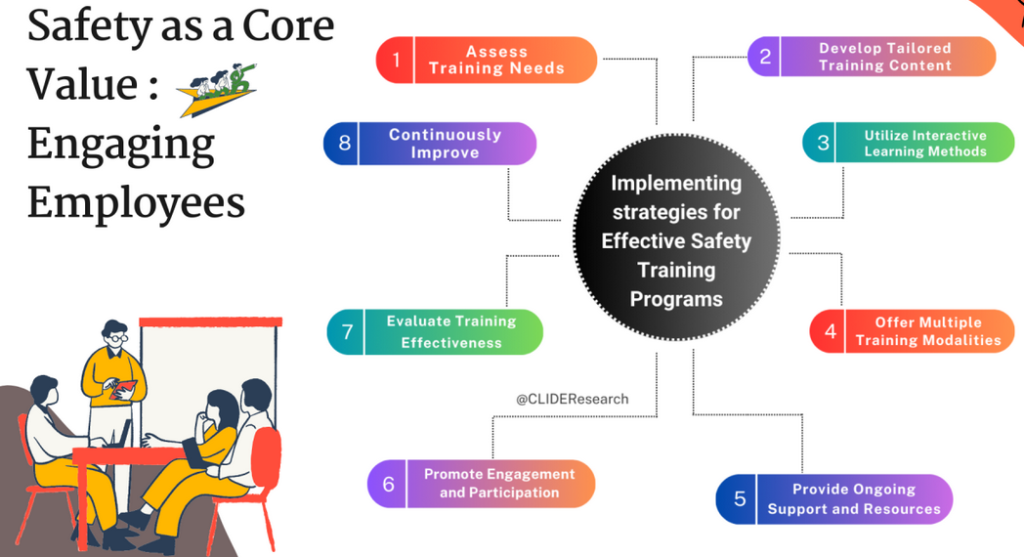
Safety as a core value means health and safety are built into the organization’s decisions, systems and behaviours.
It means safety is considered before work starts, while work is being performed and when work is reviewed.
A workplace that treats safety as a core value will usually have:
- Visible leadership commitment
- Clear health and safety responsibilities
- Practical training and supervision
- Safe work procedures
- Worker involvement
- Hazard reporting without fear
- Timely corrective action
- Regular workplace inspections
- Incident and near-miss learning
- Accountability for managers, supervisors and workers
The key test is simple:
Does the workplace protect people even when safety slows the job down?
If the answer is yes, safety is more than a message. It is part of the organization’s operating system.
A true safety value affects:
- Hiring
- Orientation
- Job planning
- Training
- Scheduling
- Purchasing
- Supervision
- Equipment maintenance
- Contractor management
- Incident investigation
- Performance reviews
- Corrective action
- Leadership communication
In a strong workplace safety culture, people understand that safe work is the expected way to work.
CCOHS notes that health and safety should be treated with the same importance as other organizational policies and should not be sacrificed for convenience or expediency. That principle is the foundation of a workplace health and safety program that works in real conditions.
Safety as a Core Value Versus Safety as a Priority
This section is important because many employers use the word “priority” when they really need a value.
A priority can change.
A value should not.
Production can become a priority. Customer deadlines can become a priority. Cost control can become a priority. Staffing coverage can become a priority.
Safety must remain active through all of those pressures.
| Safety as a priority | Safety as a core value |
|---|---|
| Can change when business pressure changes | Stays active during business pressure |
| Often depends on the current manager or supervisor | Is built into systems and expectations |
| May focus on slogans or campaigns | Shows up in decisions and behaviour |
| Can become reactive after incidents | Works
proactively before incidents |
| May rely on the safety department alone | Belongs to everyone in the workplace |
| Measures injury numbers only | Measures leading indicators and prevention activity |
| Asks workers to “be careful” | Gives workers training, time, tools and authority |
A company may say safety is a priority but still reward supervisors for speed while ignoring unsafe shortcuts.
That sends a stronger message than any poster.
A company that treats safety as a core value aligns the work system with the message. It gives supervisors enough time to plan. It trains workers before assigning tasks. It stops work when controls are missing. It investigates near misses before someone gets hurt.
Why Safety Values Matter in Ontario Workplaces
Ontario’s workplace safety system depends on shared responsibility.
Employers must create safe systems. Supervisors must ensure workers follow required procedures. Workers must work safely, use required protective equipment and report known hazards.
A strong safety value helps these legal duties become normal habits.
Without that value, a workplace may still have policies. But the policies may not match what happens on the floor.
The Ontario Occupational Health and Safety Act requires employers to provide information, instruction and supervision to protect workers and to take every precaution reasonable in the circumstances for worker protection.
For example:
- A hazard-reporting form exists, but workers do not use it because nothing gets fixed.
- A safe work procedure exists, but supervisors allow shortcuts during busy periods.
- Training records are complete, but workers cannot apply the training to real tasks.
- A JHSC exists, but recommendations sit unanswered.
- Inspections are scheduled, but corrective actions are not tracked.
These gaps show that the safety program exists on paper, but safety is not yet part of the culture.
What Safety as a Core Value Looks Like Day to Day
Safety as a core value becomes visible through small decisions.
It looks like a supervisor pausing a job because the right equipment is not available.
It looks like a worker reporting a near miss without worrying about blame.
It looks like management replacing damaged equipment before it fails.
It looks like a crew discussing hazards before the task starts.
It looks like a company choosing proper training over the cheapest certificate.
It looks like a manager asking, “What could hurt someone here?” before asking, “How fast can we finish?”
Common daily examples include:
- Pre-job hazard reviews
- Toolbox talks connected to real site conditions
- Equipment inspections before use
- Correct PPE selection
- Clear pedestrian and forklift controls
- Lockout before maintenance
- Ladder and working-at-heights controls
- Open hazard reporting
- Practical refresher training
- Follow-up after near misses
- Worker involvement in procedure updates
- Timely response to JHSC recommendations
Safety culture is not built by one annual meeting. It is built by repeated actions that show people what the workplace truly values.
Leadership’s Role in Making Safety a Core Value
Safety culture usually follows leadership behaviour.
Workers notice what leaders tolerate, reward, ignore and correct.
If management talks about safety but rewards only speed, the real value becomes speed.
If supervisors skip inspections when work gets busy, workers learn that inspections are optional.
If managers investigate incidents only to assign blame, workers learn to hide problems.
Leadership must make safety visible through action.
This includes:
- Setting clear expectations
- Providing enough time and resources
- Supporting supervisors
- Responding to reported hazards
- Participating in inspections
- Asking workers for input
- Tracking corrective actions
- Reviewing training quality
- Holding all levels accountable
- Refusing to normalize unsafe shortcuts
A leader does not need to know every technical detail of every task. But they do need to create a workplace where safe work is planned, supported and expected.
CCOHS identifies management commitment, responsibility, communication, training and inspections as core elements of an effective health and safety program. Those elements must be visible in leadership behaviour, not only written into a policy.
Worker Participation: The Core of a Strong Safety Culture
Safety cannot be imposed from the office alone.
Workers often know the real conditions better than anyone else. They know which tools fail, which areas are congested, which procedures do not match the work and which shortcuts have become normal.
A workplace that values safety gives workers a real voice.
Worker participation may include:
- Reporting hazards
- Joining inspections
- Participating in the JHSC
- Reviewing safe work procedures
- Sharing near-miss information
- Asking questions during training
- Recommending controls
- Stopping work when conditions are unsafe
- Helping new workers understand site risks
A good reporting culture does not punish workers for speaking up. It uses worker feedback to fix the system before someone is injured.
The Internal Responsibility System and Safety Values
Ontario workplaces are built around the idea that health and safety responsibilities are shared.
This does not mean everyone has the same duty. Employers, supervisors and workers have different roles.
But everyone participates.
A core safety value supports the internal responsibility system because it makes safety part of daily communication.
The employer creates the program, provides training and supplies resources.
Supervisors plan and monitor the work.
Workers follow procedures and report hazards.
The JHSC or health and safety representative helps identify issues, make recommendations and support continuous improvement.
When these roles work together, safety becomes active. When they break down, the workplace becomes reactive.
How to Build Safety as a Core Value
Building safety as a core value requires more than a statement on a wall.
The statement must be connected to systems, decisions and follow-through.
1. Write a clear safety policy
A safety policy should explain the organization’s commitment, responsibilities and expectations.
It should be signed by senior leadership, communicated to workers and reviewed regularly.
A strong policy should make it clear that safety will not be sacrificed for convenience, speed or short-term production. That makes health and safety policy development one of the first practical steps in turning safety into a value.
2. Define responsibilities at every level
Workers should know what they are responsible for.
Supervisors should know what they must enforce.
Managers should know what they must support.
Responsibilities should be included in:
- Job descriptions
- Orientation
- Supervisor training
- Performance reviews
- Contractor requirements
- Safety meeting agendas
- Incident investigations
If safety belongs to everyone, every role needs a clear safety function.
3. Train workers for the work they actually do
Generic training is not enough when workers face task-specific hazards.
Training should reflect:
- The equipment being used
- The work environment
- The worker’s experience
- The applicable regulation
- The company’s procedures
- The hazards of the task
- The controls required
- Emergency procedures
Training should also be evaluated. Attendance alone does not prove understanding.
A worker should be able to explain the hazard, the control and what to do if conditions change. Employers can use this principle when building workplace-specific safety training instead of relying only on generic course completion.
4. Train supervisors as safety leaders
Supervisors turn safety values into daily practice.
They assign work, correct unsafe behaviour, respond to hazards and decide whether work continues.
Supervisor training should include:
- Legal duties
- Hazard recognition
- Job planning
- Communication
- Incident response
- Inspections
- Corrective action
- Worker coaching
- Documentation
- When to stop work
A weak supervisor can damage a strong safety program. A strong supervisor can make safety practical and credible.
5. Make hazard reporting easy
Workers should not need to fight the system to report a hazard.
A reporting process should be:
- Simple
- Fast
- Accessible
- Non-punitive
- Tracked
- Reviewed
- Followed by corrective action
Hazard reports should not disappear.
If workers report the same issue repeatedly and nothing changes, the reporting culture will collapse.
6. Respond to near misses before injuries happen
Near misses are warnings.
They show where the system almost failed.
A workplace that values safety does not ignore near misses because “nobody got hurt.”
It investigates what happened, why it happened and what must change.
Near-miss reviews can reveal:
- Training gaps
- Equipment problems
- Poor layout
- Missing signage
- Inadequate supervision
- Unclear procedures
- Production pressure
- Weak communication
The best time to fix a hazard is before the injury.
7. Use inspections to learn, not just comply
Inspections should do more than satisfy a checklist.
They should identify hazards, confirm whether controls are working and create a record of corrective action.
Effective inspections ask:
- What has changed since the last inspection?
- Are workers following procedures?
- Are procedures realistic?
- Are tools and equipment in good condition?
- Are hazards being controlled at the source?
- Are previous corrective actions complete?
- Are workers raising concerns?
- Are supervisors responding?
Inspections should involve people who understand the work. This makes regular workplace inspections a practical way to show that safety is built into operations.
8. Track leading indicators
Injury statistics are lagging indicators. They tell you what already happened.
A workplace that treats safety as a core value also tracks prevention activity.
Useful leading indicators include:
- Completed inspections
- Open corrective actions
- Closed corrective actions
- Training completion
- Practical competency assessments
- Hazard reports
- Near-miss reports
- Toolbox talks
- JHSC recommendations
- Preventive maintenance completion
- Supervisor field observations
- Worker safety suggestions
These measures show whether the safety system is active before an injury occurs.
9. Align production decisions with safety values
Safety is tested when work pressure increases.
Before approving overtime, rushing a delivery or changing a process, supervisors and managers should ask:
- Do workers have the right training?
- Is the right equipment available?
- Are enough workers assigned?
- Will fatigue increase risk?
- Have hazards changed?
- Does the safe work procedure still apply?
- Is additional supervision required?
- Should the job be delayed?
A true safety value is not proven when the job is easy. It is proven when there is pressure.
10. Review the safety program regularly
A safety program should change as the workplace changes.
Review the program when:
- New equipment is introduced
- Work processes change
- Incidents occur
- Near misses increase
- Workers report recurring hazards
- Legislation changes
- New training needs appear
- The workplace expands
- A new supervisor takes over
- A client or audit identifies gaps
The goal is continuous improvement, not one-time compliance.
Signs Safety Is Not Yet a Core Value
A workplace may need improvement if:
- Workers are afraid to report hazards
- Near misses are ignored
- Supervisors allow shortcuts
- Training is treated as a paperwork exercise
- Corrective actions stay open for months
- Production always overrides safety concerns
- PPE is used as the only control
- New workers are rushed into tasks
- JHSC recommendations receive weak responses
- Policies exist but workers do not know them
- Repeat incidents are blamed only on workers
- Inspections identify the same hazards repeatedly
These signs do not mean the employer has failed permanently. They show where the system needs attention.
Safety as a Core Value Examples by Workplace Type
Construction
Safety as a core value may include daily hazard assessments, working-at-heights verification, ladder selection, equipment inspections, traffic control and clear stop-work expectations.
Warehousing
It may include forklift and pedestrian separation, racking inspections, loading-dock controls, housekeeping, battery-charging procedures and practical operator evaluations.
Manufacturing
It may include machine guarding, lockout procedures, noise controls, ergonomic assessments, chemical handling, preventive maintenance and supervisor observations.
Offices
It may include emergency planning, ergonomic setup, violence and harassment prevention, slip prevention, first aid readiness and psychological health and safety.
Maintenance work
It may include job hazard analysis, energy isolation, confined-space review, hot-work controls, contractor coordination and permit systems.
Different workplaces need different controls. The value stays the same, but the implementation must match the actual risk.
30-Day Plan to Start Making Safety a Core Value
Week 1: Review the current message
Look at what the company says about safety.
Review:
- Safety policy
- Orientation materials
- Training records
- Incident history
- Inspection reports
- JHSC minutes
- Corrective action logs
- Supervisor expectations
Ask whether the documents match the work being performed.
Week 2: Talk to workers and supervisors
Ask practical questions:
- What hazards worry you most?
- Which procedures are hard to follow?
- What gets ignored when work is busy?
- What near misses have happened recently?
- What training would help?
- Which corrective actions are overdue?
- What stops people from reporting hazards?
The answers will often reveal more than the paperwork.
Week 3: Fix visible gaps
Choose a few issues workers can see.
Examples:
- Repair damaged equipment
- Improve housekeeping
- Update missing signage
- Replace worn PPE
- Review a confusing procedure
- Close overdue inspection items
- Schedule needed refresher training
- Improve hazard-report follow-up
Visible action builds trust.
Week 4: Build the system
Create a simple safety-value action plan.
Include:
- Leadership commitments
- Supervisor expectations
- Worker reporting process
- Inspection schedule
- Training matrix
- Corrective action tracker
- JHSC follow-up process
- Monthly review meeting
- Leading indicators
- Communication plan
Make it practical. The best safety system is the one people can actually use.
Safety as a Core Value Checklist
Use this checklist to assess whether safety is becoming part of daily operations.
| Question | Yes / No |
|---|---|
| Is the safety policy current and signed by senior leadership? | |
| Are safety responsibilities defined for each role? | |
| Do supervisors receive safety-leadership training? | |
| Are workers trained before performing hazardous tasks? | |
| Is worker understanding evaluated after training? | |
| Are hazard reports easy to submit? | |
| Are near misses reviewed and tracked? | |
| Are corrective actions assigned and closed? | |
| Are inspections completed on schedule? | |
| Does the JHSC receive meaningful responses? | |
| Are safety controls reviewed when work changes? | |
| Does management fund required controls and training? | |
| Are leading indicators reviewed regularly? | |
| Can workers stop unsafe work without fear? | |
| Do production decisions reflect safety expectations? |
If several answers are “No,” safety may still be treated as a program rather than a core value.
Workplace Safety Core Values – Frequently Asked Questions
What does safety as a core value mean?
It means safety is built into decisions, behaviours and systems. It affects how work is planned, how people are trained, how hazards are reported and how leaders respond when risk appears.
Is safety a value or a priority?
Safety can be both, but a value is stronger. Priorities can change when deadlines or costs change. A core value should remain active even when the workplace is under pressure.
How do you promote safety as a core value?
Start with leadership behaviour, clear responsibilities, practical training, worker participation, inspections, hazard reporting, corrective action and consistent accountability.
What is the difference between safety culture and a safety program?
A safety program is the formal system of policies, procedures, training and records. Safety culture is how people actually think, decide and behave when doing the work.
Who is responsible for workplace safety?
Employers, supervisors and workers all have responsibilities. Employers must provide safe systems and instruction. Supervisors must ensure safe work is followed. Workers must follow procedures and report hazards.
How can supervisors support safety values?
Supervisors support safety values by planning work safely, correcting hazards, coaching workers, enforcing procedures, responding to concerns and refusing to accept unsafe shortcuts.
What are examples of safety values?
Examples include prevention, accountability, worker participation, hazard reporting, continuous improvement, respect for procedures, stop-work authority and learning from near misses.
How do you measure whether safety is a core value?
Use both lagging and leading indicators. Track incidents, but also track inspections, hazard reports, near misses, training, corrective actions, JHSC recommendations and supervisor observations.
Build a Workplace Where Safety Becomes Daily Practice
Safety as a core value does not happen because a company says the right words.
It happens when the safety program, leadership behaviour, supervisor decisions and worker participation all point in the same direction.
Achieve Safety and compliance helps Ontario employers create practical health and safety training programs, train workers, monitor implementation and audit compliance.
If your workplace needs help turning safety from a policy statement into daily practice, contact Achieve Safety at (647) 523-7554.