- What Is the Difference Between In-House and External Safety Training?
- Can Ontario Employers Legally Provide Safety Training In-House?
- Which Ontario Safety Training Programs Require Approved Providers?
- How Much Does In-House Safety Training Cost Compared With External Training?
- Benefits and Limitations of In-House Safety Training
- Benefits and Limitations of External Safety Training
- When Does In-House Safety Training Make Sense for Ontario Employers?
- When Should an Employer Choose an External Safety Training Provider?
- Can Ontario Employers Combine In-House and External Safety Training?
- How Train the Trainer Programs Support In-House Safety Training
- Employer Checklist: Choosing the Right Safety Training Model
- Frequently Asked Questions About In-House Safety Training in Ontario
- Develop a Safety Training Approach That Fits Your Workplace
Ontario employers can provide many types of workplace safety training through qualified internal staff or hire an external training provider. The right approach depends on the hazards workers face, the expertise available within the organization and whether a particular course requires an approved training program or provider.
Under Ontario’s Occupational Health and Safety Act (OHSA), employers must ensure workers receive the information, instruction and supervision needed to protect their health and safety. Hiring an outside instructor does not transfer that responsibility away from the employer.
For businesses comparing in-house safety training with external training, cost is often the starting point. However, instructor competence, practical evaluations, regulatory requirements and the ability to maintain consistent training records can have a greater impact on the decision.
This guide explains how both approaches work in Ontario, which training can be delivered internally, where formal approvals apply and how employers can compare their actual training costs.
What Is In-House Workplace Safety Training?
In-house safety training uses employees, supervisors or designated workplace trainers to instruct other workers.
For example, a warehouse may develop an internal instructor to deliver its material-handling safety program during employee onboarding.
The organization manages the training schedule, coordinates employee participation and maintains appropriate records.
Internal training can use employer-developed materials or instructional resources supplied under an authorized provider program.
An internal trainer must have the knowledge and instructional ability appropriate to the course. For programs with additional approval requirements, the employer must also satisfy the applicable legal framework.
What Is External Workplace Safety Training?
External safety training is delivered by a provider operating outside the employer’s organization.
The provider may supply an instructor, course materials, training facilities, assessments and evidence of completion, depending on the service purchased.
For example, an employer may book an external training provider to deliver a specialized course for supervisors or workers.
External training can take place at the employer’s facility, at a provider’s training centre or through an available online format.
Training held at the employer’s workplace is not automatically in-house training. If an independent company supplies the instructor and delivers the program, it remains externally provided training.
What Is the Difference Between In-House and External Safety Training?
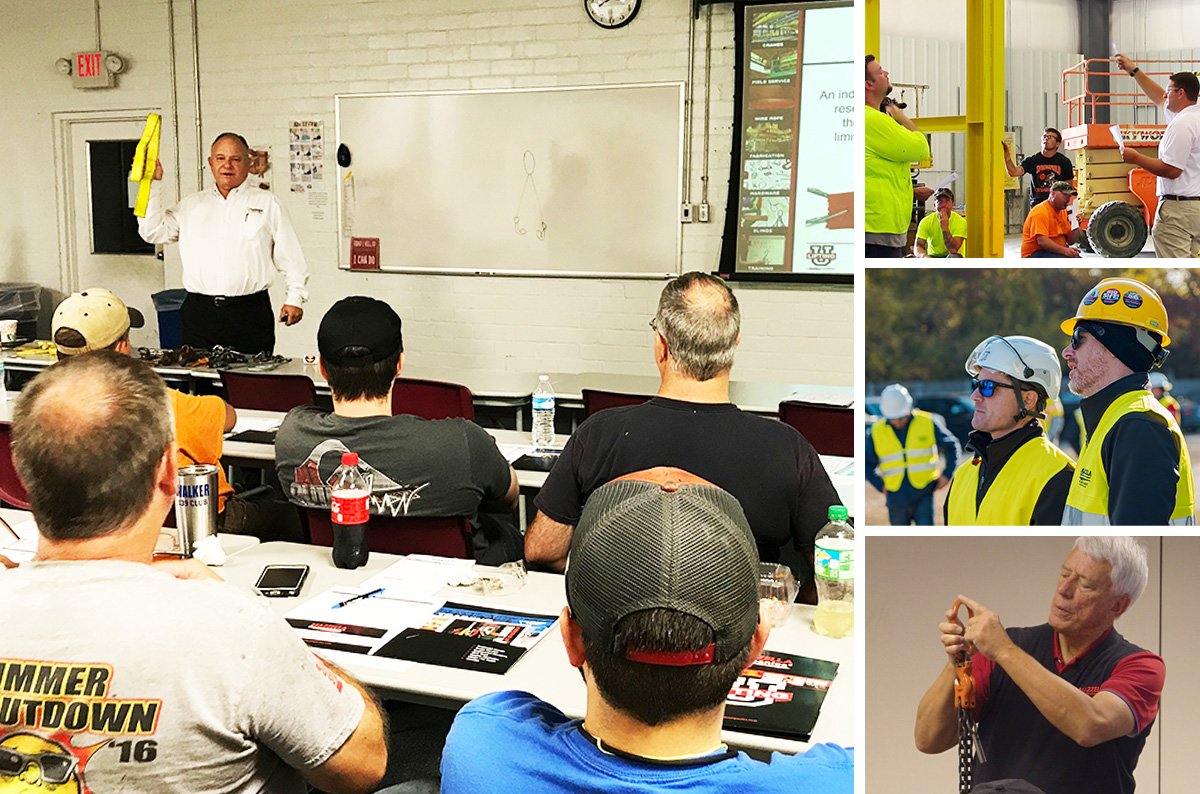
In-house safety training is organized and delivered by an employer using its own personnel, such as a safety coordinator, supervisor or designated workplace trainer. The employer is responsible for ensuring the instructor has the knowledge and competence required for the subject being taught.
External safety training is delivered by an independent training company, consultant or other outside provider. Training may take place at the provider’s facility, online where appropriate or directly at the employer’s workplace.
The location alone does not determine the training model. For example, when an external instructor visits a manufacturing facility to conduct forklift training, that remains external training even though employees complete the course onsite.
In-House vs External Safety Training: Key Differences
| Factor | In-House Safety Training | External Safety Training |
|---|---|---|
| Instructor | Qualified employee or internal trainer | Outside instructor or training provider |
| Scheduling | Controlled by the employer | Coordinated with provider availability |
| Initial costs | Trainer development, materials and equipment | Course fees and any travel or facility costs |
| Recurring costs | Internal instructor time, updates and administration | Fees for additional courses or participants |
| Workplace-specific instruction | Can be built around actual equipment and procedures | Can be customized, particularly with onsite delivery |
| Specialized expertise | Depends on internal personnel | Access to instructors with subject-specific experience |
| Training consistency | Requires internal standards and quality controls | Depends on the provider’s program and delivery |
| Certificates and records | Managed by the employer | Often supplied by the provider, with employer recordkeeping still necessary |
| Best suited for | Frequent, repeatable training with competent internal instructors | Specialized, occasional or approval-dependent training |
Neither model automatically satisfies every legal requirement. The employer must assess the training subject, applicable legislation and the worker’s ability to perform the work safely.
Can Ontario Employers Legally Provide Safety Training In-House?
Yes. Ontario legislation allows employers to deliver many workplace safety training programs internally, provided they meet the requirements applicable to the training.
Section 25(2)(a) of the OHSA requires employers to provide workers with information, instruction and supervision to protect their health or safety.
The Act establishes employer responsibilities, while individual regulations may specify additional training requirements for particular activities, hazards or worker roles.
There is no universal Ontario rule requiring every workplace safety course to be delivered by an outside training company.
Examples of Safety Training That Can Be Delivered Internally
Depending on the workplace, its hazards and the instructor’s competence, employers may provide internal instruction covering:
-
Workplace-specific health and safety orientation
-
Basic worker and supervisor health and safety awareness
-
WHMIS education and workplace-specific instruction
-
Safe work procedures and equipment operating rules
-
Emergency response and evacuation procedures
-
Manual material handling and ergonomic practices
-
Workplace hazard reporting and incident prevention
The employer must still ensure the instruction is suitable for the actual work being performed.
For example, a worker who has completed general WHMIS education may need additional instruction about the hazardous products used at their facility, the location of safety data sheets and the protective measures required for specific tasks.
Similarly, an employee who receives general equipment safety instruction may require supervised practical training and an assessment of their ability to operate the equipment safely.
Does an In-House Safety Trainer Need a Train the Trainer Certificate?
Ontario does not impose a single, universal Train the Trainer certification requirement on everyone who delivers workplace safety instruction.
Trainer qualifications depend on the training subject and any applicable legal or program-specific requirements.
For many internally delivered programs, employers should assess whether the proposed instructor has:
-
Sufficient knowledge of the equipment, tasks and associated hazards
-
An understanding of applicable workplace safety requirements
-
Practical experience with the subject being taught
-
The ability to communicate procedures and assess worker understanding
-
The competence to conduct practical instruction or evaluations where necessary
A structured Achieve Safety Train the Trainer program can help organizations develop internal instructors and establish consistent training practices.
However, completing a general Train the Trainer course does not automatically authorize someone to deliver every regulated or government-approved safety certification.
For a more detailed explanation of instructor eligibility, employers can also consult our guide on who can become a health and safety trainer in Ontario .
Which Ontario Safety Training Programs Require Approved Providers?
Certain Ontario workplace safety training programs operate under government approval requirements. Employers cannot replace those programs with an ordinary internal safety course unless the applicable approval conditions are met.
This is one of the most important distinctions when comparing in-house and external training.
Working at Heights Training
Under Ontario Regulation 297/13, workers performing certain construction activities must successfully complete an approved Working at Heights training program delivered by an approved training provider.
The approval system is administered through Ontario’s Chief Prevention Officer.
An employer cannot replace required approved Working at Heights training with an ordinary internal presentation or toolbox talk.
Some organizations may qualify to operate as approved providers under applicable approval arrangements. However, internal delivery is only an option where the required approvals and program conditions are satisfied.
Employers should also distinguish approved Working at Heights training from additional site-specific fall protection instruction, which may still be necessary for the equipment and hazards workers encounter.
Official reference: Ontario: Working at Heights Training
Joint Health and Safety Committee Certification
Ontario’s Joint Health and Safety Committee (JHSC) certification system also involves approved training programs and providers.
Where JHSC certification is required, designated committee members must complete the applicable certification training requirements through the approved system.
An employer’s internal health and safety orientation does not substitute for required JHSC certification training.
WHMIS Training
WHMIS works differently.
Under Ontario Regulation 860, employers have responsibilities for worker education and instruction concerning hazardous products in the workplace.
An employer may provide WHMIS education internally, provided the instruction addresses the applicable requirements and workers understand the hazards and protective measures relevant to their work.
Ontario does not generally require WHMIS instruction to be purchased from a government-approved commercial training provider.
Training must also remain relevant when hazardous products, workplace conditions or the information workers need changes.
Official reference: Ontario Regulation 860: WHMIS
Basic Worker and Supervisor Awareness Training
Ontario Regulation 297/13 requires basic occupational health and safety awareness training for workers and supervisors, subject to the regulation’s provisions.
Employers can deliver this training internally using material that covers the required content.
Ontario also provides free awareness training resources that employers can use.
A private commercial certificate is not inherently necessary to meet these basic awareness requirements, although employers must maintain the required records and be able to demonstrate compliance.
Official reference: Ontario: Basic Health and Safety Awareness Training Requirements
How Much Does In-House Safety Training Cost Compared With External Training?
The cost difference depends on the number of employees, training frequency, course complexity and resources already available within the organization.
An employer with several hundred employees requiring regular refresher instruction may find internal delivery economical once competent trainers and suitable training materials are established.
A smaller business that needs specialized instruction only a few times per year may spend less by hiring an external provider.
Comparing the price of an external course with the hourly wage of an internal instructor will rarely capture the full cost.
Costs Associated With In-House Training
Employers should account for instructor development, course preparation, delivery time, equipment, worker participation and ongoing program administration.
Internal trainers may also need time away from their regular responsibilities to review procedures, update materials and assess employee competence.
Costs Associated With External Training
External training expenses may include provider fees, travel, venue arrangements and paid employee time.
Onsite group training can reduce travel and scheduling disruptions, especially when several workers need the same course.
Employers should also consider whether an external course includes practical evaluations, training documentation and customization for their workplace.
Comparing the Total Annual Training Cost
A useful comparison looks at the full year rather than a single training session.
Annual in-house training cost:
Instructor development + training materials and equipment + preparation and delivery time + employee training time + administration and updates
Annual external training cost:
Provider fees + employee training time + travel and venue expenses + internal coordination + any additional workplace-specific instruction
These calculations help employers compare the two approaches on equivalent terms.
Example: Annual Training Cost Comparison
The following figures are illustrative only. They are not Ontario market averages or quoted Achieve Safety training prices.
| Cost Category | In-House | External |
|---|---|---|
| Trainer development and materials | $1,200 | $0 |
| Training delivery | $900 | $3,600 |
| Employee training time | $2,400 | $2,400 |
| Administration and coordination | $500 | $300 |
| Total Annual Cost | $5,000 | $6,300 |
In this hypothetical example, in-house training costs $1,300 less annually.
That difference could change substantially if the employer needs specialized equipment, additional trainer development or only a small number of training sessions.
The quality and legal suitability of the training must be assessed alongside the financial comparison.
Benefits and Limitations of In-House Safety Training
In-house training can be a practical investment for Ontario employers that regularly train new employees, operate specialized equipment or need to reinforce established workplace procedures.
Its effectiveness depends on the knowledge of the internal instructor and the resources available to maintain the training program.
Greater Control Over Scheduling and Training Content
An internal trainer can organize instruction around production schedules, employee shifts and operational changes.
This flexibility is particularly useful for businesses with frequent onboarding requirements or multiple shifts.
Internal trainers are also familiar with the workplace’s equipment, procedures and recurring safety concerns. They can incorporate examples from actual tasks and address hazards that may be difficult to explain in a general classroom setting.
For instance, an internal instructor at a manufacturing facility may demonstrate machine isolation procedures using the specific equipment employees operate.
The employer must still ensure the instructor is competent and that the training addresses applicable requirements.
Lower Recurring Costs for Frequent Training
Once an organization has developed competent internal trainers and suitable course materials, the cost of repeated training sessions may decrease.
This is especially relevant when employees require the same instruction throughout the year.
However, cost savings depend on training frequency. Maintaining an internal program for a course delivered only once annually may be less economical than using an external provider.
Challenges With Instructor Competence and Program Maintenance
An experienced employee is not automatically an effective safety instructor.
Technical knowledge matters, but instructors must also communicate procedures clearly, recognize misunderstandings and assess whether employees can apply what they have learned.
Employers must also account for the work involved in maintaining an internal training program.
Training materials may need revisions following equipment changes, new workplace hazards, regulatory amendments or updates to applicable standards.
Without a documented review process, internal training can gradually become inconsistent or outdated.
Benefits and Limitations of External Safety Training
External training gives employers access to instructors whose work is focused on safety education, practical instruction and workplace compliance.
This can be particularly valuable when the subject requires specialized technical knowledge or the organization has limited internal training resources.
Access to Specialized Instructors and Practical Evaluations
Certain training subjects require detailed knowledge of equipment, hazard controls and safe operating practices.
An external provider may be better equipped to deliver these courses when the employer does not have a suitably competent internal instructor.
For example, training involving overhead cranes, hoisting and rigging, confined spaces or powered lifting equipment may benefit from instructors who regularly work with the relevant equipment and training requirements.
Employers should ask prospective providers about their instructors’ qualifications, course content, practical evaluations and experience with comparable workplaces.
Reduced Course Development and Administrative Work
External providers typically prepare instructional materials and organize the delivery of their courses.
Depending on the service, they may also provide attendance records, evaluation results and certificates of completion.
This reduces the amount of course development required from the employer’s internal safety personnel.
However, employers remain responsible for maintaining appropriate training records and ensuring workers receive any additional workplace-specific instruction they need.
Limitations of External Training
External courses may require advance scheduling, travel arrangements or coordination between multiple employee shifts.
Standardized courses may also need supplementary instruction before employees begin working with a particular machine or process.
For example, a worker who completes a general forklift training program may still need familiarization with the employer’s equipment, workplace traffic patterns, load characteristics and operating procedures.
An external training certificate should therefore be considered alongside the worker’s demonstrated competence and the conditions in which the work will be performed.
When Does In-House Safety Training Make Sense for Ontario Employers?
Internal training is generally worth considering when an organization has a recurring training requirement and the expertise to deliver it effectively.
Common situations include workplaces with:
-
Frequent onboarding or employee turnover
-
Multiple shifts requiring regular safety instruction
-
Established safe work procedures that employees must understand
-
Repeated training needs involving the same equipment or tasks
-
Qualified internal personnel who can develop and deliver instruction
-
Resources to maintain training records and update course materials
A warehouse, for example, may benefit from an internal trainer who can provide recurring instruction on site-specific operating procedures and assess workers using the equipment available at the facility.
Before introducing an internal program, the employer should confirm whether the subject has any prescribed instructor, program or provider requirements.
The organization should also determine how practical competence will be evaluated and who will maintain the training documentation.
When Should an Employer Choose an External Safety Training Provider?
External training may be more suitable when the organization needs specialized expertise, has infrequent training requirements or must use an approved training provider.
It may also be appropriate when an employer is introducing unfamiliar equipment, addressing a significant operational change or establishing a training program for the first time.
For example, a company preparing employees for confined space work may need instruction covering hazard assessment, atmospheric testing, entry procedures, communication and emergency arrangements.
The employer should ensure the training reflects the applicable confined space requirements and the responsibilities assigned to its workers.
Where practical exercises or equipment-specific evaluations are needed, the provider’s ability to deliver those components should be part of the selection process.
A useful question for employers is whether they can demonstrate the same level of instructor competence, instructional quality and assessment through their internal resources.
If they cannot, external training may be the more appropriate option.
Can Ontario Employers Combine In-House and External Safety Training?
Yes. Many organizations benefit from using both approaches.
A hybrid training model allows employers to retain control over workplace-specific instruction while using external providers for specialized courses, instructor development or programs requiring formal approval.
For example, a manufacturing company might organize its training as follows:
| Training Requirement | Potential Delivery Approach |
|---|---|
| New employee workplace orientation | In-house |
| Workplace-specific WHMIS instruction | In-house |
| General safety procedures and hazard reporting | In-house |
| Specialized equipment operator training | External or qualified in-house instructor, depending on requirements |
| Train the Trainer development | External |
| Required approved Working at Heights training | Approved training provider |
| JHSC certification training | Approved training provider and program |
| Site-specific equipment familiarization | In-house, with competent personnel |
This approach can help employers manage recurring training expenses while retaining access to specialized instructors.
It also provides a practical way to develop internal training capabilities over time.
For instance, an organization may initially hire an external provider to establish a training program, develop internal instructors and assist with practical evaluation procedures.
Once the employer has suitable personnel and resources, some recurring instruction may be delivered internally.
How Train the Trainer Programs Support In-House Safety Training
Employers considering internal safety training should evaluate how their instructors will be prepared for the role.
A knowledgeable supervisor may understand a task thoroughly but have limited experience designing lessons, assessing learning or documenting training outcomes.
Train the Trainer programs can help develop these instructional skills.
Depending on the program, training may address lesson planning, instructional techniques, communication, practical demonstrations, assessment methods and training documentation.
These skills are useful when employers want to establish a repeatable internal training process.
However, employers must separately determine whether an instructor has the technical competence and any specific qualifications required for the subject.
Train the Trainer instruction supports instructor development. It does not replace subject-specific expertise or legally required provider approvals.
Ontario employers interested in developing internal instructors can explore Achieve Safety’s Train the Trainer program.
Employer Checklist: Choosing the Right Safety Training Model
Before deciding between internal and external delivery, employers can use the following checklist to evaluate their requirements.
[ ] Have we identified the specific training requirements under the OHSA and applicable regulations?
[ ] Does this training require an approved program, provider or particular instructor qualification?
[ ] Do we have an internal instructor with sufficient technical knowledge and instructional competence?
[ ] Can workers receive practical instruction and evaluations where required?
[ ] Can the training be adapted to our actual workplace hazards and equipment?
[ ] Have we compared total annual costs, including employee time and administration?
[ ] Do we have a process for maintaining training records and updating course materials?
[ ] Would a combination of internal and external training better meet our needs?
Frequently Asked Questions About In-House Safety Training in Ontario
Is in-house safety training legal in Ontario?
Yes. Ontario employers may deliver many types of safety training internally, provided the instruction meets applicable legal requirements. Certain programs, including prescribed Working at Heights training and JHSC certification, have specific approval requirements.
Does OHSA require employers to hire an external safety trainer?
The OHSA does not establish a universal requirement to hire an external trainer for every workplace safety subject. Employers must provide appropriate information, instruction and supervision, while complying with any additional requirements established by applicable regulations.
Can a supervisor provide workplace safety training?
A supervisor may provide training when they have the knowledge and competence necessary for the subject and no applicable rule requires a different qualification or approved provider. Employers should assess both the supervisor’s technical knowledge and ability to instruct and evaluate workers.
Is a Train the Trainer certificate mandatory in Ontario?
There is no universal requirement for every internal safety instructor to hold a general Train the Trainer certificate. Some regulated programs have specific instructor or provider requirements. Employers should assess these requirements individually.
Can an employer issue certificates for in-house safety training?
Employers can document the successful completion of internally delivered training and issue their own certificates where appropriate. However, an employer-issued certificate does not automatically constitute a government-approved qualification or satisfy a prescribed certification requirement.
The certificate should accurately describe the training completed and should not imply an approval or qualification that the program does not provide.
Is in-house safety training cheaper than external training?
It can be, particularly when the same training is delivered frequently to large groups of employees. The comparison should include instructor development, preparation, equipment, employee time, administration and ongoing program maintenance.
For infrequent or specialized training, an external provider may offer better overall value.
How often should employees receive refresher safety training?
There is no single refresher interval that applies to every type of workplace safety training in Ontario.
Some programs have specific validity periods or retraining requirements. Other training needs depend on the applicable regulations, equipment changes, workplace hazards and whether employees can continue performing their tasks safely.
Employers should review the requirements for each training subject rather than applying one company-wide expiry period to every course.
Can external safety training be conducted at our workplace?
Yes. Many providers offer onsite instruction, allowing employees to train using the equipment and conditions present at their facility.
Employers should confirm whether the course includes practical instruction, worker evaluations and any necessary workplace-specific content.
Develop a Safety Training Approach That Fits Your Workplace
The decision between in-house and external safety training depends on the training requirements, internal expertise, workforce size and operational needs of the organization.
Employers with frequent training requirements may benefit from developing competent internal instructors. Organizations requiring specialized instruction or approved certification programs may find external training more practical.
Many workplaces use a combination of both.
Achieve Safety supports Ontario employers through workplace safety training and instructor development programs. Organizations exploring internal training capabilities can learn more about our Train the Trainer course or contact Achieve Safety to discuss their training requirements.