- PPE Requirements in Ontario
- Are PPE Requirements Mandatory in Ontario?
- Who Is Responsible for Workplace PPE?
- PPE Responsibilities at a Glance
- Which Ontario Laws Apply to Personal Protective Equipment?
- How Should Employers Select PPE?
- What Does Proper PPE Fit Mean?
- Is PPE Training Required in Ontario?
- PPE Inspection, Maintenance and Replacement
- Who Pays for PPE in Ontario?
- Common Types of Workplace PPE
- How to Build a Workplace PPE Program
- Ontario PPE Compliance Checklist
- Frequently Asked Questions
- Review Your Workplace PPE Program
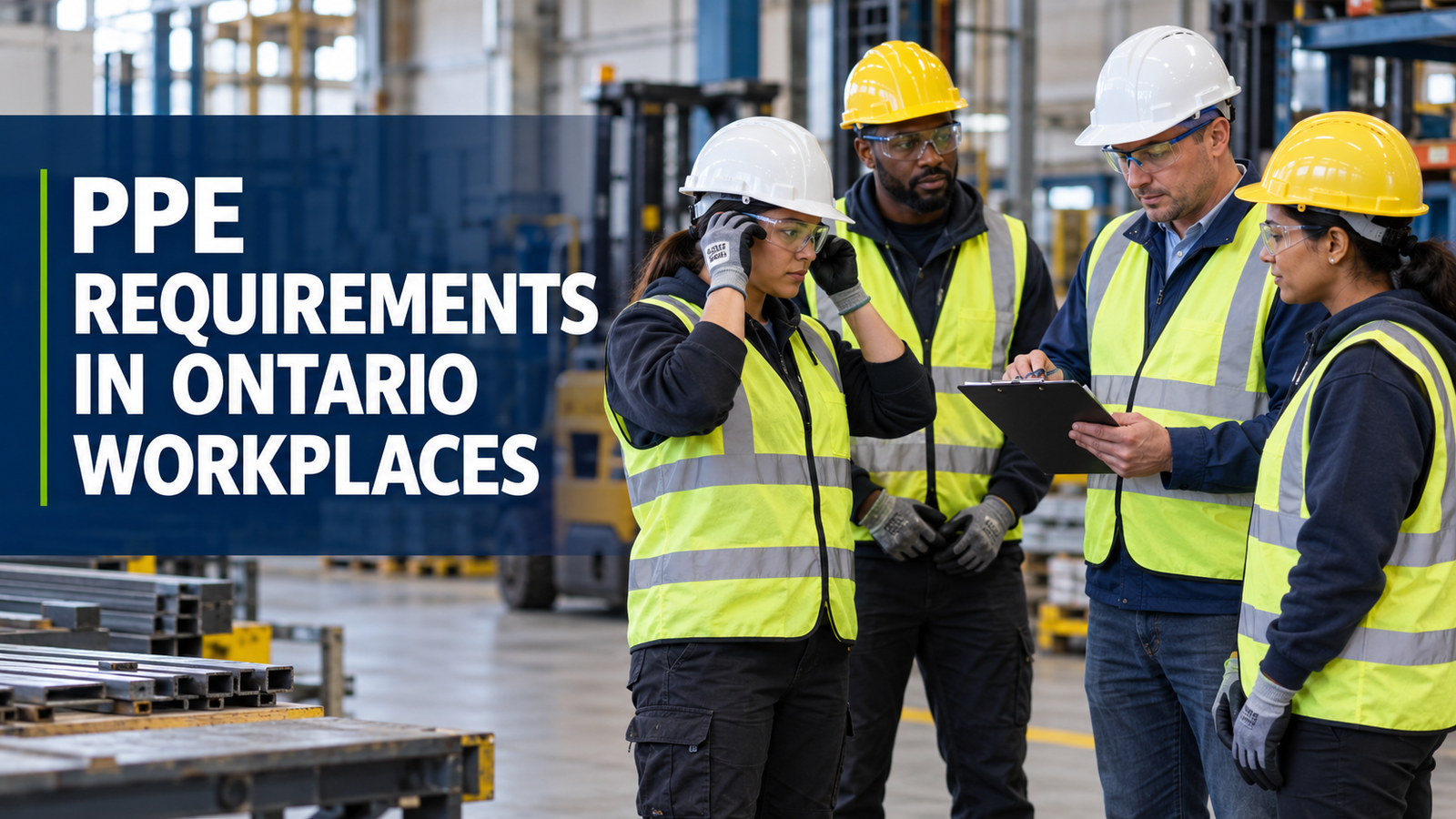
PPE Requirements in Ontario
Personal protective equipment protects workers when a workplace hazard cannot be eliminated or adequately controlled through other measures.
Depending on the work, PPE may include safety glasses, face shields, protective footwear, hard hats, gloves, hearing protection, high-visibility clothing, fall-protection equipment or respiratory protection.
Ontario does not prescribe one standard PPE kit for every employee. The equipment must match the worker, the task, the exposure and the rules that apply to that sector.
An employer may need to consider:
- The type and severity of the hazard
- The part of the body that could be injured
- The duration and frequency of exposure
- The worker’s measurements and body type
- Whether different items can be worn together safely
- The equipment manufacturer’s instructions
- Applicable Ontario regulations and technical standards
- Whether the PPE could introduce another hazard
Providing equipment is only one part of compliance. Employers must also ensure that required PPE is suitable, properly fitted, maintained and used. Workers need enough instruction to understand how to wear it, inspect it and recognize when it no longer provides reliable protection.
Need help reviewing your Ontario health and safety program?
Achieve Safety helps employers identify compliance gaps, improve workplace procedures and organize required safety documentation. Call (647) 523-7554 to discuss your workplace.
Are PPE Requirements Mandatory in Ontario?
Yes. Personal protective equipment is mandatory when the Occupational Health and Safety Act, an applicable regulation or the employer’s hazard-control procedure requires it.
Ontario’s PPE requirements come from several connected duties rather than one universal PPE regulation.
Under the Occupational Health and Safety Act, an employer must:
- Provide prescribed equipment, materials and protective devices
- Maintain prescribed equipment in good condition
- Ensure prescribed measures and procedures are followed
- Provide workers with information, instruction and supervision
- Take every precaution reasonable in the circumstances to protect workers
- Ensure that PPE provided, worn or used fits properly and is appropriate in the circumstances
The exact equipment depends on the workplace. Construction projects, industrial establishments, mines, health-care facilities and workplaces involving designated substances may be subject to different PPE provisions.
For example, a worker cutting concrete may require eye, face, hearing and respiratory protection. A warehouse worker handling corrosive products may need chemical-resistant gloves, splash goggles and protective clothing. An electrician’s PPE must reflect the electrical exposure and the findings of the task-specific risk assessment.
The employer must connect the identified hazard to a suitable control. A generic rule requiring workers to “wear appropriate PPE” does not explain which equipment is required, what it protects against or when it must be replaced.
PPE does not replace hazard control
PPE is usually used when a hazard remains after elimination, substitution, engineering controls and administrative measures have been considered.
A noisy process illustrates this relationship. The employer should first examine whether the source can be removed, enclosed, isolated or modified. Hearing protection may still be required for the exposure that remains.
The same principle applies to chemical splashes. Safer products, closed-transfer systems, splash guards and ventilation may reduce exposure. Gloves, goggles or a face shield protect the worker from the residual risk identified through the assessment.
A PPE program should therefore connect:
Hazard identification → risk assessment → control selection → PPE selection → worker instruction → inspection and review
Starting with a catalogue of gloves, glasses or respirators can lead to the wrong equipment being selected because the actual exposure has not yet been defined.
Who Is Responsible for Workplace PPE?
PPE compliance involves the employer, supervisor and worker. Their responsibilities are related, but they are not interchangeable.
Employer responsibilities
The employer controls the PPE program and must ensure that the required protective clothing and equipment are available and suitable for the work.
Depending on the workplace and applicable regulation, employer responsibilities may include:
- Identifying physical, chemical, biological, electrical and ergonomic hazards
- Assessing the likelihood and potential severity of exposure
- Selecting PPE appropriate for the hazard and task
- Confirming that equipment fits the individual worker
- Ensuring that PPE can be used safely with other required equipment
- Providing information, instruction and supervision
- Maintaining prescribed equipment in good condition
- Establishing inspection, cleaning, storage and replacement procedures
- Enforcing the use of required protective equipment
- Reviewing the selection when work, equipment or hazards change
Ontario now expressly requires employers to ensure that personal protective clothing and equipment provided, worn or used is a proper fit and appropriate in the circumstances. Fit may depend on the task, the worker’s body type and the manufacturer’s intended design. A loose hard hat, oversized gloves or poorly fitted fall-protection harness can reduce protection and create an additional hazard. Ontario’s PPE fit guidance explains how this duty applies across provincially regulated workplaces.
Supervisor responsibilities
A supervisor must ensure that workers comply with the OHSA and applicable regulations. This includes ensuring that required PPE is worn and used correctly.
A supervisor should be able to:
- Recognize when PPE is required
- Confirm that workers have the equipment assigned to them
- Check for obvious damage, contamination or poor fit
- Correct improper use
- Stop work when required protection is unavailable
- Reinforce the limits of the equipment
- Report recurring PPE problems to the employer
- Arrange additional instruction when a worker cannot use the equipment safely
A supervisor’s visual check does not replace a formal inspection, fit test or equipment-specific evaluation when one is required.
Worker responsibilities
Workers must wear or use the equipment, protective devices and clothing required by the employer and Ontario law.
Workers should also:
- Follow the instruction they received
- Inspect equipment before use
- Use PPE only for its intended purpose
- Avoid altering protective equipment
- Report damage, defects, contamination or poor fit
- Store equipment in the designated location
- Ask for clarification when the required protection is uncertain
- Report changes in the work that may affect PPE selection
A worker should not continue using cracked safety glasses, chemically degraded gloves, a damaged harness or a respirator that does not seal properly. Reporting the problem allows the employer or supervisor to reassess the equipment before exposure continues.
PPE Responsibilities at a Glance
| Workplace party | Core PPE responsibilities |
|---|---|
| Employer | Assess hazards, select appropriate PPE, ensure proper fit, provide instruction, maintain prescribed equipment and enforce the program |
| Supervisor | Confirm PPE is available and used correctly, correct unsafe practices and respond to defects or fit concerns |
| Worker | Wear required PPE, follow instruction, inspect equipment and report damage, contamination or poor fit |
Which Ontario Laws Apply to Personal Protective Equipment?
Ontario does not have one PPE rule covering every hazard and workplace. The applicable requirements depend on the industry, task, equipment and type of exposure.
The Occupational Health and Safety Act establishes the general duties. Sector-specific regulations provide more detailed requirements for construction, industrial establishments, health-care facilities, mines and other regulated workplaces.
| Legislation or regulation | How it relates to PPE |
|---|---|
| Occupational Health and Safety Act | Establishes employer, supervisor and worker duties. It also requires PPE to fit properly and be appropriate in the circumstances. |
| Regulation 851: Industrial Establishments | Addresses protective equipment used in factories, warehouses, repair facilities and other industrial workplaces. Section 79 requires instruction and training in PPE care and use before the equipment is worn or used. |
| Regulation 213/91: Construction Projects | Requires workers to use protective clothing, equipment or devices necessary for the hazards they may encounter. It contains detailed provisions for head, eye, foot, fall and other forms of protection. |
| Regulation 67/93: Health Care and Residential Facilities | Requires instruction on the care, use and limitations of required PPE before first use and at regular intervals afterward. |
| Regulation 854: Mines and Mining Plants | Contains PPE requirements connected with mining hazards, including head, eye, hearing, respiratory and protective clothing considerations. |
| Regulation 490/09: Designated Substances | Establishes controls for substances such as asbestos, lead, silica and isocyanates. Respiratory protection may be required when exposure cannot be adequately controlled through other measures. |
These rules can apply together. A maintenance worker entering a construction area inside an industrial facility may face requirements related to the site, the task, the hazardous product and the equipment being used.
Employers should identify which regulation applies before choosing PPE. Equipment that is acceptable for one task may not protect against another exposure, even when the items look similar.
Industrial workplace PPE requirements
Section 79 of Regulation 851 requires a worker to receive instruction and training in the care and use of required protective clothing, equipment or devices before using them.
This requirement commonly affects workers in:
- Manufacturing plants
- Warehouses and distribution centres
- Automotive facilities
- Machine shops
- Food-processing operations
- Maintenance departments
- Material-handling operations
- Industrial laboratories
The regulation also contains hazard-specific provisions. Eye protection may be needed where particles, chemicals or radiation could injure the eyes. Protective footwear may be necessary where there is a risk of foot injury. Respiratory protection may be required where airborne contaminants cannot be adequately controlled.
PPE selection should reflect the hazard assessment rather than a general facility-wide assumption. Workers in different areas of the same plant may require different glove materials, eye protection, footwear or hearing protection.
Construction project PPE requirements
Section 21 of Regulation 213/91 requires workers to wear protective clothing and use personal protective equipment or devices necessary to protect them from workplace hazards.
Construction PPE may include:
- Protective headwear
- Protective footwear
- Safety glasses or goggles
- Face protection
- Hearing protection
- High-visibility clothing
- Respiratory protection
- Gloves and protective clothing
- Fall-restraint or fall-arrest equipment
Working at a construction project does not mean every worker automatically needs every item on this list. The required protection depends on the task and exposure.
For example, a worker using a saw may require eye, face and hearing protection. A worker handling wet concrete may need alkali-resistant gloves, protective footwear and clothing that prevents skin contact. A worker exposed to a fall hazard may require a properly designed fall-protection system and the applicable approved training.
How Should Employers Select PPE?
PPE selection begins with the hazard, not the product.
An employer should identify what could cause harm, how exposure may occur and which part of the worker’s body requires protection. The selected equipment must then reduce the remaining risk without creating a new one.
1. Identify the task
Start with the work being performed rather than the employee’s job title.
A maintenance technician may weld, clean equipment, handle chemicals, enter noisy production areas and work near electrical components during the same shift. Each task presents a different exposure profile.
The assessment should consider normal work, cleaning, setup, maintenance, troubleshooting and reasonably foreseeable emergencies.
2. Identify the hazards
Relevant hazards may include:
- Flying particles
- Chemical splashes
- Sharp edges
- Falling objects
- Moving machinery
- Noise
- Heat and cold
- Biological material
- Electrical energy
- Airborne dust, vapour, gas or mist
- Falling from an elevation
- Vehicle and mobile-equipment traffic
Employers using hazardous products should consult the product label and safety data sheet. The SDS can help identify chemical properties, exposure routes, recommended controls, emergency measures and appropriate protective equipment.
PPE information found in an SDS must still be assessed against the actual workplace. A generic glove recommendation may not account for the product concentration, contact time, temperature or task being performed. Achieve Safety’s explanation of how workers should use safety data sheets provides additional guidance on interpreting this information.
3. Apply the hierarchy of controls
Elimination, substitution and engineering controls should be considered before relying on PPE as the main protective measure.
An employer may be able to:
- Remove the hazardous task
- Replace a chemical with a less hazardous product
- Enclose a noisy or dusty process
- Install local exhaust ventilation
- Use machine guards or barriers
- Automate material handling
- Isolate workers from the source
PPE remains important when these controls cannot remove the entire exposure. It may also provide temporary protection while more reliable controls are being installed.
Machine guards, for example, prevent access to dangerous moving parts. Gloves should not be treated as a substitute for effective guarding and may create an entanglement hazard around rotating equipment. The employer’s machine-guarding assessment should determine how the machinery is controlled before hand protection is selected.
4. Determine the required level of protection
Protective equipment must be suitable for the severity and type of exposure.
The assessment should examine:
- Expected exposure level
- Exposure duration
- Frequency of the task
- Distance from the hazard
- Possible routes of exposure
- Environmental conditions
- Consequences of equipment failure
- Emergency and rescue considerations
- Applicable manufacturer and technical requirements
Safety glasses designed for impact protection may not provide adequate chemical-splash protection. Disposable dust masks may not protect against gases, vapours or oxygen-deficient atmospheres. General-purpose gloves may offer little resistance to a corrosive chemical.
The protective rating and intended use matter more than the appearance of the equipment.
5. Check compatibility
Workers often need more than one form of PPE. Each item must continue to function when worn with the others.
Compatibility problems may include:
- Safety glasses interfering with a respirator seal
- Earmuffs preventing a hard hat from sitting correctly
- A face shield contacting respiratory equipment
- Bulky gloves reducing grip or equipment control
- Protective clothing interfering with a fall-arrest harness
- A hood preventing proper head-protection adjustment
- Prescription eyewear creating gaps in splash protection
The complete combination should be evaluated during the task. Testing one item at a time may fail to reveal how the equipment interacts when worn together.
What Does Proper PPE Fit Mean?
Proper fit means the equipment sits on the worker as intended, remains in position during the task and provides the protection for which it was designed.
Ontario’s PPE fit requirement applies across workplaces covered by the OHSA. Employers must consider relevant factors, including the task, workplace conditions, worker’s body type and equipment design.
Signs of poor fit may include:
- A hard hat that moves or falls off
- Safety glasses leaving large gaps
- Gloves that reduce dexterity or catch on equipment
- Footwear that affects balance
- Hearing protection that does not seal properly
- A harness with incorrectly positioned straps
- A respirator that cannot maintain a reliable face seal
- Protective clothing that restricts movement or leaves skin exposed
“One size fits all” equipment may be acceptable in some situations, but adjustability does not automatically establish proper fit. The employer must confirm that the item works for the individual worker and the task.
The assessment should also account for workers who have historically had difficulty obtaining suitable PPE because of body size, body shape, religious dress, disability or other individual needs. Alternative models and sizes may be required to provide equivalent protection.
Fit should be reassessed when:
- New equipment is introduced
- The worker’s body size changes
- Different PPE must be worn together
- The task or exposure changes
- The equipment repeatedly shifts during use
- A worker reports discomfort or restricted movement
- An inspection identifies gaps in protection
- Manufacturer instructions change
Respirators require additional attention. A general visual fit check is not the same as a formal respirator fit test. Where tight-fitting respiratory protection is required, the employer must determine the applicable respiratory-protection and fit-testing requirements.
Is PPE Training Required in Ontario?
Workers must receive appropriate instruction before using required protective clothing, equipment or devices.
The exact obligation depends on the workplace and applicable regulation. For example, section 79 of Regulation 851 requires workers in industrial establishments to be instructed and trained in the care and use of required PPE before wearing or using it.
Health-care workplaces have an additional emphasis on equipment limitations and recurring instruction. Construction employers must ensure that workers understand the protection required for the hazards they may encounter.
A generic safety orientation may introduce PPE rules. It does not replace task-specific instruction.
A worker issued chemical-resistant gloves should understand:
- Which chemicals the gloves resist
- How long the material can withstand contact
- How to inspect the gloves
- How contamination affects reuse
- How to remove them without skin contact
- Where they must be stored or discarded
The employer should connect instruction to the equipment workers will actually use.
What should PPE instruction cover?
A practical PPE program should teach workers:
- Which tasks require PPE
- What hazards the equipment protects against
- What the equipment cannot protect against
- How to select the correct model, size or rating
- How to put it on and remove it safely
- How to adjust it for proper fit
- How to perform a pre-use inspection
- How to use it with other protective equipment
- How to clean and store it
- When it must be removed from service
- How to report defects or fit problems
- What to do when the required PPE is unavailable
Workers should also understand the limits of their role. Being shown how to wear a respirator does not qualify a worker to enter every contaminated atmosphere. Wearing arc-rated clothing does not authorize someone to perform energized electrical work.
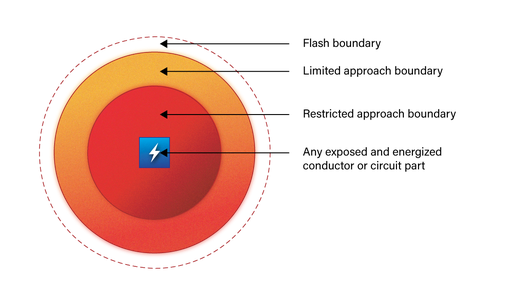
When workers may encounter electrical hazards, PPE must form part of a broader electrical risk assessment, safe-work procedure and worker qualification process. These relationships are explained further in Achieve Safety’s guide to arc flash training requirements and CSA Z462.
Does PPE training require a certificate?
Ontario does not create one universal PPE certificate that applies to every worker, item and workplace.
The employer must ensure that the worker receives the instruction required by the OHSA and applicable regulation. Some activities, such as working at heights on a construction project, have separate approved training requirements. Other PPE instruction may be delivered as part of workplace orientation, WHMIS training, equipment training or a safe-work procedure.
A record should identify:
- Worker’s name
- Date of instruction
- Equipment covered
- Hazards and tasks discussed
- Instructor or supervisor
- Demonstration or evaluation completed
- Additional instruction required
- Worker and instructor acknowledgement
Not every PPE provision establishes a specific record-retention period. Even so, clear records help an employer verify that instruction occurred and identify workers who need updated information.
Attendance alone does not establish competency. The employer should confirm that the worker can select, inspect, fit, use and remove the equipment correctly.
PPE Inspection, Maintenance and Replacement
PPE must be kept in a condition that allows it to provide its intended protection.
Inspection frequency depends on the equipment, exposure, manufacturer’s instructions and applicable regulation. Many items require a check before each use. More complex equipment may also require scheduled inspections by a competent or qualified person.
What should a pre-use inspection examine?
The worker should look for conditions that could affect protection, including:
- Cracks, cuts, tears or punctures
- Chemical degradation
- Heat damage
- Broken or missing components
- Distorted or stretched material
- Damaged straps, buckles or fasteners
- Contaminated surfaces
- Faded or unreadable labels
- Expired cartridges or filters
- Improper adjustment
- Evidence of impact
- Unauthorized modifications
The inspection must be appropriate for the equipment. Checking the shell of a hard hat does not confirm that its suspension is correctly installed. Looking at a respirator cartridge does not establish that it is suitable for the contaminant or still within its service life.
Cleaning and decontamination
Reusable PPE should be cleaned according to the manufacturer’s instructions and workplace procedure.
The method must not damage the equipment. Solvents, high temperatures, harsh chemicals or abrasive cleaning can weaken some plastics, rubber components, protective coatings and harness materials.
Shared equipment requires added controls. The employer should establish how it will be:
- Cleaned between users
- Disinfected when necessary
- Checked for damage
- Adjusted for each worker
- Stored to prevent contamination
- Traced when an inspection identifies a defect
Equipment contaminated with a hazardous substance may require specialized decontamination or disposal. Workers should not take contaminated PPE home unless the workplace procedure specifically permits it and the hazard has been assessed.
Storage requirements
PPE should be stored in a clean, dry location protected from conditions that could damage it.
Depending on the item, harmful storage conditions may include:
- Direct sunlight
- Extreme heat or cold
- Moisture
- Chemical vapours
- Dust
- Crushing or deformation
- Contact with oils or solvents
- Contamination from work clothing
- Uncontrolled access by other workers
Respirators, fall-protection components and chemically protective equipment often require more controlled storage than general work clothing.
When must PPE be replaced?
Equipment should be removed from service when it is damaged, contaminated, no longer fits, fails an inspection or reaches a manufacturer-defined service limit.
Replacement may also be required after:
- A significant impact
- A fall-arrest event
- Chemical breakthrough
- Heat or flame exposure
- Electrical exposure
- Prolonged ultraviolet exposure
- A failed functional test
- A change in the task or hazard
- A manufacturer recall
- An alteration that was not approved
Ontario does not assign one expiry date to every type of PPE. Some items have manufacturer-specified expiry or service-life limits. Others are replaced according to condition, exposure history, inspection results and applicable standards.
An employer should not create an arbitrary replacement schedule that overrides a shorter manufacturer limit. It should also avoid keeping damaged equipment in service simply because a printed expiry date has not been reached.
Who Pays for PPE in Ontario?
Ontario does not have one general rule stating that an employer must pay for every form of PPE in every workplace.
Payment responsibility may depend on:
- The applicable regulation
- Type of equipment
- Industry
- Employment agreement
- Collective agreement
- Workplace policy
- Whether the equipment is specialized
- Whether it can normally be used away from work
The employer still has a duty to ensure that required protective equipment is available, suitable, properly fitted and used where the law requires it. A disagreement about payment does not remove the underlying safety obligation.
Some employers provide all required PPE directly. Others provide an allowance for safety footwear or permit workers to purchase an approved model. Collective agreements may establish specific reimbursement amounts or replacement schedules.
The Canadian Centre for Occupational Health and Safety notes that payment rules vary by jurisdiction and that Ontario arrangements may be affected by employment or union agreements.
Employers should document:
- Which PPE the company supplies
- Which items workers may purchase
- Required ratings or standards
- Approved models
- Allowance or reimbursement procedures
- Replacement responsibilities
- What happens when equipment is lost or damaged
- How proper fit will be confirmed
A worker-owned item should not be accepted solely because it looks suitable. The employer should verify that it provides the required protection, fits properly and remains in serviceable condition.
Common Types of Workplace PPE
| PPE category | Hazards it may address | Important limitations |
|---|---|---|
| Safety glasses and goggles | Flying particles, dust and chemical splashes | Impact glasses may not provide splash protection |
| Face shields | Splash, heat and flying debris | Often require primary eye protection underneath |
| Protective gloves | Chemicals, cuts, heat, cold and biological material | One glove material does not protect against every chemical |
| Protective footwear | Impact, compression, puncture, slipping and electrical hazards | Required ratings depend on the work and exposure |
| Hard hats | Falling or flying objects and certain electrical hazards | The shell and suspension must be compatible and correctly adjusted |
| Hearing protection | Hazardous noise exposure | Selection must reflect the exposure and required attenuation |
| High-visibility clothing | Vehicle and mobile-equipment traffic | Garment class, condition and background contrast affect visibility |
| Protective clothing | Chemicals, heat, flame, contamination and weather | Material selection must match the exposure and breakthrough risk |
| Respiratory protection | Dust, mist, fumes, vapour, gas and biological aerosols | Requires hazard-specific selection; tight-fitting models may require fit testing |
| Fall-protection equipment | Falls from elevation | Requires a complete system, suitable anchorage, inspection and applicable training |
| Arc-rated PPE | Thermal effects of an arc-flash event | Does not prevent an arc flash and does not replace electrical safe-work procedures |
The category name alone is not enough. The employer must evaluate the item’s rating, design, condition, fit and compatibility with the work.
How to Build a Workplace PPE Program
A written PPE program gives employers and supervisors a consistent way to control equipment selection, use and replacement.
1. Create a PPE inventory
List the protective equipment used in each department, work area and task.
Record:
- Equipment type
- Manufacturer and model
- Protective rating
- Available sizes
- Assigned workers or departments
- Inspection requirements
- Cleaning method
- Storage location
- Replacement criteria
2. Connect PPE to the hazard assessment
Each required item should have a defined purpose.
The assessment should explain:
- Which hazard remains
- Why PPE is necessary
- What level of protection is required
- Which body area needs protection
- Which other controls are in place
- What could cause the PPE to fail
- When the selection must be reviewed
3. Establish issue and replacement procedures
Workers need a reliable method for obtaining equipment before work begins and replacing it when necessary.
The procedure should prevent workers from continuing with damaged PPE because:
- Supplies are locked away
- A supervisor is unavailable
- Replacement approval takes too long
- The correct size is out of stock
- Workers fear being blamed for normal wear
- No one knows who authorizes replacement
4. Train workers and supervisors
Workers need instruction on the equipment they use. Supervisors need enough knowledge to recognize incorrect selection, poor fit, damage and misuse.
Where hazardous products are involved, PPE instruction should align with the workplace’s WHMIS education and product-specific training.
5. Verify performance in the field
Written procedures should be compared with how work is actually performed.
Supervisors and workplace inspectors should observe:
- Whether workers wear the assigned equipment
- Whether it remains secure during movement
- Whether different items interfere with one another
- Whether workers remove PPE to complete difficult tasks
- Whether cleaning and storage procedures are followed
- Whether workers can obtain replacements promptly
- Whether new tasks have introduced different hazards
Repeated non-use may point to poor supervision. It can also reveal a deeper problem involving fit, discomfort, visibility, communication, dexterity or equipment compatibility.
6. Review the program when conditions change
The employer should reassess PPE when:
- A new process is introduced
- Chemicals or materials change
- Equipment is modified
- An incident or near miss occurs
- Workers report discomfort or poor fit
- Inspection findings reveal recurring damage
- A manufacturer changes its instructions
- A standard or legal requirement changes
- More effective hazard controls become available
Ontario PPE Compliance Checklist
An employer should be able to answer yes to the following questions:
- Have workplace hazards been identified?
- Have more effective controls been considered before PPE?
- Is required PPE connected to a documented hazard?
- Is the equipment suitable for the level and type of exposure?
- Does each worker have access to the correct size?
- Has proper fit been confirmed?
- Can all required PPE be worn together safely?
- Have workers received task-specific instruction?
- Can workers demonstrate correct use and removal?
- Are pre-use and scheduled inspections completed?
- Are cleaning and storage procedures established?
- Are damaged items removed from service?
- Can workers obtain replacements without delay?
- Are responsibilities for payment and replacement documented?
- Is the program reviewed when work or hazards change?
A weak answer in any of these areas indicates that the workplace may have equipment without having a complete PPE program.
Frequently Asked Questions
Is PPE mandatory in every Ontario workplace?
PPE is mandatory when required by the OHSA, an applicable regulation, the identified hazard or the employer’s safe-work procedure. The specific equipment depends on the task and exposure. There is no single PPE kit required for every Ontario employee.
Does an Ontario employer have to provide PPE training?
Workers must receive the information and instruction required to use protective equipment safely. Some sector-specific regulations contain direct training provisions. For example, Regulation 851 requires instruction and training in the care and use of required PPE before it is worn or used.
Does an employer have to pay for PPE?
Ontario does not apply one universal payment rule to every PPE item. Responsibility may depend on the regulation, equipment, workplace policy, employment agreement or collective agreement. Employers must still ensure that legally required protection is available and suitable.
Can workers use their own PPE?
An employer may permit personally owned PPE, but the equipment should be reviewed before use. It must provide the required level of protection, fit properly, be compatible with other equipment and remain in acceptable condition.
Does workplace PPE expire?
There is no universal expiry date for all PPE. Replacement depends on the equipment, manufacturer’s instructions, exposure history, condition, inspection findings and applicable standard. Some cartridges, hard hats, protective clothing and fall-protection components may have specific service-life restrictions.
Is a face shield enough without safety glasses?
A face shield may not provide complete eye protection from particles or splashes entering around its edges. Many tasks require safety glasses or goggles underneath the shield. Selection must follow the hazard assessment and equipment instructions.
Is a dust mask the same as a respirator?
No. Products differ in design, certification and protective capability. Respiratory protection must be selected for the contaminant, concentration, oxygen level, task and expected exposure. A disposable filtering facepiece cannot protect against every gas, vapour or hazardous atmosphere.
When is respirator fit testing required?
Tight-fitting respirators may require formal fit testing under the applicable respiratory-protection requirements. A user seal check performed each time the respirator is worn does not replace a required qualitative or quantitative fit test.
How often should PPE instruction be repeated?
Ontario does not establish one refresher interval for every form of PPE. Additional instruction may be needed when equipment, hazards, procedures or worker responsibilities change, when an inspection identifies incorrect use or when a worker cannot demonstrate the required knowledge and skill.
Review Your Workplace PPE Program
PPE works when the equipment matches the hazard, fits the individual worker and is supported by clear procedures.
Achieve Safety and compliance helps Ontario employers review workplace hazards, documentation, worker instruction and compliance gaps through on-site health and safety compliance consulting.
Call (647) 523-7554 to discuss your workplace and the areas of your safety program that require review.