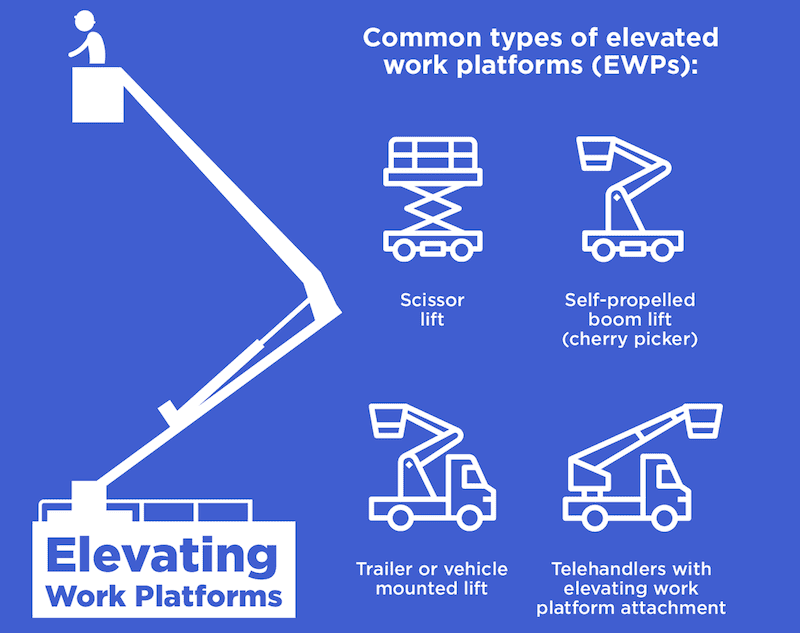
Elevating Work Platforms (EWPs) are commonly used across Ontario construction, warehousing, maintenance, and industrial workplaces to safely access elevated work areas. The most common types include scissor lifts, boom lifts, and vertical mast lifts.
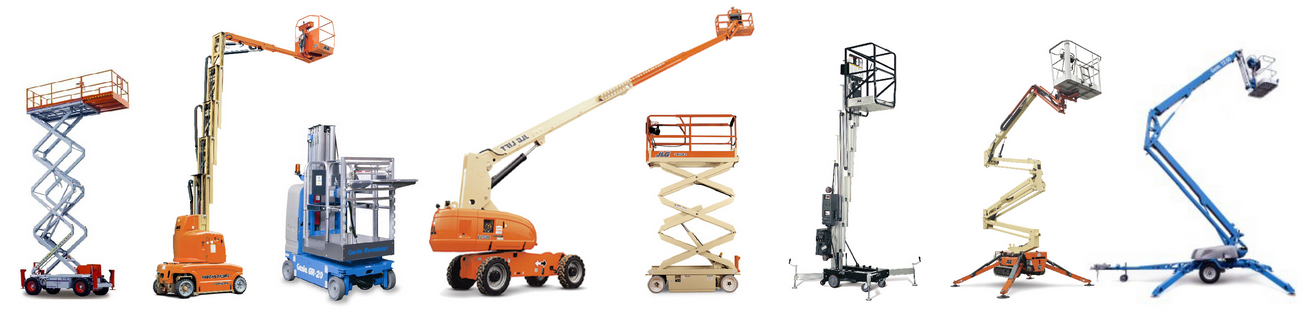
While these machines improve productivity, they also introduce serious workplace hazards such as falls, tip-overs, electrocution, crushing incidents, and equipment instability. Many workplace injuries involving EWPs happen because of improper setup, lack of training, unsafe ground conditions, or contact with overhead power lines.
Ontario employers are responsible for ensuring workers understand equipment limitations, hazard controls, and safe operating procedures before elevated work begins. Proper EWP training helps reduce incidents, improve compliance, and protect workers operating at height. We have a post for you that would help you choose the type of EWP training you need.
Types of Aeiral Work Platforms [EWP]
Not all elevating work platforms are built for the same environment.
Different EWP types are designed for different heights, surfaces, movement capabilities, and job site conditions. Choosing the wrong machine is one of the leading causes of instability and workplace incidents.
Scissor Lifts
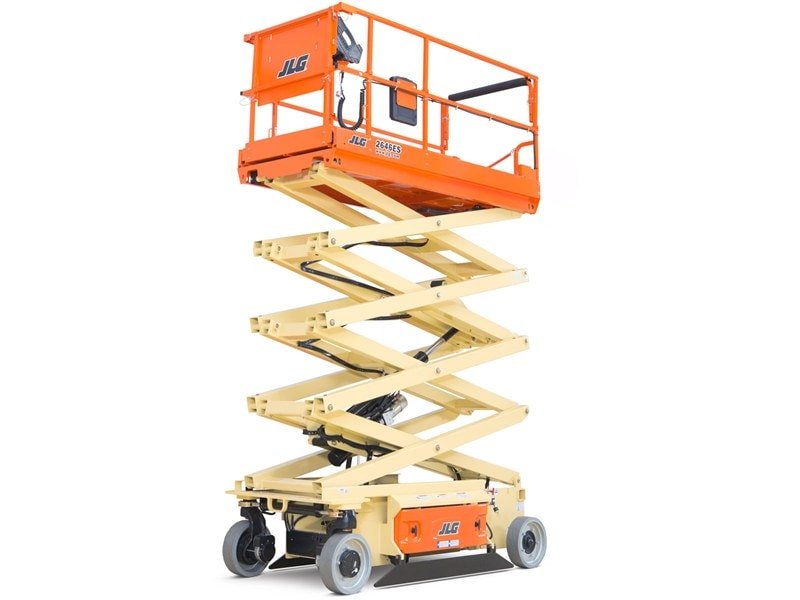
Scissor lifts move vertically using a crisscross lifting mechanism beneath the platform.
They are commonly used for:
- Indoor maintenance
- Warehousing
- Electrical work
- Ceiling installation
- Commercial construction
- Facility servicing
Key Characteristics
- Vertical lifting only
- Larger work platform
- Usually designed for stable surfaces
- Commonly electric or diesel powered
Typical Ontario Job Site Uses
- Warehouse inventory access
- Indoor construction work
- Shopping centre maintenance
- Mechanical installations
Scissor lifts are often considered safer than boom lifts because they move straight upward, but tip-overs and fall hazards still happen regularly when workers overload platforms or operate on unstable surfaces.
Boom Lifts
Boom lifts use an extendable arm to reach elevated work areas horizontally and vertically.
These are widely used when workers need extended reach around obstacles or elevated structures especially during high rise window cleaning.
There are two main categories.
Articulating Boom Lifts
Articulating boom lifts contain multiple joints that allow the arm to bend around structures and obstacles.
They are commonly used for:
- Complex construction sites
- Industrial maintenance
- Utility work
- Exterior building access
Telescopic Boom Lifts
Telescopic boom lifts extend in a straight line for maximum horizontal outreach.
These are often used for:
- High-reach outdoor work like window cleaning
- Bridge maintenance
- Steel erection
- Roofing projects
Key Risks With Boom Lifts
Boom lifts generally create higher risk exposure because:
- The platform extends outward
- Wind affects stability
- Ground conditions become critical
Vertical Mast Lifts
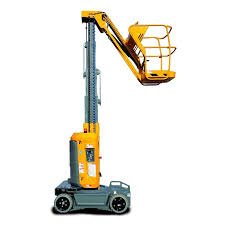
Vertical mast lifts are compact machines designed for tight indoor workspaces.
They are commonly found in:
- Retail stores
- Warehouses
- Schools
- Hospitals
- Commercial maintenance environments
Why They Are Used
- Narrow footprint
- Easy maneuverability
- Designed for confined spaces
- Lower working heights
Although smaller than boom or scissor lifts, vertical mast lifts still expose workers to fall hazards, collision risks, and overhead obstructions.
Common EWP Hazards in Ontario Workplaces
Elevating work platforms create multiple hazard categories simultaneously.
That is what makes them dangerous.
A worker may face fall hazards, electrical exposure, instability risks, and crushing hazards at the same time during a single task.
Fall Hazards
Falls remain one of the leading causes of serious workplace injuries involving EWPs.
Common causes include:
- Climbing guardrails
- Overreaching outside the platform
- Improper fall protection
- Sudden platform movement
- Unsecured entry gates
Many workers wrongly assume guardrails alone eliminate fall risks.
In reality, improper movement or unsafe positioning can still eject workers from the platform.
Tip-Over Hazards
Tip-overs are among the most severe EWP incidents because they often result in catastrophic injuries.
Common causes include:
- Uneven terrain
- Excessive slope angles
- Overloading
- High winds
- Soft ground conditions
- Improper stabilization
Ontario construction sites frequently create unstable operating environments due to mud, gravel, excavation areas, and weather exposure.
Electrical Hazards
Electrocution risks increase dramatically when EWPs operate near energized power lines.
Many incidents occur because workers underestimate minimum approach distances.
Electrical hazards often involve:
- Overhead hydro lines
- Building electrical systems
- Hidden energized equipment
- Metal platform conductivity
Even indirect contact can be fatal.
Workers do not need to physically touch a power line for electricity to arc to the machine.
Mechanical and Crushing Hazards
Workers can also become trapped between:
- The platform and overhead structures
- Guardrails and steel beams
- Walls and elevated surfaces
Mechanical hazards may involve:
- Hydraulic failures
- Sudden movement
- Equipment malfunction
- Uncontrolled lowering
Crushing incidents are especially dangerous in confined indoor work areas.
Real-World EWP Accident Examples
Many EWP incidents in Ontario are preventable.
The problem is that workers often become comfortable around the equipment and underestimate how quickly conditions can change.
Tip-Over on Uneven Ground
A common construction-site incident involves boom lifts operating on unstable terrain.
For example:
A worker positions a boom lift near an excavation area after rainfall. The ground appears stable from the surface, but the soil underneath has softened. As the boom extends outward, the machine’s centre of gravity shifts. One wheel sinks slightly, causing the lift to destabilize and tip.
Situations like this often involve:
- Poor ground assessment
- Excessive outreach
- Ignoring manufacturer slope limits
- Weather-related surface instability
This is one reason outdoor EWP operation requires constant reassessment throughout the workday, not just during setup.
Electrocution Near Power Lines
Another major hazard category involves overhead electrical contact.
A typical example may involve:
A worker operating a telescopic boom lift near commercial hydro lines while installing signage. The operator believes there is enough clearance, but the extended boom enters the minimum approach distance. Electricity arcs from the power line to the machine.
Even without direct contact, severe injury or fatal electrocution can occur.
Many workers mistakenly believe rubber tires fully protect the machine from electrical transfer.
They do not.
This is why power line awareness is heavily emphasized during EWP operator training programs.
Industry-Specific EWP Risks in Ontario
Different industries create different EWP hazard patterns.
A warehouse environment creates very different risks compared to an outdoor construction site.
Understanding these industry-specific conditions is critical for proper hazard assessment.
Construction Industry Risks
Construction sites are among the highest-risk environments for EWP use.
Common Construction Hazards
- Uneven ground
- Mud and loose gravel
- Excavations
- Wind exposure
- Constantly changing site conditions
- Multiple trades working simultaneously
- Limited visibility
- Overhead power lines
Ontario weather also plays a major role.
Rain, snow, ice, and high winds can rapidly change operating conditions and increase instability risks.
Boom lifts used outdoors are particularly affected by wind loading.
Warehousing and Distribution Risks
Warehouses create a different set of hazards.
Common Warehouse EWP Risks
- Tight aisles
- Overhead racking
- Congested pathways
- Pedestrian traffic
- Limited maneuvering space
- Indoor collision risks
Scissor lifts and vertical mast lifts are commonly used in these environments because of their compact design.
However, crushing hazards become more severe in narrow indoor spaces where workers can become pinned between structures and equipment.
Maintenance and Facility Management Risks
Maintenance teams often use EWPs inside commercial buildings, schools, hospitals, and industrial facilities.
These environments introduce additional complications.
Common Maintenance Risks
- Indoor electrical systems
- Low ceiling clearance
- Sprinkler piping
- Overhead ductwork
- Confined operating areas
- Public foot traffic
One overlooked risk in facilities work is overhead obstruction contact.
Workers focusing on the task itself may fail to monitor clearance above and behind the platform during movement.
EWP Safety Best Practices
Safe EWP operation depends on consistent hazard control before work even begins.
Most serious incidents involve skipped inspections, rushed setup, or poor situational awareness.
Perform Pre-Use Inspections
Operators should inspect:
- Tires and wheels
- Hydraulic systems
- Guardrails
- Emergency lowering systems
- Controls and alarms
- Fall protection anchor points
- Batteries or fuel systems
Assess Ground and Surface Conditions
Before elevation begins, workers should evaluate:
- Surface stability
- Slope conditions
- Soft ground
- Ice or water accumulation
- Excavation proximity
Maintain Safe Operating Zones
Work areas should remain clear of:
- Pedestrian traffic
- Falling object exposure
- Overhead obstructions
- Electrical hazards
- Moving vehicles
Use Fall Protection Properly
Depending on the equipment type and workplace policies, workers may require:
- Full-body harnesses
- Shock-absorbing lanyards
- Approved anchor points
Why EWP Training Matters in Ontario
Elevating work platforms combine working-at-heights risks with heavy equipment hazards.
That combination makes proper safety training critical.
Without training, workers may not recognize:
- Machine limitations
- Instability warning signs
- Electrical approach distances
- Load capacity restrictions
- Safe rescue procedures
- Industry-specific hazards
Ontario employers also carry legal responsibilities under workplace safety laws to ensure workers are properly trained, informed, and supervised.
Proper EWP training helps:
- Reduce workplace incidents
- Improve worker competency
- Strengthen due diligence
- Support OHSA compliance
- Lower operational risk
Achieve Safety EWP Training Ontario provides operator, awareness, and supervisor-focused training programs designed to help Ontario workplaces safely use scissor lifts, boom lifts, and other elevated work platforms across construction, warehousing, maintenance, and industrial environments.