- Machine Guarding Training at a Glance
- What Is Machine Guarding Training?
- Is Machine Guarding Training Required in Ontario?
- Ontario Machine Guarding Requirements Under Regulation 851
- What Is CSA Z432:23?
- Who Should Complete Machine Guarding Training?
- Common Machine Hazards Workers Must Recognize
- Types of Machine Guards and Safeguarding Devices
- Safeguarding Devices and Machine Controls
- What the Four-Hour Machine Guarding Course Covers
- How Workers Should Inspect Machine Guards
- When a Machine Must Not Be Operated
- Machine Guarding and Lockout Serve Different Purposes
- When Is a Pre-Start Health and Safety Review Required?
- What Employers Must Do After Training
- Does Machine Guarding Training Expire in Ontario?
- Frequently Asked Questions
- Book On-Site Machine Guarding Training in Ontario
Moving machinery can pull in clothing, trap fingers, crush hands or eject material before an operator has time to react. Effective machine guarding places a physical or functional barrier between the worker and that hazardous movement.
Ontario employers must ensure dangerous moving parts, pinch points and processing hazards are properly guarded. They must also give workers the information, instruction and supervision required to operate machinery safely.
Achieve Safety provides a four-hour, on-site Machine Guarding Training course in Ontario based on CSA Z432:23, Safeguarding of Machinery. The course helps operators, supervisors, maintenance personnel and workplace safety representatives recognize machine hazards, inspect common safeguards and respond when a guard is missing, damaged or defeated.
Pricing is available upon request.
Book Machine Guarding Training: Call Achieve Safety at (647) 523-7554 to discuss your machinery, participants and preferred training date.

Machine Guarding Training at a Glance
| Course detail | Information |
|---|---|
| Course | Machine Guarding Training |
| Duration | Four hours |
| Delivery | On-site at the client’s workplace |
| Price | Contact Achieve Safety |
| Standard | Based on CSA Z432:23 |
| Regulatory focus | Ontario Regulation 851 |
| Participants | Operators, supervisors, maintenance personnel, JHSC members and safety representatives |
| Main subjects | Machine hazards, safeguards, inspections, safe operation and lockout principles |
The course provides safety instruction. It does not certify machinery, approve a safeguarding system or replace a required engineering review.
What Is Machine Guarding Training?
Machine Guarding Training teaches workers how machinery can cause injury and how guards, protective devices and safe operating procedures reduce exposure.
Participants learn to recognize areas where a person could come into contact with:
- Rotating shafts and couplings
- Belts, pulleys, gears and chains
- In-running nip points
- Cutting and shearing components
- Reciprocating or transverse movement
- Presses and points of operation
- Conveyors and rollers
- Ejected stock, fragments or waste
- Parts that can fall or move after shutdown
- Stored electrical, hydraulic, pneumatic or mechanical energy
The course also explains how different safeguards work. These may include fixed guards, interlocked guards, adjustable barriers, perimeter fencing, light curtains and two-hand controls.
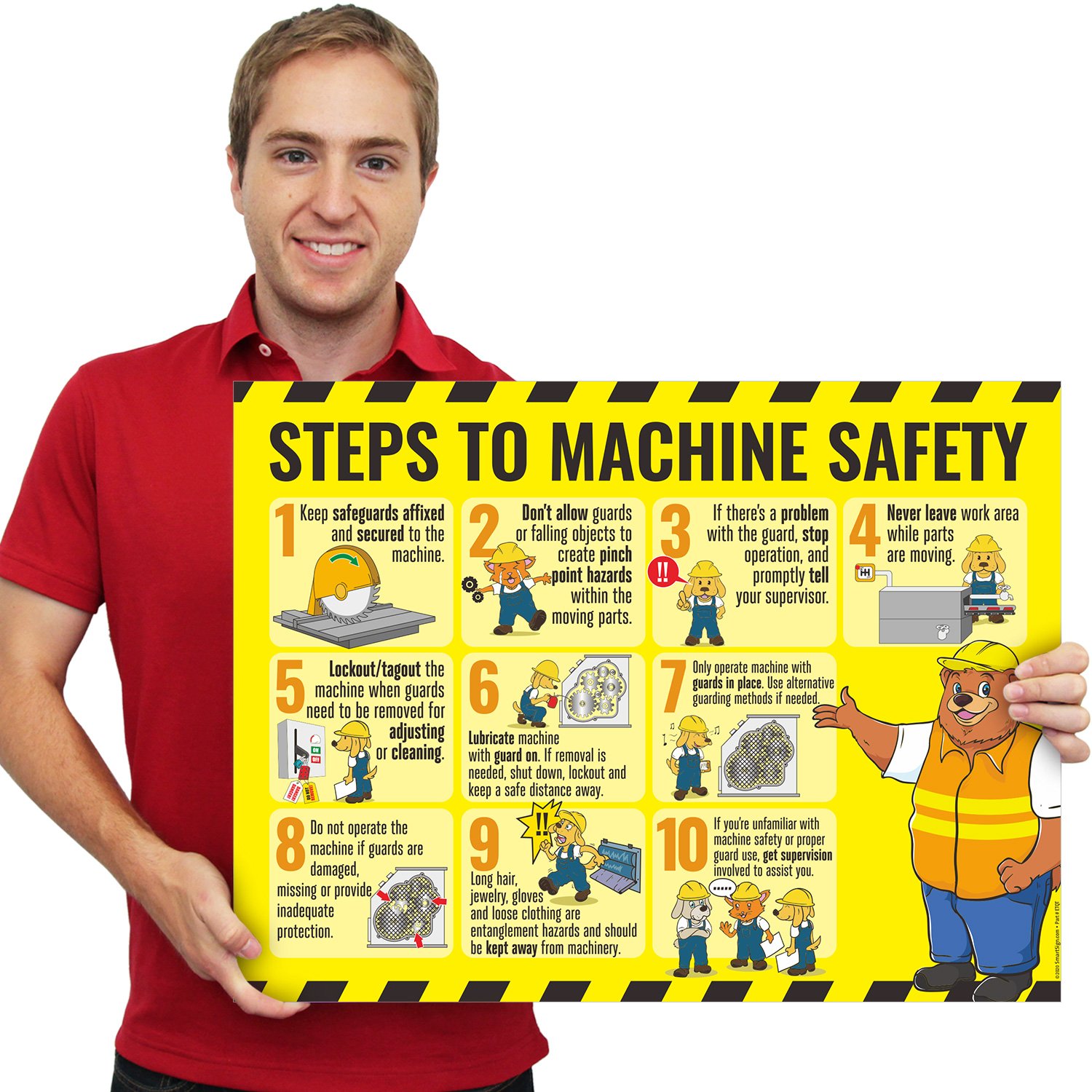
A safeguard only works when it remains properly installed and suited to the hazard. A guard with an opening that allows access to a pinch point may provide little meaningful protection. An interlocked door can also become ineffective when its switch has been bypassed or misaligned.
Workers need to recognize these conditions before production begins.
Is Machine Guarding Training Required in Ontario?
Ontario does not issue a universal machine-guarding licence or prescribe one certificate that every machine operator must hold.
The legal duties arise from the machinery, workplace and hazards involved.
Under the Occupational Health and Safety Act, employers must provide workers with the information, instruction and supervision needed to protect their health and safety. Supervisors must ensure workers follow the Occupational Health and Safety Act, its regulations and the workplace’s required protective measures.
When workers operate or work near hazardous machinery, appropriate instruction may include:
- Hazards created by the equipment
- Guards and protective devices provided
- Required pre-use checks
- Normal startup and shutdown
- Safe material feeding and removal
- Prohibited actions
- Defect-reporting procedures
- Emergency-stop procedures
- Jam-clearing restrictions
- Lockout requirements
- Workplace-specific safe operating procedures
Generic orientation may not be enough when a worker has access to a machine with exposed motion, complex safeguards or non-routine operating tasks.
Training supports compliance, but it does not correct an unsafe machine
An employer cannot use training as a substitute for a required guard.
If a dangerous moving part is accessible, telling the operator to “keep hands clear” does not provide the same protection as an effective engineering control. The hazard must be guarded as required, and the worker must be instructed on the machine’s safe use.
The same principle applies to signs, floor markings and written procedures. Administrative controls can support the guarding system. They should not replace a required physical guard or protective device.
Ontario Machine Guarding Requirements Under Regulation 851
Machine guarding requirements for factories and other industrial establishments are primarily found in Ontario Regulation 851.
The regulation addresses exposed moving parts, pinch points, materials leaving the machine, emergency stops, operating controls and hazardous movement during maintenance.
| Regulation 851 provision | General requirement |
|---|---|
| Section 24 | An exposed moving part that may endanger a worker must have a guard or device that prevents access. |
| Section 25 | An in-running nip hazard or dangerous pinch point must be guarded to prevent access. |
| Section 26 | A machine must be shielded or guarded so that its product, processing material or waste stock does not endanger a worker. |
| Section 27 | A power-driven machine’s emergency-stop control must be clearly identified and within easy reach of the operator. |
| Section 28 | An operating control used as a guard must be safely located, protected from accidental operation and not defeated. |
| Section 75 | Hazardous motion must stop before cleaning, oiling, adjustment, repair or maintenance, and parts that could move must be blocked. |
| Section 76 | Controls must be locked out when machine startup could endanger a worker, along with other precautions needed to prevent starting. |
The required safeguard depends on the machine and how workers interact with it. A fixed enclosure may be suitable for a transmission component that rarely requires access. An interlocked guard or presence-sensing device may be more appropriate where workers regularly load material into a production machine.
The machine must be safe during foreseeable work
Machine hazards are not limited to normal production.
Employers must also consider exposure during:
- Setup and changeover
- Tool changes
- Cleaning
- Lubrication
- Inspection
- Adjustment
- Troubleshooting
- Jam removal
- Maintenance and repair
- Removal of finished material or waste
- Restarting after a shutdown
A machine that appears adequately guarded during automatic operation may expose workers when a door is opened, a blockage occurs or production material is removed.
Training should reflect the tasks employees actually perform.
What Is CSA Z432:23?
CSA Z432:23, Safeguarding of Machinery is the current Canadian standard addressing worker protection from hazards associated with mobile and stationary machinery.
The CSA Z432:23 standard provides a structured framework for:
- Identifying machine hazards
- Assessing risk
- Selecting risk-reduction measures
- Designing and applying guards
- Using protective devices
- Evaluating safety-related control systems
- Providing information for safe machinery use
- Reviewing safeguards throughout the machine’s lifecycle
Achieve Safety’s four-hour course uses CSA Z432:23 as its technical foundation. The course focuses on practical hazard recognition and safeguarding awareness for workplace personnel.
Course completion does not make a participant a machine-safety engineer. It also does not authorize the participant to approve a guarding design or conduct a professional engineering review.
Who Should Complete Machine Guarding Training?
Training should match each participant’s responsibilities and level of exposure.
Machine operators and production workers
Operators work closest to points of operation, moving components and material-feed areas. They need to recognize required guards, complete assigned inspections and stop using machinery when a safeguard is missing or damaged.
Maintenance and repair personnel
Maintenance employees may enter areas that operators cannot normally access. They may remove guards, open enclosures or work around stored energy during troubleshooting and repair.
Machine-guarding awareness should be supported by task-specific Lockout and Tagout Training and the employer’s equipment-specific energy-control procedures.
Supervisors and production managers
Supervisors must recognize unsafe machinery conditions, enforce operating procedures and respond when guards are removed, altered or bypassed.
They also need to understand that production pressure does not justify operating machinery with an ineffective safeguard.
JHSC members and health and safety representatives
Committee members and representatives may encounter machine hazards during workplace inspections. Training helps them identify obvious deficiencies, ask better questions and recommend further assessment when the suitability of a safeguard is uncertain.
Machine guarding can also form part of workplace-specific hazard instruction during JHSC Part 2 Certification Training.
Engineers, purchasers and project personnel
Employees involved in selecting, importing, installing or modifying equipment should understand Ontario’s safeguarding expectations before machinery reaches production.
Early review can prevent a facility from purchasing equipment that requires extensive changes before it can be used safely.
Common Machine Hazards Workers Must Recognize
A machine can expose a worker through its normal movement, the material being processed or energy retained after shutdown.
| Machine hazard | How an injury can occur | Common examples |
|---|---|---|
| Point-of-operation hazard | A body part enters the area where material is cut, formed, punched or pressed | Presses, saws, shears and punches |
| In-running nip point | Two surfaces pull clothing or a body part inward | Rollers, belts and pulleys, gears or chains |
| Rotating-part hazard | Hair, jewellery, gloves or loose clothing becomes entangled | Shafts, spindles, couplings and chucks |
| Reciprocating motion | A moving component creates a crush or shear point | Press rams and powered slides |
| Transverse motion | A component moving in a straight line traps or strikes a person | Conveyors, tables and machine carriages |
| Cutting or shearing hazard | A blade or cutting edge contacts the worker | Saws, cutters, slicers and shears |
| Ejected-material hazard | Stock, fragments, tooling or waste leaves the machine | Grinders, lathes, drills and woodworking equipment |
| Stored-energy hazard | A component moves after shutdown or during servicing | Springs, cylinders, raised parts and pressurized systems |
Several hazards may exist on one machine. A conveyor can create nip points at rollers, entanglement around drive components and crushing hazards where material travels near a fixed structure.
Types of Machine Guards and Safeguarding Devices
The right safeguard depends on the hazard, machine cycle, material being processed and access needed for production or maintenance.
A guard that works well on an enclosed transmission system may interfere with material feeding on a press. A light curtain may suit one process but provide inadequate protection where the machine cannot stop before a worker reaches the danger zone.
Fixed guards
A fixed guard is a permanent physical barrier secured with fasteners, welding or another method that prevents easy removal.
Fixed guards commonly protect workers from:
- Belts and pulleys
- Chains and sprockets
- Gears
- Rotating shafts
- Couplings
- Fans
- Flywheels
- Other transmission components
A fixed guard usually provides reliable protection because it does not rely on a control system. Removing it for maintenance may expose the worker to hazardous movement or stored energy, which can trigger lockout requirements.
Interlocked guards
An interlocked guard is connected to the machine’s control system. Opening the guard sends a stop command or prevents the machine from starting.
An effective interlocking system must account for how quickly the machinery stops. If hazardous motion continues after the guard opens, the system may need guard locking or another protective measure that prevents access until movement has ended.
Workers should never bypass an interlock with a spare actuator, magnet, tie or improvised device.
Adjustable guards
An adjustable guard can be positioned to accommodate different stock sizes or production tasks. Examples may be found on saws, woodworking equipment and other machines that process material of varying dimensions.
The operator must understand how to set the guard correctly. A guard left fully open may expose more of the cutting tool or point of operation than the task requires.
Self-adjusting guards
A self-adjusting guard moves as material enters the machine and returns toward its protective position when the material passes.
Its effectiveness depends on proper movement, positioning and maintenance. A sticking or damaged guard can leave the hazard exposed.
Perimeter and barrier guards
Perimeter fencing creates a controlled zone around robots, automated production cells and larger machinery. Access gates may use interlocks or guard-locking devices.
The system must address every way a person could enter the safeguarded area, including spaces beneath or around the barrier. Restart procedures must also prevent machinery from operating while someone remains inside.
Safeguarding Devices and Machine Controls
Some machines use protective devices where a fixed barrier would interfere with normal operation.
These systems may include:
- Light curtains
- Laser scanners
- Pressure-sensitive mats
- Interlocked gates
- Two-hand controls
- Two-hand trips
- Restraint devices
- Pullback devices
- Safety-rated control systems
A safeguarding device must detect or restrict access early enough to protect the worker. The machine’s stopping time, the person’s approach speed and the distance between the device and the hazard all affect whether the arrangement is suitable.
Training helps participants recognize the purpose of these devices. Designing or validating a safety control system may require technical expertise beyond the scope of an awareness course.
An emergency stop is not a machine guard
An emergency stop gives an operator or another worker a way to stop equipment after a dangerous condition is noticed.
It does not prevent a hand, tool or piece of clothing from entering the danger zone. It may also be too late to stop an injury once contact occurs.
Emergency stops support the safeguarding system. They do not replace:
- Physical guards
- Interlocked barriers
- Presence-sensing devices
- Safe stopping distances
- Hazardous-energy isolation
- Proper operating procedures
Section 27 of Ontario Regulation 851 requires an emergency-stop control on a power-driven machine to be conspicuously identified and within easy reach of the operator. Meeting that requirement does not remove the separate duty to guard exposed moving parts and pinch points.
What the Four-Hour Machine Guarding Course Covers
Achieve Safety delivers Machine Guarding Training on-site so the course can be presented within the employer’s working environment.
The four-hour program covers:
- Ontario machine-guarding requirements
- Employer, supervisor and worker responsibilities
- The purpose of CSA Z432:23
- Points of operation and danger zones
- Rotating, reciprocating and transverse motion
- In-running nip points and pinch points
- Cutting, crushing and shearing hazards
- Entanglement and drawing-in hazards
- Flying material and ejected parts
- Fixed and interlocked guards
- Adjustable and self-adjusting guards
- Perimeter barriers
- Presence-sensing devices
- Two-hand controls
- Emergency-stop limitations
- Machine hazard recognition
- Guard inspection principles
- Safe startup and shutdown
- Guard bypass and tampering
- Jam-clearing restrictions
- Cleaning and adjustment hazards
- Lockout and blocking principles
- Reporting damaged or ineffective safeguards
- Pre-Start Health and Safety Review awareness
Training at the workplace allows the instructor to relate safeguarding principles to the machinery and tasks familiar to participants. It does not certify that each machine complies with Ontario law or CSA Z432:23.
Contact Achieve Safety to discuss course pricing, class arrangements and the types of machinery used at your facility.
How Workers Should Inspect Machine Guards
Pre-use inspections help identify obvious changes before production begins. The inspection should follow the manufacturer’s instructions and the employer’s written procedure.
Before operating machinery, the worker should check whether:
- Required guards are installed
- Fasteners and mounting points are secure
- Openings allow access to a moving part
- Adjustable guards are properly positioned
- Interlocked doors close and align correctly
- Safeguards show signs of bypassing or tampering
- Cracks, bends or corrosion have weakened the guard
- Materials or debris interfere with its operation
- Warning signs and labels remain readable
- Controls are clearly identified
- Emergency stops are accessible
- The machine has been altered since the previous inspection
- An unusual sound, movement or condition is present
Workers should not reach around a guard or enter a danger zone to test whether a protective device works. Functional tests must follow an approved procedure that does not expose the person to hazardous movement.
When a Machine Must Not Be Operated
A production target does not justify using equipment with an ineffective safeguard.
The machine should be stopped and reported according to the workplace procedure when:
- A required guard is missing
- A guard is loose, damaged or improperly fitted
- An interlock has been defeated
- A light curtain or other protective device is not functioning
- A worker can reach a hazardous moving part
- A machine repeatedly jams inside the danger zone
- Material cannot be fed or removed safely
- The equipment behaves unpredictably
- A new modification affects a guard or control system
- The safe operating procedure cannot be followed
- The operator has not received suitable instruction
- The worker does not understand the hazard or required control
The worker should notify the supervisor and prevent unintended use where the workplace procedure requires it. Maintenance, inspection or corrective work must be completed by people authorized for those tasks.
Machine Guarding and Lockout Serve Different Purposes
Machine guarding and lockout often appear in the same safety program because both control machinery hazards. They protect workers during different activities.
| Machine guarding | Lockout and tagout |
|---|---|
| Protects workers during normal operation | Protects workers during servicing and other hazardous access |
| Prevents access to moving parts and danger zones | Isolates hazardous energy and prevents unexpected startup |
| Includes guards, barriers, interlocks and protective devices | Includes isolation devices, locks, tags and verification |
| Supports normal production tasks | Applies to activities such as repair, cleaning and jam clearing |
| Remains part of the operating machine | Requires the equipment to be placed in a controlled energy state |
A worker may be protected by an interlocked gate during production and still require lockout before entering the guarded area to repair equipment.
Opening an interlocked guard sends a stop command. It does not necessarily disconnect electrical power, release hydraulic pressure, block gravity hazards or prevent another person from restarting the equipment.
Workers who service or maintain machinery may therefore need separate Lockout and Tagout Training and equipment-specific energy-control instruction.
When Is a Pre-Start Health and Safety Review Required?
A Pre-Start Health and Safety Review, commonly called a PSR or PSHSR, is an engineering or technical review required in certain circumstances under section 7 of Regulation 851.
A review may be triggered when a factory introduces or modifies:
- Machinery or apparatus
- A protective element
- An industrial process
- An engineering control
- A safeguarding system
- An interlocking device
- A barrier guard
- A safety-related control
The trigger depends on the circumstances and exemptions listed in Regulation 851. A PSR is not automatically required every time a machine is purchased or a guard is replaced.
Ontario’s Pre-Start Health and Safety Review guidance explains when a review may be required, who can conduct it and what the report must contain.
Machine-guarding training does not replace a PSR
The four-hour course teaches participants how to recognize hazards and understand safeguards. It does not authorize a participant to:
- Approve a machine for production
- Validate a safety-related control system
- Calculate a machine’s stopping distance
- Certify that a guard meets CSA Z432:23
- Sign an engineering report
- Decide that a PSR exemption applies
- Conduct a PSR where a professional engineer is required
Employers installing or modifying machinery should determine PSR requirements before the equipment is placed into service. Waiting until production begins can leave workers exposed and make corrective work more disruptive.
What Employers Must Do After Training
Training forms one part of an effective machine-safety program.
After the course, the employer still needs to ensure that:
- Each machine has suitable guards and protective devices
- Workers receive equipment-specific instruction
- Safe operating procedures reflect actual tasks
- Operators know what to inspect before use
- Safeguard defects are reported and corrected
- Unauthorized employees cannot alter guards or controls
- Maintenance personnel follow lockout procedures
- Machine modifications are assessed before operation
- PSR requirements are reviewed
- Training and instruction are documented
- Supervisors monitor how the machinery is used
- Workers receive updated instruction when conditions change
The employer should also establish a clear process for removing unsafe machinery from service. Operators need to know who to contact, how to document the problem and what must happen before the machine can be restarted.
Does Machine Guarding Training Expire in Ontario?
Ontario does not prescribe one expiry date for every machine-guarding training record.
Employers must ensure workers remain capable of performing their assigned tasks safely. Refresher instruction or reassessment may be appropriate when:
- New machinery is introduced
- A machine or safeguard is modified
- The worker changes jobs or equipment
- The operating procedure changes
- A guard is removed or bypassed
- Unsafe behaviour is observed
- An inspection identifies a knowledge gap
- A near miss or injury occurs
- A worker returns after a long absence
- The applicable requirements or standards change
A fixed calendar date should not be the only trigger. Training needs should reflect the machinery, worker responsibilities and changes within the workplace.
Frequently Asked Questions
Is machine guarding required in Ontario?
Yes. Ontario Regulation 851 requires dangerous moving parts, in-running nip hazards, pinch points and certain material-processing hazards to be guarded in industrial establishments. The exact safeguarding method depends on the machine and exposure.
Is Machine Guarding Training mandatory?
Ontario does not prescribe one universal Machine Guarding Training certificate. Employers must provide suitable information, instruction and supervision when workers operate or work near hazardous machinery.
What is CSA Z432:23?
CSA Z432:23 is the current Canadian standard for safeguarding mobile and stationary machinery. It provides a framework for hazard identification, risk reduction, guards, protective devices and safety-related controls.
How long is Achieve Safety’s course?
The on-site Machine Guarding Training course takes four hours.
How much does the course cost?
Pricing is available upon request. Course arrangements may depend on the training location, number of participants and workplace requirements.
Who should take Machine Guarding Training?
Participants may include machine operators, production workers, supervisors, maintenance personnel, JHSC members, health and safety representatives, purchasers and project personnel involved with machinery.
Is an emergency stop considered a machine guard?
No. An emergency stop helps stop machinery after someone recognizes a dangerous condition. It does not prevent access to a moving part or replace a required guard.
Can an interlock replace lockout?
An interlock may stop normal machine movement when a gate opens. It does not necessarily isolate every energy source or prevent unexpected startup. Tasks involving entry into a danger zone may still require lockout and verification.
Can a worker operate a machine with a damaged guard?
A worker should not operate machinery when a required guard is missing, damaged, bypassed or unable to protect against the hazard. The condition should be reported and corrected according to the employer’s procedure.
Does the course include a machine inspection?
The course is delivered on-site and teaches machine hazard recognition and guard-inspection principles. It does not certify the employer’s machinery or replace a formal safeguarding assessment or PSR.
Does training replace equipment-specific instruction?
No. Workers still need instruction on the actual machinery, controls, operating procedure, hazards and safeguards used at their workplace.
Does Machine Guarding Training expire?
Ontario does not establish one expiry date for all machine-guarding training. Refresher instruction may be necessary when equipment, duties, procedures or safeguards change, or when a performance problem is identified.
Book On-Site Machine Guarding Training in Ontario
Achieve Safety provides a four-hour Machine Guarding Training course at the client’s workplace.
The program is based on CSA Z432:23 and covers:
- Ontario machine-guarding requirements
- Common machinery hazards
- Guards and protective devices
- Operator inspections
- Safe operating principles
- Lockout and blocking awareness
- PSR awareness
- Employer, supervisor and worker responsibilities
Pricing is available upon request.
Call (647) 523-7554 to discuss your workplace, participants and preferred training date.