
If a workplace in Ontario has 20 or more workers, one question comes up fast: who needs JHSC training, and what exactly does certification involve?
That confusion is common.
Many employers know they need a Joint Health and Safety Committee. Fewer know how certification actually works, how quickly training needs to be completed, or what happens after Part 1.
The simple answer is:
JHSC training in Ontario is a formal certification process for committee members, and it is tied directly to workplace compliance under the Occupational Health and Safety Act. In most workplaces with 20 or more workers, the committee must include at least two certified members, typically one worker representative and one management representative. Ontario also treats certification as a multi-step process that includes Part 1, Part 2, and refresher training every three years.
- What Is JHSC Training?
- Who Needs JHSC Certification in Ontario?
- Why Employers Get This Wrong
- How JHSC Certification Works in Ontario
- Step 1: Identify Who Should Be Certified
- Step 2: Make Sure the Training Path Is Approved
- Step 3: Complete JHSC Part 1 Training
- Step 4: Complete JHSC Part 2 Training
- Step 5: Keep Certification Current
- What JHSC Part 1 Training Actually Helps With
- Common Workplace Hazards Covered in JHSC Training
- Physical Hazards
- Ergonomic Hazards
- Chemical Hazards
- Biological Hazards
- Safety System Failures
- Examples of JHSC Responsibilities in Real Workplaces
- Workplace Inspections
- Incident and Accident Reviews
- Hazard Reporting and Follow-Up
- Policy and Procedure Input
- Supporting the Internal Responsibility System
- Common Questions Employers Ask Before Booking JHSC Training
- How long does JHSC certification take?
- Does every workplace need a JHSC?
- Is Part 1 enough?
- Should training be treated as compliance only?
- Is JHSC training mandatory in Ontario?
- What is the difference between JHSC Part 1 and Part 2?
- What is the cost of JHSC certification in Ontario?
- How to Choose the Right JHSC Training Provider
- Why JHSC Training Matters Beyond Compliance
- Finally,
What Is JHSC Training?
JHSC stands for Joint Health and Safety Committee.
A JHSC is meant to bring workers and management into the same safety conversation. It is not there just to fill a legal requirement. A good committee helps spot hazards early, raise concerns before someone gets hurt, and keep safety improvements moving instead of sitting in a binder.
Ontario’s own guidance describes certified JHSC members as people who have received specialized training, and the purpose of the committee includes identifying hazards related to equipment, substances, work processes, conditions, and procedures.
Who Needs JHSC Certification in Ontario?
In Ontario, most workplaces with 20 or more workers must have a JHSC, and in general that committee must have at least two certified members. One represents workers. One represents management.
That usually applies across a wide range of sectors, including:
- construction
- manufacturing
- warehousing
- transportation
- food processing
- property maintenance
- industrial operations
- larger commercial workplaces
For smaller workplaces, the setup can be different. For example, Ontario notes that most workplaces with 6 to 19 workers need a health and safety representative rather than a committee.
So the first step is not choosing a course. It is confirming what your workplace is actually required to have.
Why Employers Get This Wrong
The biggest mistake is assuming JHSC certification is a one-time box to check.
It is not.
Part 1 alone does not finish the process. Part 2 still needs to happen. After that, refresher training is needed to maintain certification. That is where many employers fall behind. They train the right people once, then forget the timeline.
Another issue is choosing members based only on job title. The best JHSC members are not always the most senior people. They are the people who pay attention, speak up, understand the work on the floor, and can communicate clearly with both workers and management.
Founder insight from Tyler Di Cristofaro
The strongest JHSC members are usually the people who actually understand how work gets done day to day. A committee works better when members can recognize real hazards, not just repeat policy language.
How JHSC Certification Works in Ontario
JHSC certification in Ontario is usually easier to manage when it is broken into steps.
Step 1: Identify Who Should Be Certified
Start with the committee itself.
Pick:
- one worker representative who knows the day-to-day risks
- one management representative with enough authority to help drive corrective action
This sounds simple, but it matters. A weak committee often starts with the wrong member selection.
Step 2: Make Sure the Training Path Is Approved
Ontario’s JHSC certification system is built around standards set by the Chief Prevention Officer, and the province maintains resources for finding approved training providers and classes.
That matters because not every generic safety course qualifies as certification training.
Step 3: Complete JHSC Part 1 Training
Part 1 is the foundation.
Ontario describes basic certification as training that provides overall knowledge of health and safety that applies to all workplaces. It covers the broad principles members need before they move into workplace-specific hazards.
A strong Part 1 course should help participants understand:
- the purpose of the JHSC
- the legal framework under Ontario OHSA
- roles and duties of workplace parties
- how to identify and assess hazards
- how certified members support inspections and investigations
- how recommendations should be made and followed up
For employers comparing options, this is the stage where training quality matters most. If Part 1 is too generic, the committee often stays passive.
At Achieve Safety and Compliance, JHSC Part 1 Training is offered online in Ontario at $349, with a practical focus on helping committee members understand their responsibilities and apply them back in the workplace.
Step 4: Complete JHSC Part 2 Training
This is where the training becomes more practical.
Ontario guidance explains that Part Two is workplace-specific hazard training. It is meant to move beyond general knowledge and focus on hazards the committee actually needs to deal with in that workplace.
That can include issues tied to:
- machinery
- material handling
- slips, trips, and falls
- chemical exposure
- confined spaces
- mobile equipment
- ergonomic strain
- violence or harassment risks depending on the work setting
Step 5: Keep Certification Current
This is the part many organizations forget.
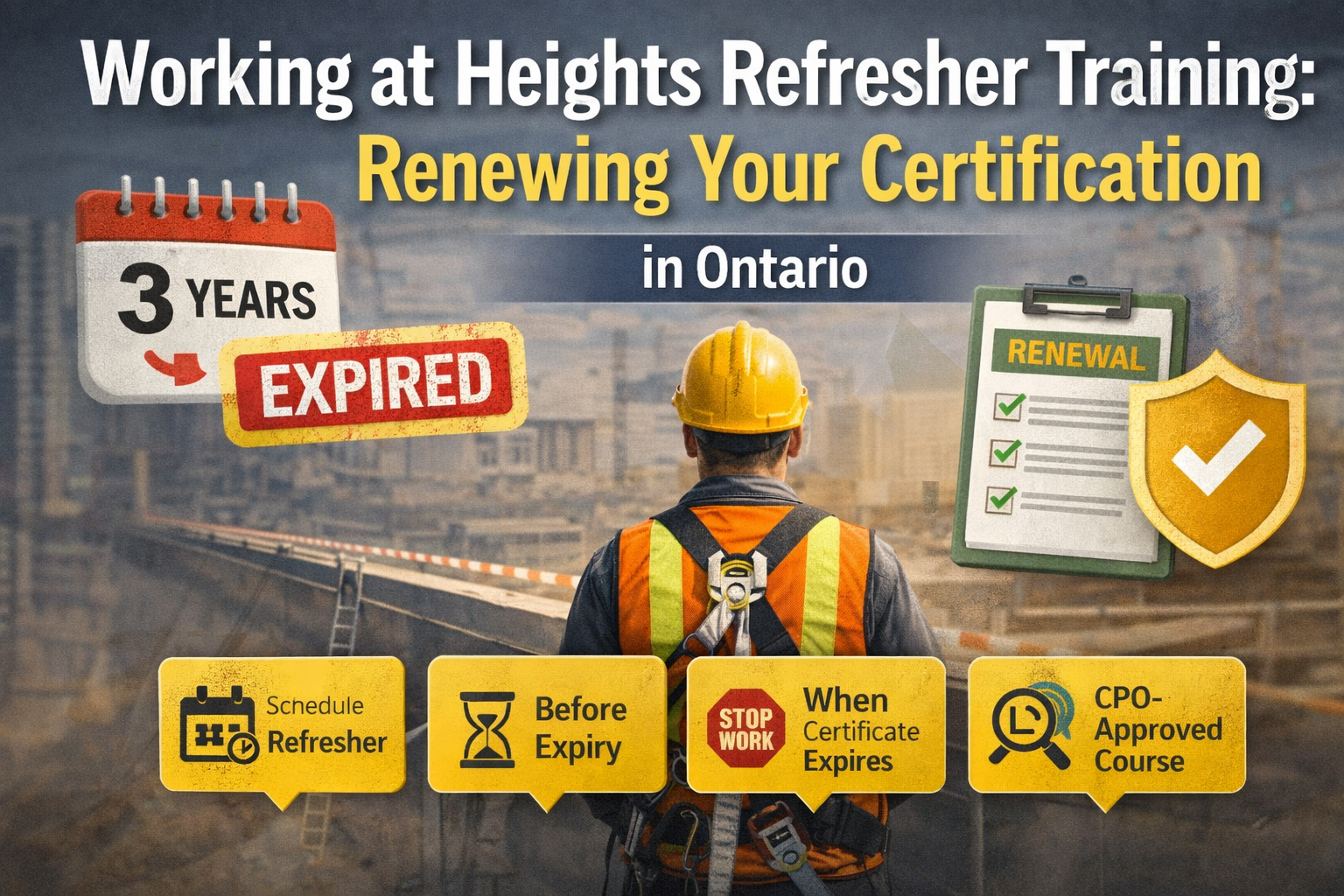
Ontario states that JHSC certification is generally valid for three years after successful completion of the approved training path, and refresher training is required every three years to maintain certification.
If a committee lets that lapse, it can create a compliance problem fast.
In real workplaces, the issue is rarely that people refuse training. The issue is timing. Certifications expire quietly. Then an employer finds out during a compliance review, after an incident, or when someone starts asking for records. Says Tyler Di Cristofaro
What JHSC Part 1 Training Actually Helps With
A good Part 1 course does more than explain the law.
It helps committee members become useful.
That means they should leave training able to:
- recognize obvious and non-obvious hazards
- understand how the internal responsibility system works
- participate in inspections with purpose
- support incident reviews
- make recommendations that are realistic
- understand where committee authority begins and ends
- communicate safety concerns without creating confusion
That practical side is where many workplaces see the real value. A trained committee can improve reporting, speed up follow-through, and reduce the gap between policy and actual work.
Common Workplace Hazards Covered in JHSC Training
JHSC training is built around real hazards that show up across Ontario workplaces. The goal is not just to recognize risks, but to understand how they develop and how to control them before someone gets hurt.
Physical Hazards
These are the most visible risks on site.
- slips, trips, and falls
- working at heights and fall exposure
- moving machinery and equipment
- falling objects and struck-by incidents
- noise and vibration exposure
Ergonomic Hazards
Often overlooked, but a major cause of injuries.
- repetitive motion tasks
- poor workstation setup
- lifting, pushing, and pulling strain
- awkward body positioning
Chemical Hazards
Common in industrial, construction, and maintenance environments.
- exposure to hazardous substances
- improper labeling or storage
- lack of WHMIS understanding
- airborne contaminants
Biological Hazards
More relevant in certain industries, but still important.
- mold exposure
- bacteria and viruses
- unsanitary working conditions
Safety System Failures
These are the root causes behind many incidents.
- lack of training
- poor communication between workers and supervisors
- missing or outdated safety procedures
- failure to follow inspection or reporting processes
Examples of JHSC Responsibilities in Real Workplaces
A Joint Health and Safety Committee is not just there to attend meetings. It plays an active role in improving workplace safety on an ongoing basis.
Workplace Inspections
JHSC members regularly inspect the workplace to identify hazards.
- Example: A warehouse committee member notices blocked emergency exits during a walkthrough. The issue is documented and corrected before it becomes a serious risk.
Incident and Accident Reviews
After an incident, the committee helps review what happened and why.
- Example: A worker slips on a wet surface. The committee reviews cleaning procedures, signage, and flooring conditions instead of blaming the worker.
Hazard Reporting and Follow-Up
JHSC members raise concerns and ensure corrective actions are tracked.
- Example:Workers report unsafe ladder usage. The committee recommends updated training and better equipment rather than ignoring the issue.
Policy and Procedure Input
Committees often contribute to safety policies and updates.
- Example:A company introduces a new piece of equipment. The JHSC reviews procedures to ensure safe operation before rollout.
Supporting the Internal Responsibility System
The committee helps maintain communication between workers and management.
- Example:Workers raise concerns about workload pressure affecting safety. The committee brings it to management with practical recommendations.
Common Questions Employers Ask Before Booking JHSC Training
How long does JHSC certification take?
It depends on scheduling and provider format, but the path includes Part 1, then Part 2, then later refresher training to maintain certification. Ontario guidance also indicates that certification remains valid for three years after successful completion of the approved program.
Does every workplace need a JHSC?
No. In Ontario, the requirement generally applies to workplaces with 20 or more workers. Smaller workplaces may instead require a health and safety representative.
Is Part 1 enough?
No. Part 1 is only the first step. Certification includes Part 2, and maintenance includes refresher training.
Should training be treated as compliance only?
That is a mistake. The best employers use JHSC training as both a compliance requirement and a workplace improvement tool.
Is JHSC training mandatory in Ontario?
Yes, for many workplaces.
If a workplace has 20 or more workers, Ontario law generally requires a Joint Health and Safety Committee with at least two certified members.
Smaller workplaces may require a health and safety representative instead.
What is the difference between JHSC Part 1 and Part 2?
JHSC Part 1
- covers general health and safety principles
- explains OHSA roles and responsibilities
- focuses on hazard recognition and basic risk control
JHSC Part 2
- focuses on workplace-specific hazards
- applies safety concepts to real job environments
- builds practical decision-making skills for the committee
Both are required to become fully certified.
What is the cost of JHSC certification in Ontario?
Costs can vary depending on the training provider and format.
For reference:
- JHSC Part 1 training is commonly priced between $300 and $500 per participant
- At Achieve Safety and Compliance, JHSC Part 1 Training is offered at $349
Additional costs may apply for Part 2 and refresher training.
How to Choose the Right JHSC Training Provider
Not all training experiences are equal, even when the course title looks similar.
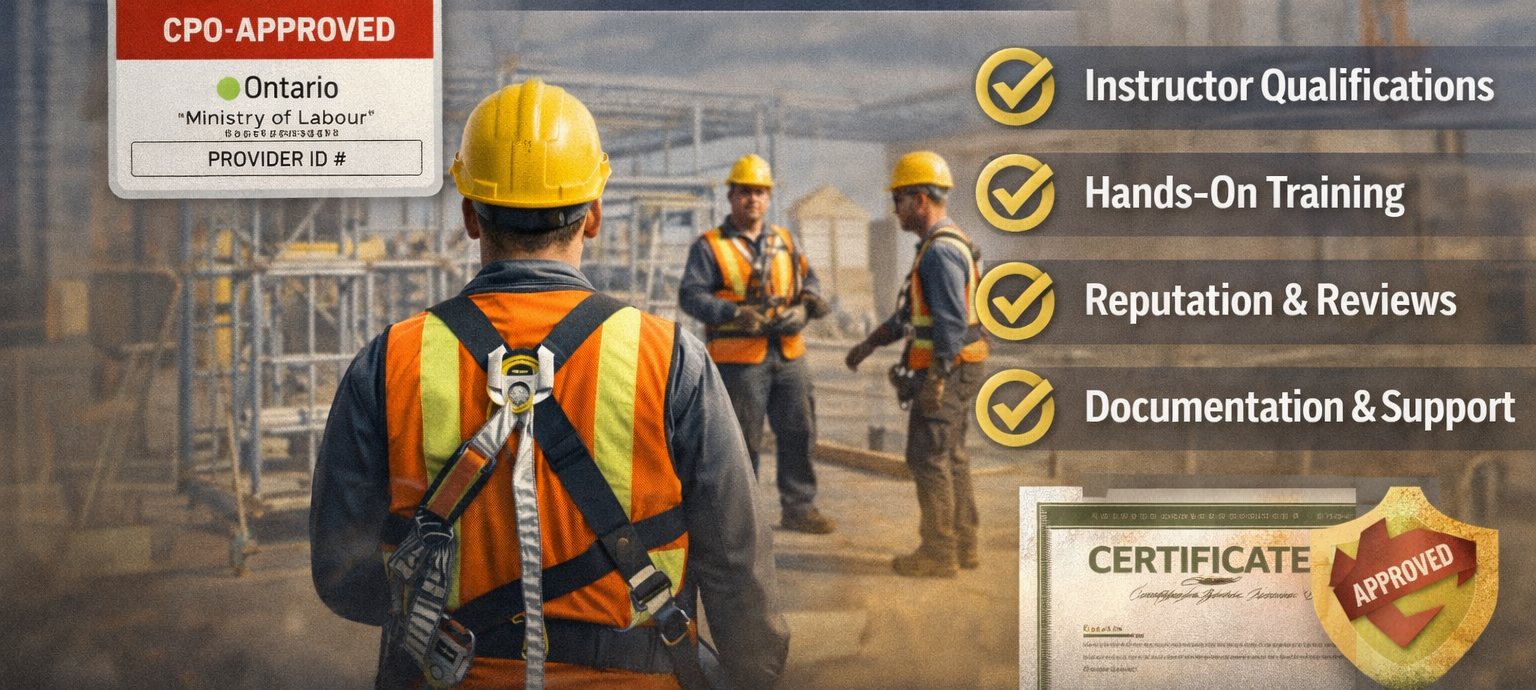
A good provider should offer:
- a course path aligned with Ontario requirements
- instructors who understand actual workplace risk
- a cpo approved course – Achieve Safety and compliance is a CPO approved training provider in Ontario.
- clear explanations without legal fluff
- real examples from Ontario workplaces
- practical guidance your committee can use after the course
- support for employers who also need broader compliance help
That last point matters more than most people think. Employers often book JHSC training because they know they need it. Then the training surfaces other issues like outdated policies, weak inspections, missing records, or confusion around responsibilities.
When that happens, it helps to work with a safety partner who understands the bigger picture, not just the classroom portion.
Why JHSC Training Matters Beyond Compliance
A committee that is trained properly can help a workplace:
- catch hazards earlier
- improve communication between workers and management
- reduce repeated safety issues
- support due diligence
- strengthen inspection quality
- improve incident follow-up
- build a more consistent safety culture
That is the difference between a committee that exists on paper and one that actually helps.
Finally,
If your workplace is trying to sort out JHSC training in Ontario, the path is straightforward once the structure is clear.
Choose the right committee members.
Make sure the training path is CPO approved.
Complete Part 1.
Move into Part 2.
Do not lose track of refresher timelines.
Most of all, treat certification as the start of a stronger safety system, not the end of an admin task.
For employers that want practical support, Achieve Safety and Compliance provides JHSC Part 1 Training along with broader safety consulting, compliance support, and workplace training solutions across Ontario.