- Ontario Workplace First Aid Kit Requirements: Quick Answer
- Which Law Establishes Ontario First Aid Kit Requirements?
- What Changed in Ontario’s First Aid Program in 2026?
- What Must Every Workplace First Aid Station Include?
- How Do You Choose the Correct First Aid Kit Size?
- Section 8 First Aid Kit: 1 to 5 Workers Per Shift
- Section 9 First Aid Kit: 6 to 15 Workers Per Shift
- Section 10 First Aid Kit: 16 to 199 Workers Per Shift
- First Aid Room Requirements for 200 or More Workers
- How Many First Aid Kits Does an Ontario Workplace Need?
- Where Should First Aid Kits Be Located?
- First Aid Requirements for Off-Site Workers and Mobile Crews
- First Aid Requirements on Construction Projects
- How Often Must Workplace First Aid Kits Be Inspected?
- What Should Not Be Kept in a Workplace First Aid Kit?
- Can Employers Add Supplies Beyond the Regulation 1101 Minimum?
- What First Aid Records Must Ontario Employers Keep?
- Does Every First Aid Treatment Have to Be Reported to WSIB?
- Is the WSIB Form 82 Poster Required?
- Are AEDs Mandatory in Ontario Workplaces?
- How Many Trained First Aiders Does a Workplace Need?
- Workplace First Aid Compliance Checklist
- Common First Aid Kit Compliance Mistakes
- Frequently Asked Questions About Ontario Workplace First Aid Kits
- Keep Your Ontario Workplace Ready to Respond
A workplace first aid kit in Ontario must match the number of workers employed on a shift at that location.
Employers covered by Ontario’s Workplace Safety and Insurance Act must follow Regulation 1101. The regulation establishes minimum requirements for first aid supplies, trained personnel, station locations, inspection records and first aid treatment records.
Buying a kit labelled “workplace compliant” does not automatically satisfy these duties.
The employer must confirm:
- The kit contains the prescribed supplies
- The kit size matches the workforce on the shift
- Supplies remain complete and in good condition
- The station is easy to find and access
- A properly certified first aider is present
- The required certificates, poster and inspection card are displayed
- Additional stations are provided when one location cannot serve workers promptly
This guide explains how to select the correct Ontario workplace first aid kit, what each kit must contain and how often it must be inspected.
Ontario Workplace First Aid Kit Requirements: Quick Answer
The minimum kit or facility requirement is based on the number of workers employed in any one shift at the place of employment.
| Workers on one shift | Minimum first aid provision | Required first aid certification |
|---|---|---|
| 1 to 5 workers | Section 8 first aid station and kit | At least one worker with Basic First Aid, called Emergency First Aid in Regulation 1101 |
| 6 to 15 workers | Section 9 first aid station and kit | At least one worker with Intermediate First Aid, called Standard First Aid in Regulation 1101 |
| 16 to 199 workers | Section 10 first aid station and kit, plus one stretcher and two blankets | At least one worker with Intermediate First Aid |
| 200 or more workers | Section 11 first aid room with prescribed equipment and furnishings | A registered nurse or qualified worker who meets the regulation’s requirements |
The threshold is based on workers per shift, not the employer’s total payroll.
For example, a company with 24 employees may fall under the 6-to-15-worker requirement if no more than 12 people work at that location on the same shift. The employer must still consider coverage during overlapping shifts, overtime, weekend work and other periods when the on-site headcount increases.
Ontario does not prescribe one universal ratio of kits to workers. The employer must provide enough first aid stations to make prompt treatment available. A large warehouse, multi-floor building or dispersed jobsite may need several stations even when the worker count only requires one minimum kit category.
The current WSIB First Aid Program guidance states that a first aider should be able to reach an injured worker quickly and gives two minutes as a practical example for assessing coverage.
Which Law Establishes Ontario First Aid Kit Requirements?
Regulation 1101 establishes first aid requirements for businesses covered by the Workplace Safety and Insurance Act.
The regulation addresses four connected parts of first aid readiness:
- Equipment: A properly stocked first aid box, stretcher, blankets or first aid room, depending on workforce size.
- Personnel: A worker with the required valid first aid certificate must be present and work near the station.
- Access: First aid stations must be positioned so injured workers can receive prompt treatment whenever work is in progress.
- Documentation: Employers must display prescribed information and maintain inspection and treatment records.
These requirements apply to employees regardless of employment status and extend to off-site work locations. Mobile crews and vehicles used for work can therefore require their own first aid arrangements.
The employer must pay for the first aid equipment and services required by the regulation. When an employer selects an existing employee as a designated first aider, WSIB guidance also requires the business to cover the approved training cost and the worker’s wages during training.
The complete legal requirements appear in Regulation 1101: First Aid Requirements.
What Changed in Ontario’s First Aid Program in 2026?
WSIB introduced its modernized First Aid Program on June 22, 2026.
The update aligned approved workplace first aid training with CSA Z1210:24 and changed the names used for two certification levels:
| Previous and regulatory name | Name used in the updated WSIB program |
|---|---|
| Emergency First Aid | Basic First Aid |
| Standard First Aid | Intermediate First Aid |
Regulation 1101 itself has not changed. It continues to use “Emergency First Aid” and “Standard First Aid,” while WSIB’s updated program uses “Basic First Aid” and “Intermediate First Aid.”
The certificates are treated as equivalents:
- Basic First Aid satisfies the Emergency First Aid requirement
- Intermediate First Aid satisfies the Standard First Aid requirement
Certificates issued by previously approved providers on or before June 21, 2026 remain valid until their expiry dates. Ontario first aid certificates are valid for three years from the date of issue.
Employers must now verify training through a WSIB-approved first aid training provider. Approved providers and their affiliates must display the WSIB First Aid Program badge.
Online-only first aid training does not satisfy the program requirements. WSIB permits certain blended courses that combine online theory with in-person instruction and skill demonstration.
The 2026 update changed training administration and terminology. It did not change:
- Worker-count thresholds
- Regulation 1101 kit contents
- First aid station requirements
- Quarterly inspection requirements
- First aid room thresholds
- Employer record-keeping duties
What Must Every Workplace First Aid Station Include?
A first aid kit is one component of a compliant first aid station.
Under Regulation 1101, the station must include:
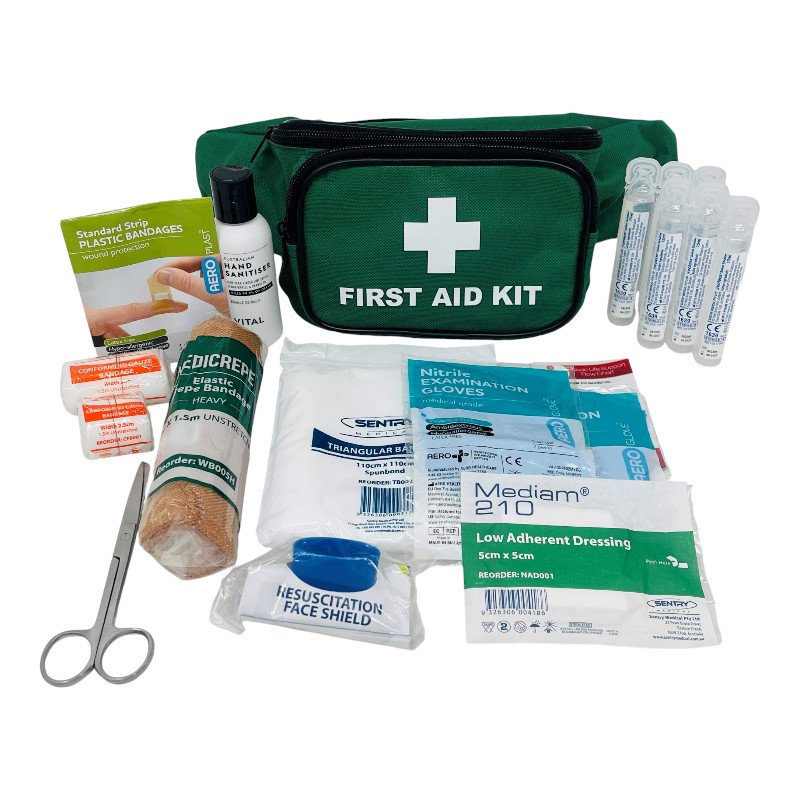
- A first aid box containing the required supplies
- The WSIB “In Case of Injury” poster, known as Form 82
- Valid certificates for the trained workers on duty
- An inspection card showing the latest kit inspection date
- The signature of the person who completed the inspection
WSIB also recommends posting a list of the first aiders serving that area.
The station must be under the charge of a qualified worker who works in its immediate vicinity. Placing a kit in one department while the designated first aider regularly works elsewhere may not provide the prompt response the regulation requires.
The first aid box must be large enough for its contents to remain visible and easily accessible. It should be portable and must not be stored in a locked cabinet, drawer or room.
Employers should identify the station with clear signage. New workers should learn its location and the names of available first aiders during workplace orientation.
How Do You Choose the Correct First Aid Kit Size?
Begin with the highest number of workers who may be present during any one shift at the location.
Include regular, part-time, temporary and other employees who meet the WSIA definition of a worker. Do not base the decision only on the average daily attendance.
The review should account for:
- Shift overlaps
- Overtime
- Seasonal staffing
- Temporary workers
- Maintenance shutdowns
- Weekend operations
- Separate buildings or floors
- Mobile and off-site crews
- Employees using work vehicles
- Workers temporarily assigned from another location
If the count crosses a threshold, the workplace must move to the corresponding first aid requirement.
Worker count is only the starting point
The statutory kit category establishes the minimum supplies. It does not determine whether one station can adequately serve the entire workplace.
An employer should also assess:
- Distance between workers and the station
- Building layout
- Locked or controlled-access areas
- Outdoor and remote work zones
- Machinery or production lines that delay movement
- Work performed on several floors
- Whether the designated first aider can respond promptly
- Hazards that may require additional supplies
- Whether used items can be replaced immediately
When the required station or first aid room is not easily accessible, section 12 requires the employer to establish additional stations.
Section 8 First Aid Kit: 1 to 5 Workers Per Shift
A workplace with no more than five workers on one shift must maintain a Section 8 first aid station.
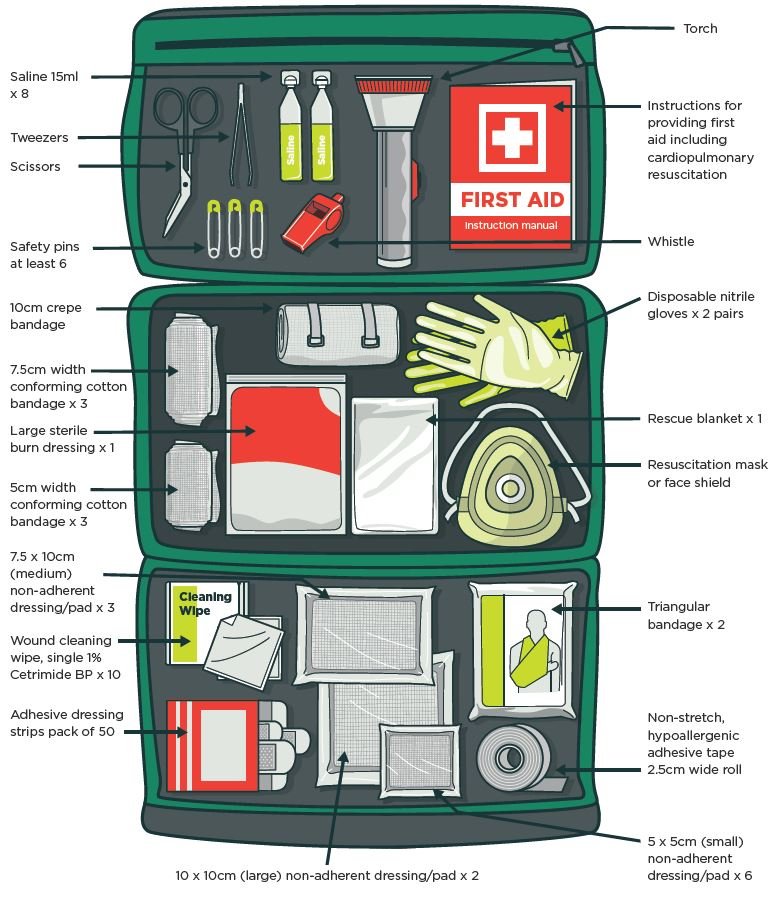
The kit must contain, at minimum:
| Required item | Minimum quantity |
|---|---|
| Current edition of a standard St. John Ambulance First Aid Manual | 1 |
| Card of safety pins | 1 |
| Individually wrapped adhesive dressings | 12 |
| Sterile gauze pads, 3 inches square | 4 |
| Gauze bandages, 2 inches wide | 2 rolls |
| Field dressings, 4 inches square, or four-inch sterile bandage compresses | 2 |
| Triangular bandage | 1 |
The station must be under the charge of a worker who holds a valid Basic First Aid certificate or its recognized equivalent and works in the immediate vicinity.
Small workplaces often miss compliance because they focus only on the box. The kit, trained first aider, certificates, Form 82 and inspection card function as one system.
Section 9 First Aid Kit: 6 to 15 Workers Per Shift
A workplace with more than five but no more than 15 workers on one shift requires a Section 9 first aid station.
The kit must contain:
| Required item | Minimum quantity |
|---|---|
| Current edition of a standard St. John Ambulance First Aid Manual | 1 |
| Card of safety pins | 1 |
| Individually wrapped adhesive dressings | 24 |
| Sterile gauze pads, 3 inches square | 12 |
| Gauze bandages, 2 inches wide | 4 rolls |
| Gauze bandages, 4 inches wide | 4 rolls |
| Individually wrapped sterile surgical pads suitable for pressure dressings | 4 |
| Triangular bandages | 6 |
| Splint padding | 2 rolls |
| Roll-up splint | 1 |
The person in charge of this station must hold a valid Intermediate First Aid certificate or recognized equivalent and work nearby.
A workplace moving from five to six workers crosses two compliance thresholds at once. It needs the larger Section 9 kit and an Intermediate First Aid certified worker rather than the Basic level required for a workforce of up to five.
What First Aid Records Must Ontario Employers Keep?
Regulation 1101 requires employers to record the circumstances of workplace accidents and the first aid treatment provided.
The record must include:
- The injured worker’s description of what happened
- Date and time of the accident
- Names of witnesses
- Nature of the injury
- Exact location of the injury on the worker’s body
- Date and time first aid was provided
- Nature of each first aid treatment given
The record should be completed as soon as practical while the details remain clear.
If the worker receives follow-up first aid, each treatment should be recorded. This could include replacing a dressing, checking an injury or providing further observation.
First aid records and inspection records are different
Employers must maintain two separate types of documentation:
| Record | What it documents |
|---|---|
| First aid treatment record | The accident, injury and treatment provided to the worker |
| Kit inspection card | The date of the latest kit inspection and the inspector’s signature |
An inspection card does not replace the accident and treatment record. A workplace needs both when first aid has been administered.
Protect the worker’s medical information
Treatment records contain personal health information and should be stored securely.
Supervisors, safety representatives and investigators may need access to relevant incident information. That does not mean the worker’s complete medical details should be displayed at the first aid station or openly shared with other employees.
The public inspection card should document the condition of the kit. Individual treatment details should be maintained in a separate, controlled record.
Does Every First Aid Treatment Have to Be Reported to WSIB?
Every workplace injury or illness should be reported internally and recorded as required. An employer does not necessarily submit a WSIB claim when the worker receives first aid only.
WSIB reporting is generally required when a workplace injury or illness results in:
- Health care treatment beyond first aid
- Lost time from work
- Reduced earnings
- Modified duties at less than regular pay
- Modified work at regular pay continuing beyond the prescribed reporting period
- Permanent impairment
The employer should not delay medical care while deciding whether an incident is reportable.
The first aider provides immediate assistance within the limits of their training. The employer then determines the required notification, investigation and WSIB reporting steps based on the outcome.
First aid records can also reveal recurring hazards. Several minor cuts from the same machine, for example, may indicate a guarding, handling or procedural problem even when none of the individual cases requires outside medical treatment.
Is the WSIB Form 82 Poster Required?
The WSIB “In Case of Injury” poster, known as Form 82, must be displayed at every first aid station.
The poster explains the steps workers and employers must take after a workplace injury or illness. It should be visible, current and readable.
Employers covered by WSIB must also keep Form 82 posted in conspicuous locations throughout the workplace.
A current copy can be downloaded or ordered through the official WSIB Form 82 page.
Every first aid station should display:
- Form 82
- Valid certificates for trained workers on duty
- The first aid kit inspection card
- A list of designated first aiders serving the area
The information should be updated when certificates expire, staffing changes or first aid responsibilities move to another worker.
Are AEDs Mandatory in Ontario Workplaces?
Automated external defibrillators are not required by Regulation 1101.
An employer may still choose to provide an AED based on:
- Workforce size and age profile
- Workplace risk assessment
- Distance from emergency medical services
- Public access to the facility
- Physical demands of the work
- Site layout
- Industry requirements
- Contractual or organizational policies
Where an AED is provided, it should be:
- Clearly marked
- Accessible during working hours
- Included in emergency procedures
- Checked according to manufacturer instructions
- Monitored for battery and electrode-pad expiry
- Used by workers who have received appropriate instruction
An AED does not replace the Regulation 1101 first aid station, required supplies or certified first aider.
How Many Trained First Aiders Does a Workplace Need?
Regulation 1101 does not establish a fixed first-aider-to-worker ratio.
At least one worker with the required valid certificate must be present and available whenever work is in progress. The appropriate certification depends on the number of workers on the shift:
- Up to five workers: Basic First Aid
- Six or more workers: Intermediate First Aid
Meeting this minimum may require more than one certified employee.
One designated first aider may not provide reliable coverage when that person:
- Takes vacation or sick leave
- Attends meetings away from the work area
- Regularly works off-site
- Works only part of the operating schedule
- Cannot reach all work areas promptly
- Is assigned duties that prevent an immediate response
Employers should train enough people to cover every shift, work area and foreseeable absence.
The 2026 WSIB First Aid Program requires employers to choose a WSIB-approved provider. Certificates issued in Ontario are valid for three years.
Workplace First Aid Compliance Checklist
Use this checklist to review each workplace, shift and off-site crew separately.
Determine the required provision
- Count the highest number of workers who may be present on one shift
- Include shift overlaps, temporary staff and overtime
- Select the applicable Section 8, 9 or 10 kit
- Provide a first aid room when 200 or more workers are present
- Add a stretcher and two blankets when the workforce exceeds 15
- Review special requirements for vehicles and mobile crews
Check each first aid station
- Required kit contents are complete
- Supplies are clean and in good condition
- Sterile packages remain sealed
- Expired items have been replaced
- Contents are visible and organized
- The kit is portable
- The station is unlocked and unobstructed
- First aid signage is easy to see
- Form 82 is posted
- Valid first aid certificates are displayed
- The inspection card is current
- Designated first aiders are identified
Verify trained-person coverage
- At least one properly certified first aider is present on every shift
- The certification level matches the shift headcount
- Certificates have not expired
- The first aider works close to the station
- Coverage exists during breaks, absences and overtime
- Off-site crews have appropriate trained-person coverage
- Workers know how to contact the first aider
Maintain inspections and records
- Every kit receives a documented inspection at least quarterly
- Kits are rechecked after supplies are used
- The latest inspection date is recorded
- The inspector signs the inspection card
- Missing or damaged supplies are replaced promptly
- All first aid treatments are documented
- Treatment records are stored securely
- Incidents are reviewed for corrective action
- WSIB reporting requirements are assessed after each injury or illness
First aid readiness should be included in the organization’s broader health and safety program. This helps employers track certificates, station locations, inspections, emergency procedures and corrective actions through one coordinated system.
Common First Aid Kit Compliance Mistakes
Buying a kit without checking its contents
Commercial labels such as “office kit” or “25-person kit” do not prove that the contents meet Regulation 1101.
The employer should compare the inventory with the applicable section of the regulation or confirm that the kit meets the accepted CSA Z1220 workplace kit standard.
Using the employer’s total workforce instead of workers per shift
The kit category depends on the number of workers employed on one shift at the place of employment.
A business with many employees spread across several locations may have different requirements at each workplace. A smaller company can also cross a threshold during shift overlaps or seasonal hiring.
Keeping the first aid kit locked away
Workers must be able to access first aid supplies promptly. A kit in a locked office or cabinet may be unavailable when the person with the key is absent.
Relying on one first aider for every shift
A certificate on the wall does not provide coverage when the certificate holder is off-site, on vacation or working a different shift.
Missing the stretcher and blankets
Workplaces with 16 to 199 workers on a shift require one stretcher and two blankets in addition to the Section 10 kit.
Inspecting only once a year
Regulation 1101 requires inspections at least quarterly. High-use kits should be reviewed more often and after every incident where supplies are removed.
Leaving expired certificates posted
A first aid certificate is valid for three years in Ontario. An expired certificate does not meet the trained-person requirement.
Stocking medication in the kit
Pain relievers, antihistamines and ointments should not be placed in the general workplace first aid box.
Ignoring work vehicles and off-site crews
First aid responsibilities continue when employees leave the main facility. Mobile workers need accessible supplies and trained-person coverage appropriate to the crew.
Recording the kit inspection but not the treatment
The inspection card and treatment record serve different purposes. Employers must document the circumstances of the accident and the first aid provided.
These issues can be identified during an Ontario workplace safety audit before they affect an emergency response or become an inspection finding.
Frequently Asked Questions About Ontario Workplace First Aid Kits
Is a first aid kit mandatory in every Ontario workplace?
Businesses covered by the Workplace Safety and Insurance Act must provide first aid equipment, facilities and trained personnel at their workplaces, including applicable off-site locations.
What size first aid kit does my workplace need?
The minimum kit is based on the number of workers on one shift at the location:
- Section 8 for 1 to 5 workers
- Section 9 for 6 to 15 workers
- Section 10 for 16 to 199 workers
- A first aid room for 200 or more workers
How often must an Ontario workplace first aid kit be inspected?
Every kit must be inspected at least quarterly. The inspection card must show the latest inspection date and the inspector’s signature.
Do first aid kits have to be checked after use?
The law requires supplies to remain complete and in good condition at all times. Employers should check and restock a kit immediately after supplies are used rather than waiting for the next quarterly inspection.
Can a workplace use a CSA first aid kit?
Yes. WSIB states that businesses can meet the Regulation 1101 supply requirements by providing kits that meet CSA Z1220, First Aid Kits for the Workplace. The employer must still satisfy station access, training, posting, inspection and record-keeping duties.
Can medication be kept in an Ontario workplace first aid kit?
Over-the-counter and prescription medications should not be included. Administering medication is outside the normal scope of workplace first aid training and may create additional medical risk.
Does every workplace need an AED?
No. Regulation 1101 does not require an AED. Employers may provide one based on their hazards, workforce, site characteristics or organizational policy.
Does every workplace need a stretcher?
A stretcher and two blankets are required when more than 15 but fewer than 200 workers are employed on one shift. A prescribed stretcher is also required in a first aid room serving 200 or more workers.
How many first aid kits are required?
There is no fixed kit-to-worker ratio. Employers must provide enough properly placed stations to give workers prompt access to first aid.
Is CPR certification by itself enough?
No. CPR training alone is not equivalent to an approved workplace first aid certificate. CPR is included as a component of WSIB-recognized Basic and Intermediate First Aid programs.
Can workplace first aid training be completed entirely online?
No. WSIB permits approved blended training, but online-only courses do not meet its workplace first aid requirements because participants must demonstrate practical skills.
Who pays for first aid supplies and designated-worker training?
The employer pays for the required kits, stations and first aid services. When an existing employee is selected as a designated first aider, the employer must also cover the approved course cost and the worker’s wages during training.
Keep Your Ontario Workplace Ready to Respond
A compliant first aid program connects the correct supplies with accessible stations, certified people and reliable records.
Employers should review their arrangements whenever the workforce, shifts, layout or work location changes. A kit selected for five employees may no longer be suitable after hiring a sixth worker. One central station may also become inadequate when operations expand to another floor or building.
Achieve Safety and Compliance helps Ontario employers assess workplace procedures, develop health and safety programs, train workers and identify compliance gaps.
For help reviewing your first aid arrangements or broader workplace safety program, contact Achieve Safety and Compliance at (647) 523-7554.