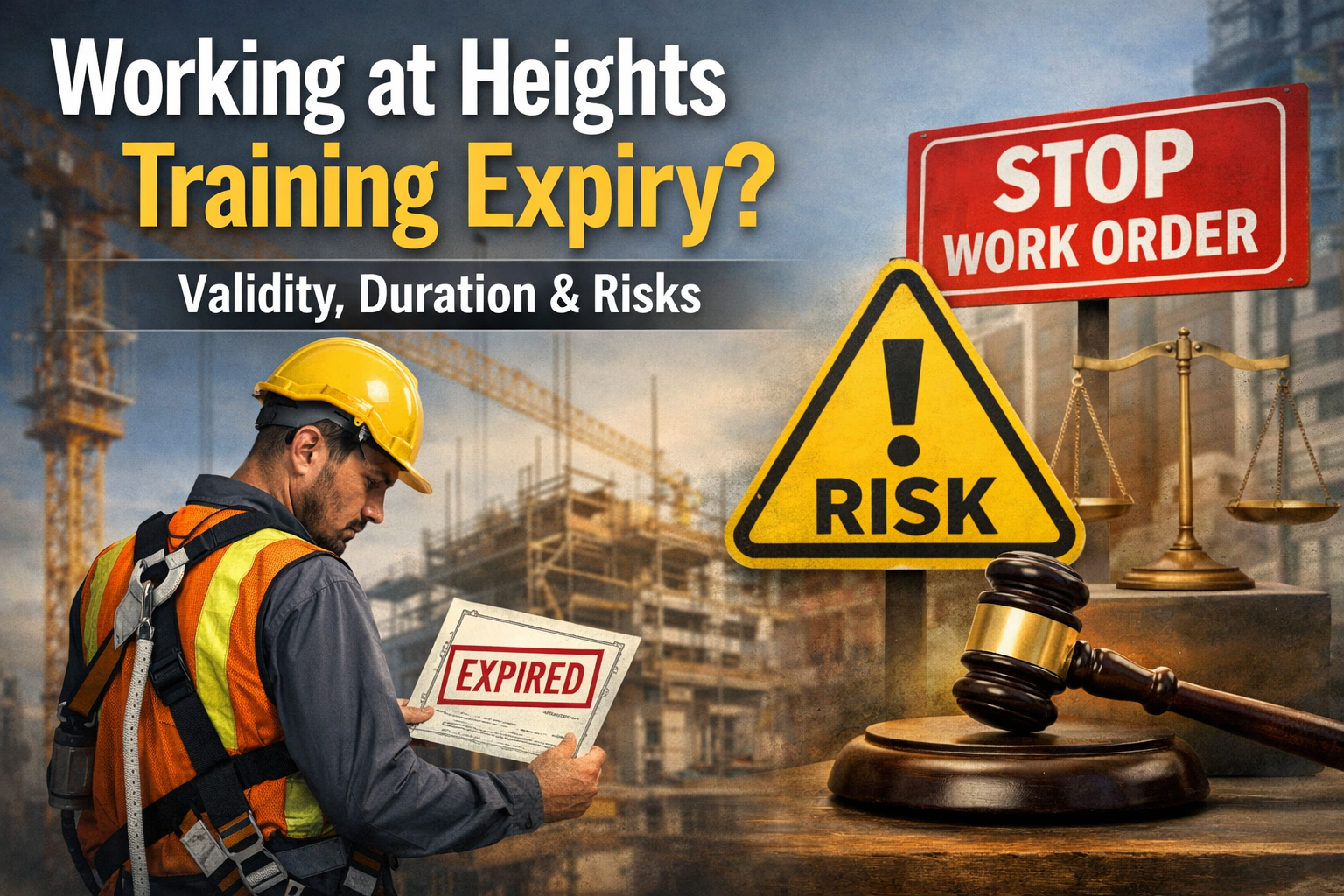

Ontario construction sites must follow strict OHSA requirements to protect workers from falls, struck-by hazards, equipment risks, and unsafe work conditions. This guide outlines the key safety duties for contractors, including training, supervision, documentation, and job site controls. Use it to confirm compliance or request an Achieve Safety audit for full site readiness.
- Intro
- Why Construction Site Safety Compliance Matters
- Key OHSA Responsibilities for Contractors in Ontario
- Required Training for Construction Workers in Ontario
- Working at Heights (WAH) Training
- WHMIS 2015 Training
- Supervisor Competency Training
- Fall Protection and Ladder Safety Training
- Equipment and Tool Training
- Confined Space Awareness or Entry Training
- First Aid Certification
- Trade Specific Competency Training
- Hazard Assessments and Job Site Planning
- Pre Job Hazard Assessment
- Daily or Task Based Hazard Assessments
- Safe Work Procedures and Job Planning
- Coordinating Subcontractors
- Preparing the Site for Work
- Fall Protection and Working at Heights Requirements
- Working at Heights (WAH) Certification
- Fall Protection Systems
- Ladder Safety Requirements
- Roof Work and Edge Protection
- Scaffold Safety
- Supervision and Monitoring
- Equipment Safety and Machine Operation Controls
- Excavation and Trenching Requirements
- Electrical Safety and Overhead Powerlines
- Required Documentation on Construction Sites
- Get a Construction Site Safety Audit
- FAQs
- What are the key safety requirements for contractors in Ontario?
- Do construction workers need Working at Heights training?
- How often should a construction site be inspected?
- Are contractors responsible for subcontractor safety?
- What documents do inspectors ask for first?
Intro
Construction sites carry some of the highest injury risks in Ontario, which is why the Occupational Health and Safety Act sets very clear rules for contractors. These rules focus on preventing falls, controlling equipment hazards, managing high-risk work, and ensuring workers are trained and supervised.
Many contractors struggle not because they ignore safety, but because construction sites change quickly. New hazards appear as the job progresses, and even routine tasks can lead to serious injuries when controls are missing or out of date.
This guide explains the essential OHSA requirements that every contractor must follow to keep workers safe and avoid Ministry of Labour orders. It covers training, documentation, supervision, job site inspections, and the controls needed for common construction hazards.
If you want a full review of your compliance level, Achieve Safety OHSA compliance experts in Onatrio can perform a construction consulting for safety audit or gap assessment tailored to your project.
Why Construction Site Safety Compliance Matters
Construction sites are some of the most hazardous workplaces in Ontario. Falls, struck-by incidents, equipment failures, electrical contact, and poor housekeeping can cause serious injuries within seconds. Because of these risks, the Occupational Health and Safety Act and the Construction Projects Regulation set strict rules for contractors, supervisors, and workers.
- Contractor → must ensure → work is planned, supervised, and safe
- Supervisor → enforces → safe practices and corrects hazards
- Worker → follows → training and uses required protective equipment
Compliance is not just about avoiding fines. It protects workers, prevents delays, reduces insurance costs, and keeps projects moving smoothly. A well managed site shows professionalism and helps contractors maintain good standing with clients, inspectors, and project owners.
Many problems occur because construction sites change rapidly. Hazards shift as new trades arrive, equipment moves, and tasks evolve. Without strong oversight, even small gaps can lead to serious incidents. Achieve Safety supports contractors with audits, training, and gap assessments to help them stay ahead of these risks.
Key OHSA Responsibilities for Contractors in Ontario
Contractors in Ontario have clear legal duties under the Occupational Health and Safety Act and the Construction Projects Regulation. These responsibilities apply on every project, regardless of size, location, or type of work. Compliance begins with understanding what the law expects from constructors, employers, supervisors, and workers on a construction site.
- Contractor → plans → work so hazards are controlled before tasks begin
- Supervisor → ensures → workers follow safe practices and use protective equipment
- Worker → performs → tasks according to training and site rules
Key OHSA responsibilities include:
-
Ensuring workers receive proper training for their tasks
-
Appointing a competent supervisor for the project
-
Providing safe equipment and maintaining it in good condition
-
Completing hazard assessments and developing safe work procedures
-
Controlling high risk activities such as working at heights, excavation, and electrical work
-
Inspecting the site regularly to identify new hazards
-
Keeping required documentation on site
-
Communicating hazards and safety expectations to all trades and workers
When contractors understand and apply these requirements consistently, the job site becomes safer and more organized.
Required Training for Construction Workers in Ontario
Training is one of the strongest predictors of safety performance on a construction site. Ontario law requires contractors to ensure that every worker is trained, competent, and able to perform their tasks safely. Inspectors often ask for training records first because they show whether the employer has met basic legal duties.
- Worker Training → builds → competency and hazard awareness
- Contractor → provides → training that meets OHSA and Construction Projects Regulation requirements
Construction workers in Ontario must receive training in the following areas:
Working at Heights (WAH) Training
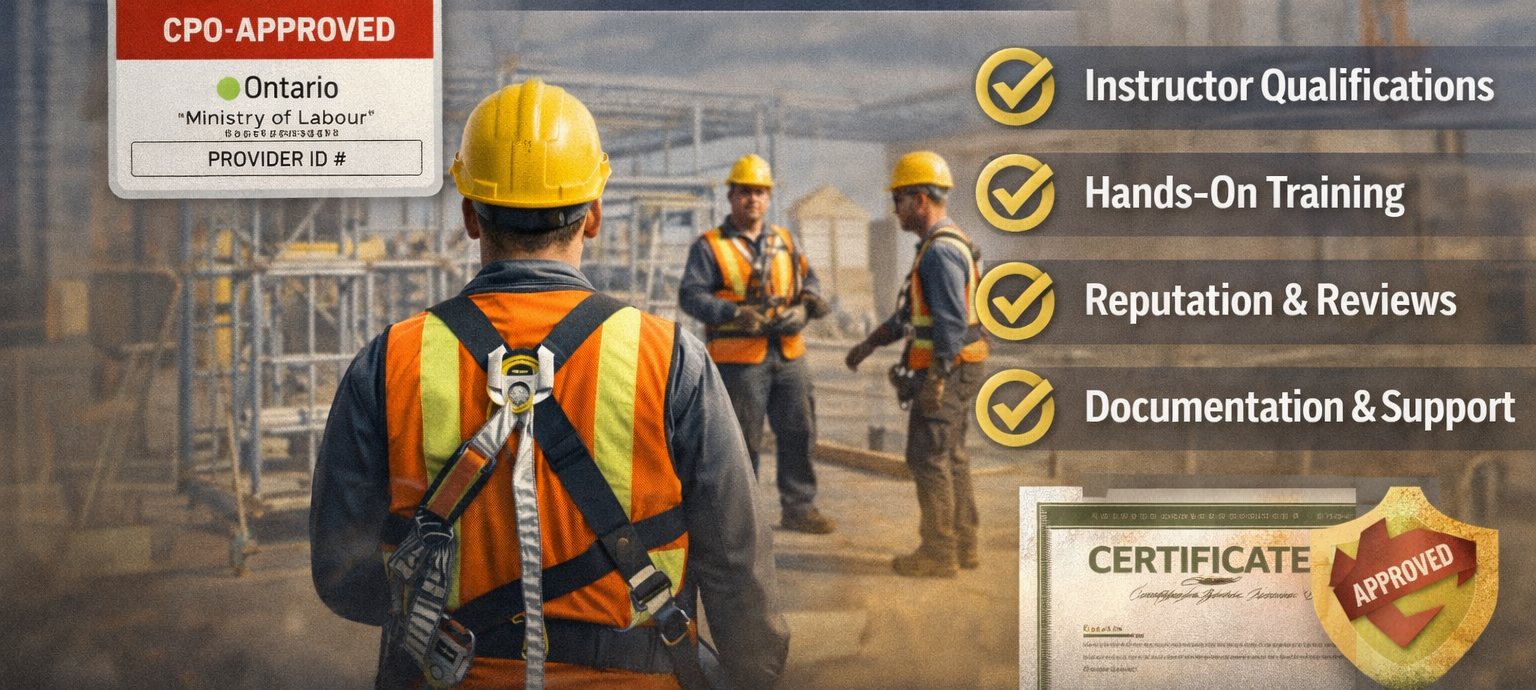
Required for anyone using ladders, scaffolds, roofs, or elevated platforms. This is one of the most important legal requirements on a construction site. Workers must hold a valid WAH certificate from an approved training provider.
WHMIS 2015 Training
Required for all workers who may be exposed to hazardous products. Workers learn how to read labels, understand pictograms, and follow safe handling procedures.
Supervisor Competency Training
Supervisors must understand the law, communicate hazards, monitor work, and correct unsafe behaviour. A competent supervisor is a legal requirement under OHSA.
Fall Protection and Ladder Safety Training
Fall hazards exist on nearly every construction site. Workers must be trained on ladder setup, guardrails, travel restraint systems, and how to prevent slips and falls.
Equipment and Tool Training
Workers must be trained and competent when using:
-
Power tools
-
Scaffolds
-
Aerial lifts
-
Material handling equipment
-
Cutting and drilling tools
-
Specialized construction machinery
Training must match the specific equipment being used.
Confined Space Awareness or Entry Training
If work involves tanks, pits, vaults, or enclosed spaces, proper confined space training is required.
First Aid Certification
Each project must have a sufficient number of trained first aid responders based on WSIB Regulation 1101.
Trade Specific Competency Training
Electricians, roofers, demolition crews, and other specialized trades require additional training to match their job hazards.
Contractors must keep training records on site at all times. Missing or outdated records often result in Ministry of Labour orders. Achieve Safety provides health and safety training in Ontario to help contractors meet these requirements quickly and accurately.
Hazard Assessments and Job Site Planning
Every construction project in Ontario must begin with a clear understanding of the hazards present on site. Work is constantly changing, so contractors must assess hazards before tasks start and continue evaluating them as conditions shift. Proper planning prevents injuries, delays, and Ministry of Labour orders.
- Hazard Assessment → identifies → risks that could harm workers
- Contractor → plans → controls to eliminate or reduce those risks
Key planning duties include:
Pre Job Hazard Assessment
Before workers arrive, the contractor must identify site specific hazards such as:
-
Fall hazards
-
Overhead powerlines
-
Excavations
-
Confined spaces
-
Traffic and equipment movement
-
Structural instability
-
Slips, trips, and housekeeping hazards
-
Hazardous materials on site
This assessment guides the creation of safe work procedures and helps supervisors prepare workers.
Daily or Task Based Hazard Assessments
Construction sites change every day. Contractors should review hazards at the start of each shift or whenever tasks change. This is often done through a tailgate meeting or daily hazard review.
Safe Work Procedures and Job Planning
Workers must have clear instructions on how to complete tasks safely. Contractors need written procedures for high risk tasks such as:
-
Working at heights
-
Cutting and drilling
-
Trenching and excavation
-
Demolition
-
Crane and hoisting operations
Safe work procedures reduce confusion and help workers follow consistent, safe methods.
Coordinating Subcontractors
Multiple trades may be performing tasks simultaneously. Coordination prevents conflicting work, overlapping hazards, and unsafe conditions.
Contractor → communicates → site rules and expectations to all trades
Preparing the Site for Work
This includes:
-
Securing entrances
-
Setting up fencing or barriers
-
Installing signage
-
Setting up material storage areas
-
Ensuring emergency access routes are clear
Good planning makes the worksite organized, predictable, and safe. Achieve Safety can assist contractors with hazard assessments and job site planning through structured audits and safety consulting.
Fall Protection and Working at Heights Requirements
Falls remain the leading cause of injuries on Ontario construction sites. Because of this, OHSA and the Construction Projects Regulation set strict rules for any work done at height. Contractors must ensure workers are trained, protected, and supervised whenever they work near an edge, on a ladder, or on elevated platforms.
Working at Heights Training → builds → worker ability to prevent falls
Contractor → provides → fall protection systems and safe access
Working at Heights (WAH) Certification
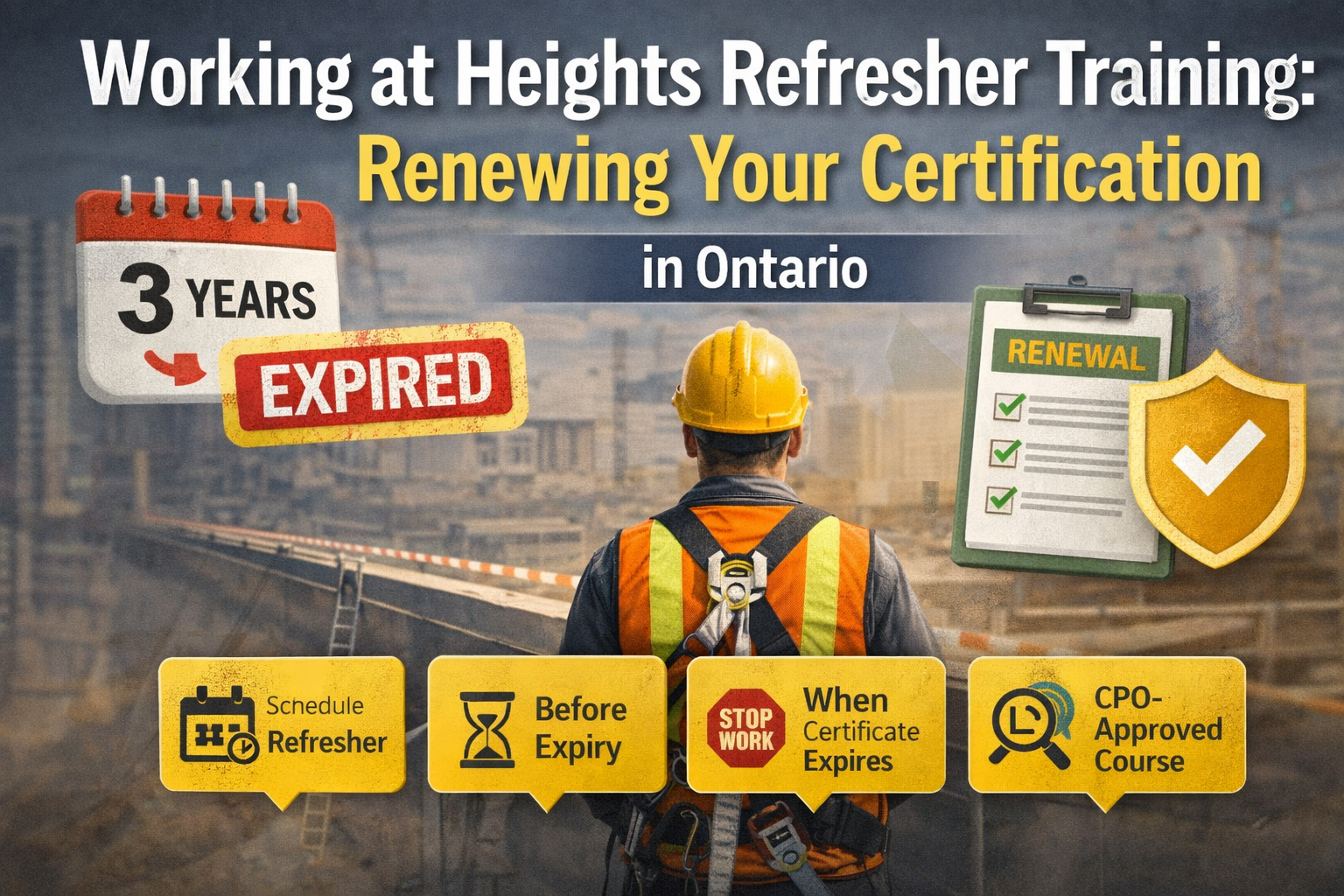
Any worker who uses a ladder, scaffold, roof, or elevated platform must complete Working at Heights training from an approved provider. Certificates must be valid and available on site. Supervisors must verify that workers have proper training before assigning tasks.
Fall Protection Systems
When workers are exposed to fall hazards, contractors must install appropriate fall protection systems. These may include:
-
Guardrails
-
Travel restraint systems
-
Fall arrest systems
-
Safety nets
-
Warning barriers
-
Scaffolds with proper platforms and guardrails
The type of system depends on the task and height.
Ladder Safety Requirements
Ladders must be used safely and inspected before each shift. Contractors must ensure workers know how to:
-
Choose the right ladder
-
Maintain three points of contact
-
Set up ladders at the correct angle
-
Secure ladders to prevent movement
Achieve Safety provides ladder safety training that aligns with OHSA and CSA CAN3 Z11 standards.
Roof Work and Edge Protection
Workers on roofs must have clear access points, secure anchor points, controlled access zones, and written procedures. Weather conditions must also be monitored.
Scaffold Safety
Scaffolds must be erected by competent workers. They must include guardrails, toe boards, stable platforms, and proper bracing.
Supervision and Monitoring
Supervisors must ensure workers use fall protection correctly at all times. They must stop unsafe practices immediately.
- Supervisor → monitors → workers for fall hazards and correct equipment use
Fall protection is one of the first things inspectors check during a site visit. Missing equipment or improper setup often results in orders. A construction site audit from Achieve Safety can confirm whether your fall protection program meets OHSA expectations.
Equipment Safety and Machine Operation Controls
Construction equipment creates some of the highest risk conditions on site. Unsafe operation can cause struck by incidents, rollovers, crush injuries, and property damage. Contractors must ensure machines are inspected, maintained, and operated only by competent workers.
- Equipment Inspection → confirms → machines are safe to use
- Competent Operator → prevents → mechanical and operational failures
Key requirements:
-
Inspect machinery daily before use
-
Repair defective equipment immediately
-
Ensure only trained and competent operators use machinery
-
Provide safe access, clear travel paths, and communication signals
-
Keep workers out of equipment blind spots
Maintain lockout procedures during service or repair
Excavation and Trenching Requirements
Excavations and trenches present collapse hazards that can trap or suffocate workers. Contractors must follow strict procedures before anyone enters or works near a trench.
Trench Assessment → identifies → soil stability and collapse risks
Protective System → prevents → cave ins and worker entrapment
Requirements include:
-
A competent worker must inspect the trench daily
-
Soil type must be identified before entry
-
Protective systems required based on soil classification
-
Install trench boxes, shoring, or benching where needed
-
Keep heavy equipment away from trench edges
-
Provide safe access such as ladders or ramps
-
Remove water and control ground movement
Electrical Safety and Overhead Powerlines
Electrical hazards can cause shock, burns, or fatal contact. Construction sites often involve temporary power, tools, and overhead lines.
- Electrical Hazard Control → prevents → contact injuries and fires
Contractors must:
-
Maintain minimum approach distances from overhead powerlines
-
Use a competent signaler when working near energized lines
-
Inspect cords, panels, and tools for damage
-
Ground and bond equipment correctly
-
Use GFCIs on all temporary power circuits
-
Install lockout procedures during electrical work
Required Documentation on Construction Sites
Inspectors frequently request documents as soon as they arrive. Missing documents reflect poor supervision and often lead to orders.
- Documentation → proves → compliance with OHSA requirements
Contractors must keep:
-
Health and safety policy
-
Workplace violence and harassment policy
-
Worker training records including WAH and WHMIS
-
JHSC meeting minutes or representative information
-
Notice of Project (if applicable)
-
Daily equipment logs
-
Incident investigations
-
Safe work procedures
-
Fall protection work plans
-
Hazard assessments
Achieve Safety can organize documentation systems and prepare contractors for MLITSD inspections.
Get a Construction Site Safety Audit
Construction work moves fast. Hazards change quickly. A professional safety audit helps contractors stay ahead of risks and avoid enforcement issues.
- Achieve Safety OHSA Audit → identifies → hazards, training gaps, documentation issues
- Action Plan → guides → contractors toward full OHSA compliance
An audit reviews:
-
Fall protection
-
Equipment operation
-
Electrical hazards
-
Excavations
-
Housekeeping
-
Training records
-
Documentation
-
High risk activities
-
Supervisor management practices
Contractors who schedule periodic audits build safer, more compliant sites and reduce downtime from MLITSD orders.
FAQs
What are the key safety requirements for contractors in Ontario?
Contractors must train workers, control hazards, plan work, inspect the site, provide safe equipment, and follow the Construction Projects Regulation under OHSA.
Do construction workers need Working at Heights training?
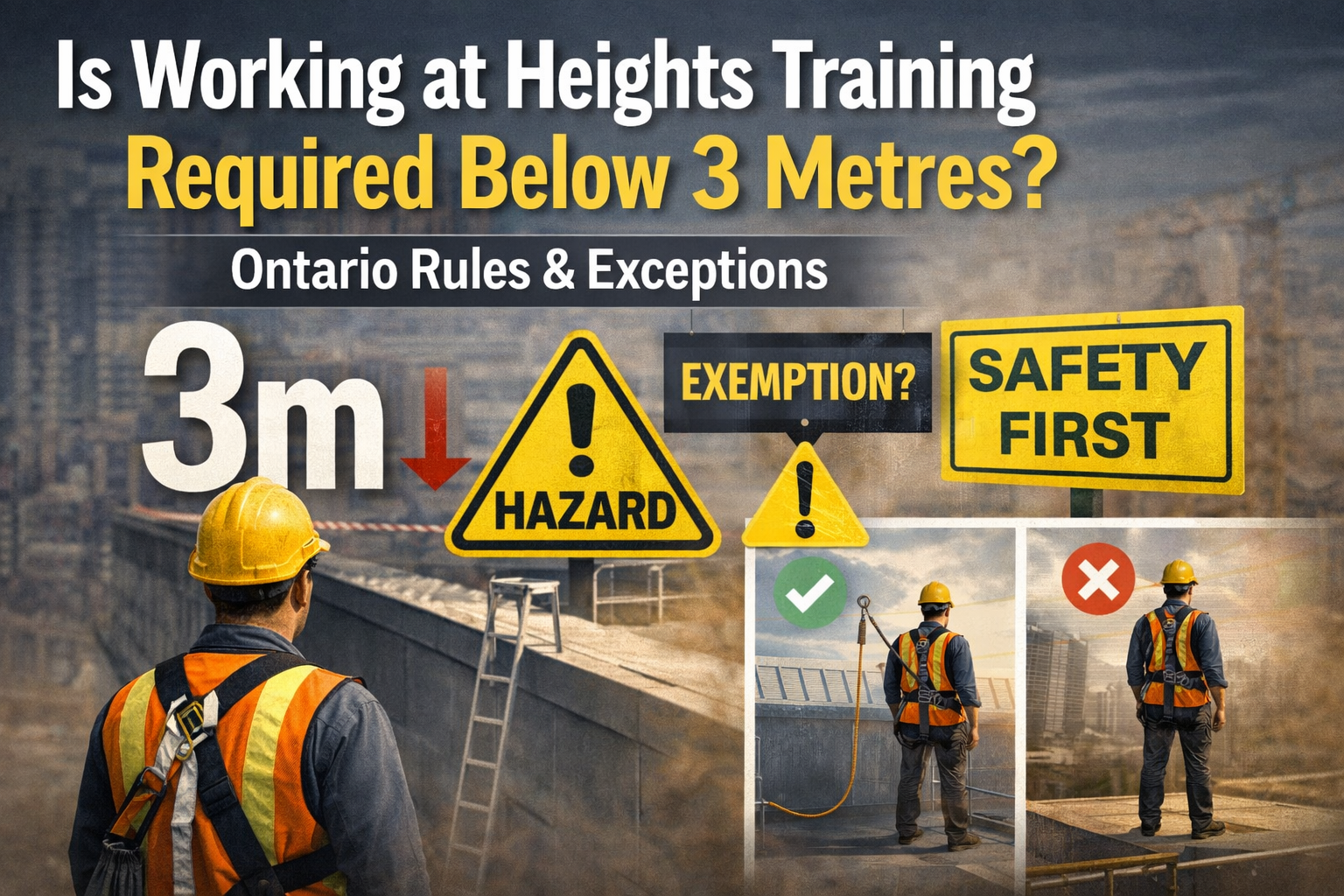
Yes. Any worker exposed to fall hazards must complete approved Working at Heights training.
How often should a construction site be inspected?
Daily. Supervisors must inspect the site and correct hazards before work begins.
Are contractors responsible for subcontractor safety?
Yes. The constructor and contractor must ensure all trades follow safety rules and work safely.
What documents do inspectors ask for first?
Training records, hazard assessments, safe work procedures, JHSC documents, and fall protection plans.