- Download the Free Ontario Workplace Safety Training Poster
- Is Workplace Safety Training Mandatory in Ontario?
- 1. Worker and Supervisor Health and Safety Awareness
- 2. WHMIS Training
- 3. Working at Heights Training
- 4. First Aid and CPR
- 5. Forklift Operator Training
- 6. Mobile Elevating Work Platform Training
- 7. Lockout, Tagout and Electrical Safety
- 8. Personal Protective Equipment
- 9. Hand and Power Tool Safety
- 10. Fire, Spill and Emergency Response
- How Often Should Workplace Safety Training Be Renewed?
- What Should Ontario Employers Keep in Their Training Records?
- Build a Training Program Around Your Real Workplace Hazards
- Frequently Asked Questions
Learn which workplace safety training may be required in Ontario, who needs it and when. Download the free Achieve Safety training poster.
Which workplace safety training courses are actually required in Ontario?
There is no single list of ten certificates that applies to every employer or worker. Training requirements depend on the Occupational Health and Safety Act, applicable regulations, the industry, the equipment being used and the hazards workers may encounter.
Some programs apply broadly across Ontario workplaces. Others become necessary when workers handle hazardous products, operate powered equipment, use fall protection or perform specialized work.
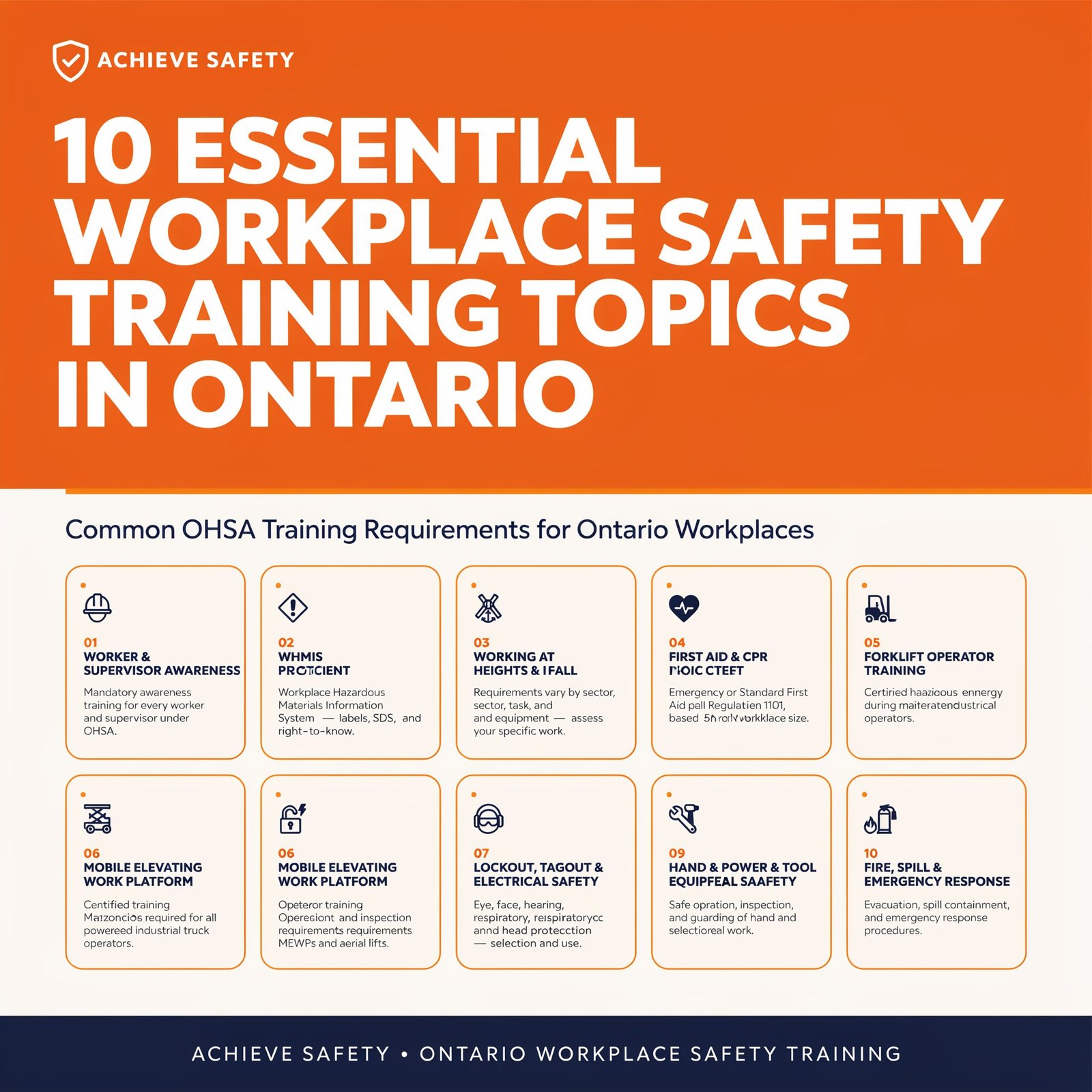
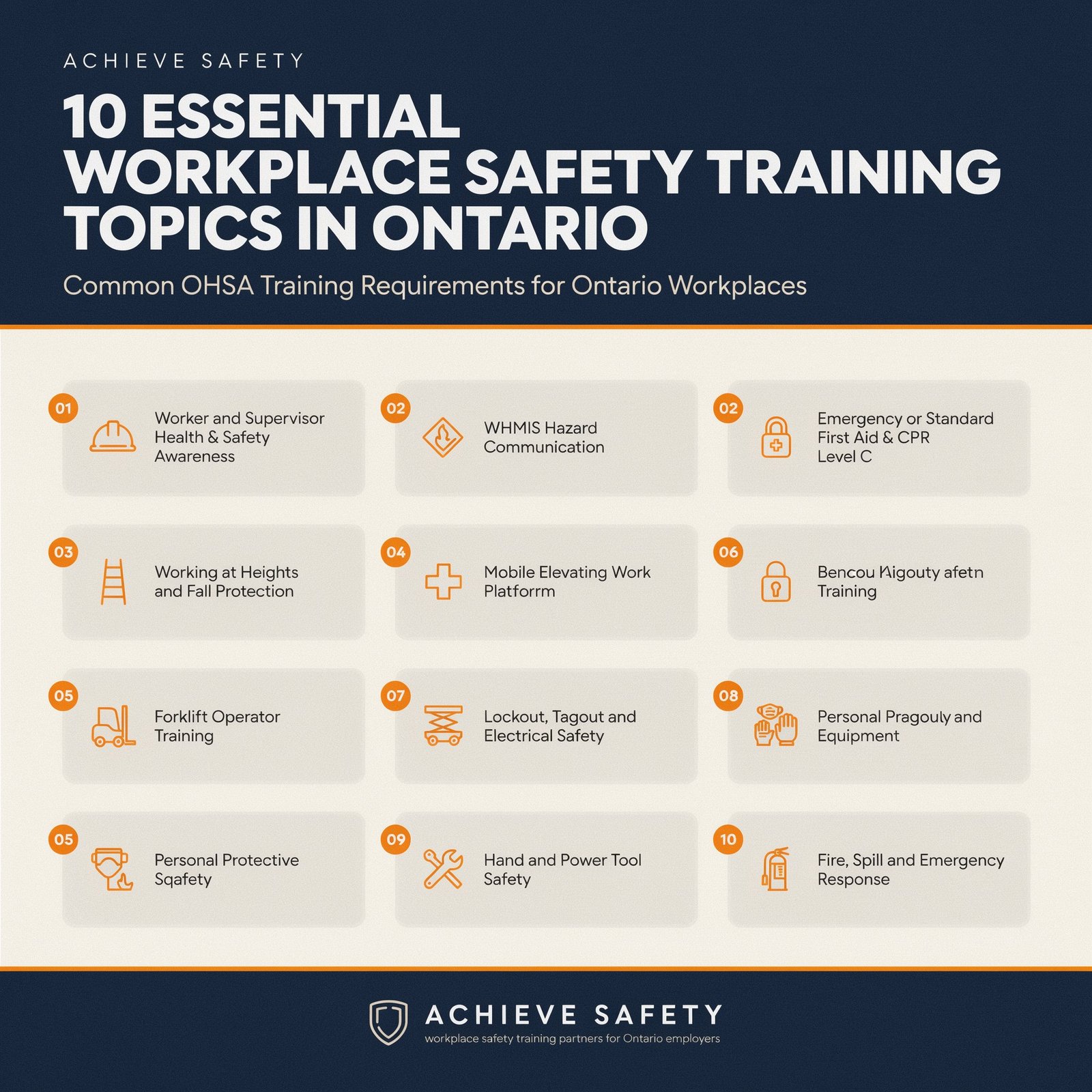
This guide explains ten important training areas employers should review. It also includes a free workplace safety training poster that can be displayed in lunchrooms, training rooms, warehouses, offices and construction trailers.
Download the Free Ontario Workplace Safety Training Poster
The free poster provides a quick visual reminder of the training topics commonly found in Ontario workplace safety programs.
Employers can use it to support:
- New-worker orientation
- Supervisor meetings
- Toolbox talks
- Annual compliance reviews
- Training-needs assessments
- Health and safety committee discussions
The poster does not replace required government posters, workplace-specific instruction, hazard assessments, training records or competent supervision.
Download the free workplace safety training poster here.
Is Workplace Safety Training Mandatory in Ontario?
Yes. Ontario employers have a general duty to provide workers with the information, instruction and supervision needed to protect their health and safety.
Some training is specifically prescribed by legislation. Other instruction is required because of the hazards, equipment or work procedures present in a particular workplace.
Ontario requires basic occupational health and safety awareness training for workers and supervisors. Employers must also provide additional workplace-specific instruction so workers understand the hazards and procedures connected to their actual jobs.
1. Worker and Supervisor Health and Safety Awareness
Basic supervisor awareness training should form the foundation of an Ontario workplace safety program.
Workers must receive training covering:
- Worker rights and responsibilities
- Employer and supervisor duties
- The right to know about hazards
- The right to participate in workplace safety
- The right to refuse unsafe work
- The roles of health and safety representatives and committees
Worker awareness training must be completed as soon as practicable. A person who becomes a supervisor must complete the required supervisor awareness program within one week, unless a valid exemption applies.
This general course does not replace job-specific orientation. A warehouse worker, equipment operator and construction worker will each require different additional instruction.
2. WHMIS Training
Workers must receive WHMIS education and workplace-specific training before they use, handle or may be exposed to hazardous products.
Effective WHMIS training should cover:
- Hazard classes and pictograms
- Product labels
- Safety data sheets
- Safe handling and storage
- Required personal protective equipment
- Spill and exposure procedures
- Emergency response measures
Generic online training may explain the WHMIS system, but employers must still teach workers how hazardous products are managed in their own workplace.
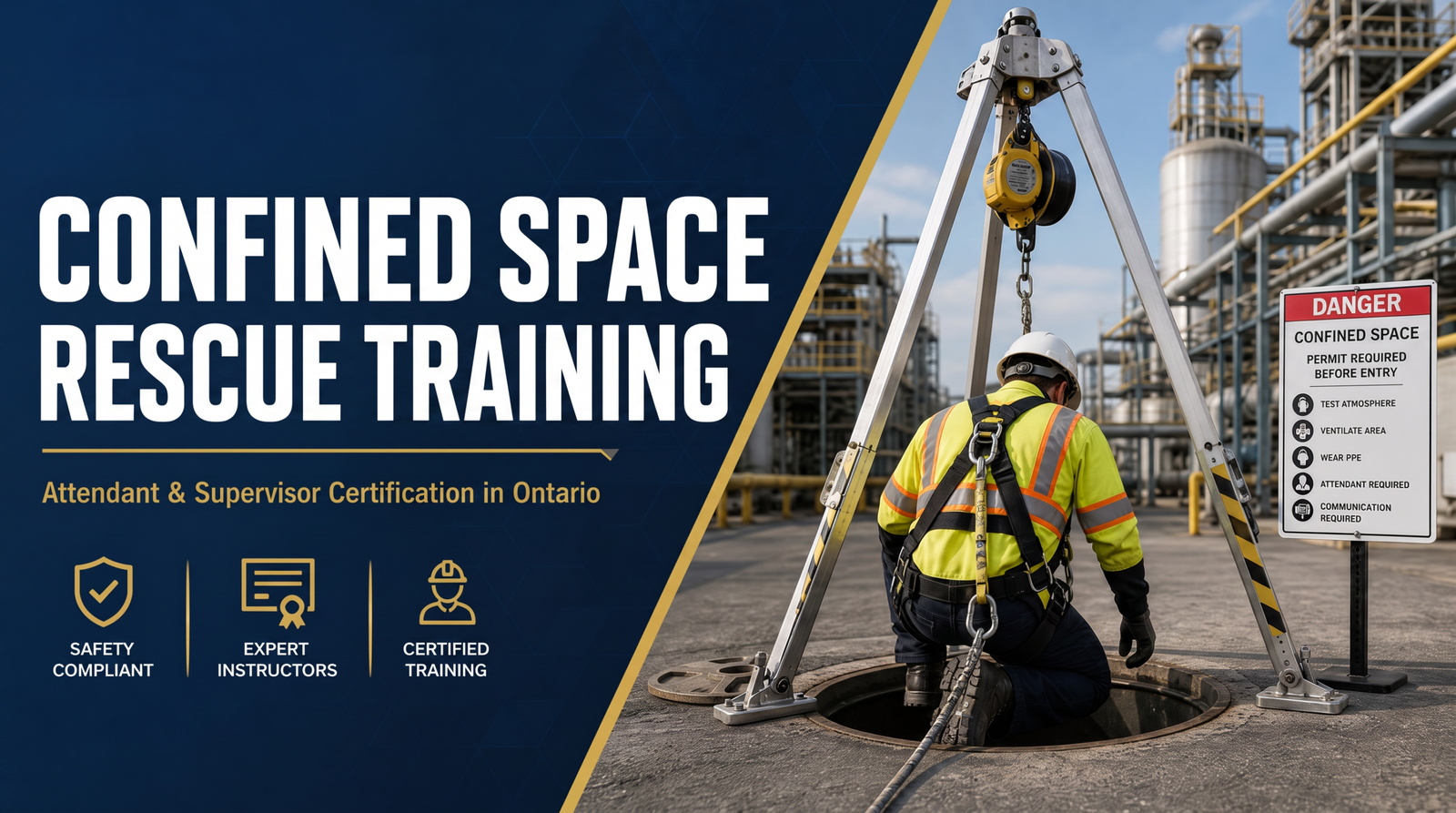
3. Working at Heights Training
Workers on Ontario construction projects who use fall-protection equipment must complete an approved Working at Heights program delivered by a CPO approved health and safety training provider in Ontario.
Training covers subjects such as:
- Fall hazards
- The hierarchy of fall controls
- Travel-restraint systems
- Fall-restricting systems
- Fall-arrest equipment
- Harness inspection and fitting
- Anchors and connecting equipment
- Rescue considerations
CPO Approved Working at Heights training does not eliminate the employer’s responsibility to provide site-specific instruction. Workers must understand the fall hazards, equipment, anchor systems, rescue procedures and controls used at the project where they are working.
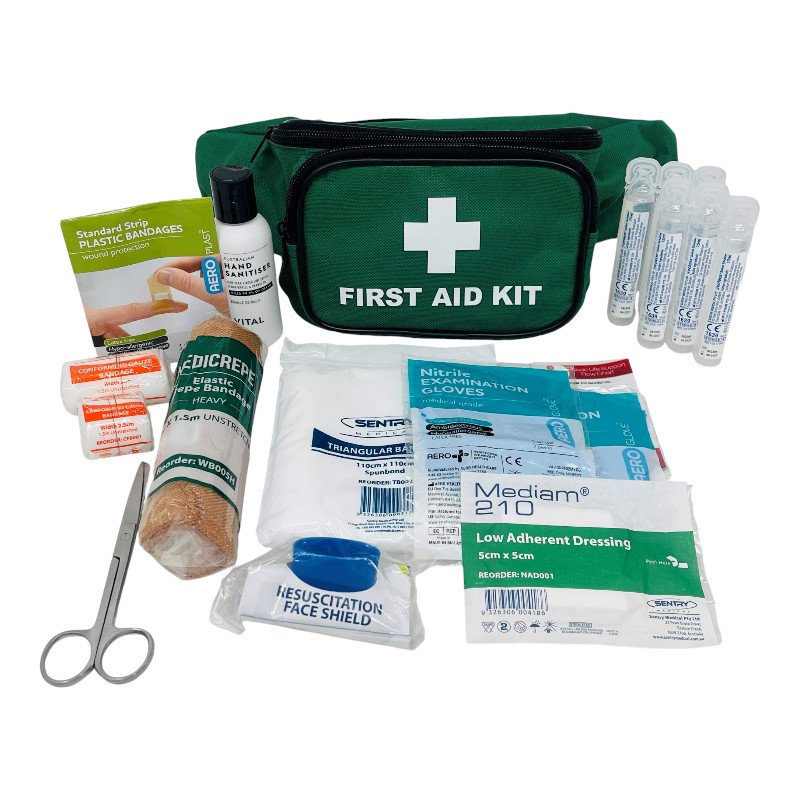
4. First Aid and CPR
Ontario workplaces covered by the Workplace Safety and Insurance Act must have appropriate first aid equipment, facilities and trained personnel.
The required first aid certificate depends partly on the number of workers employed on a shift. For example, Regulation 1101 distinguishes between workplaces with five or fewer workers and workplaces with more than five workers.
The trained first aider must work near the first aid station and hold a valid certificate from a training organization recognized by the WSIB. Employers must also maintain first aid supplies, display required information and record treatment provided to injured workers.
CPR and AED instruction may be included in recognized programs, but employers should confirm the exact level required for their workforce and workplace.
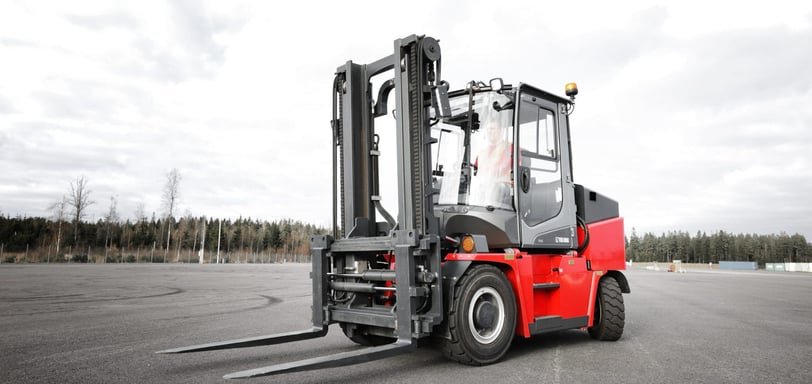
5. Forklift Operator Training
A forklift should only be operated by a worker who has the knowledge, training and experience needed to operate it safely.
Forklift training should include both theory and practical evaluation. Important subjects include:
- Pre-use inspections
- Stability and centre of gravity
- Load capacity
- Travelling with loads
- Pedestrian traffic
- Ramps and grades
- Dock and trailer hazards
- Battery charging or fuel handling
- Workplace-specific operating procedures
Ontario guidance identifies operator competency as a core requirement for powered lift-truck operation. A trainee must receive appropriate instruction and supervision before being allowed to operate independently.
6. Mobile Elevating Work Platform Training
Workers operating scissor lifts, boom lifts and other mobile elevating work platforms must understand the equipment they use.
Training should address:
- Equipment controls
- Manufacturer instructions
- Pre-use inspections
- Ground conditions
- Platform capacity
- Overhead hazards
- Entrapment and crushing hazards
- Emergency lowering systems
- Fall-protection requirements
- Rescue planning
Ontario guidance states that EWP operators must be trained, familiar with the specific equipment and able to follow the manufacturer’s operating instructions.
Ontario has also enacted a dedicated Elevating Work Platforms regulation that comes into force on January 1, 2027. It introduces more detailed training requirements for mobile elevating work platform operators, making early preparation important for affected employers.
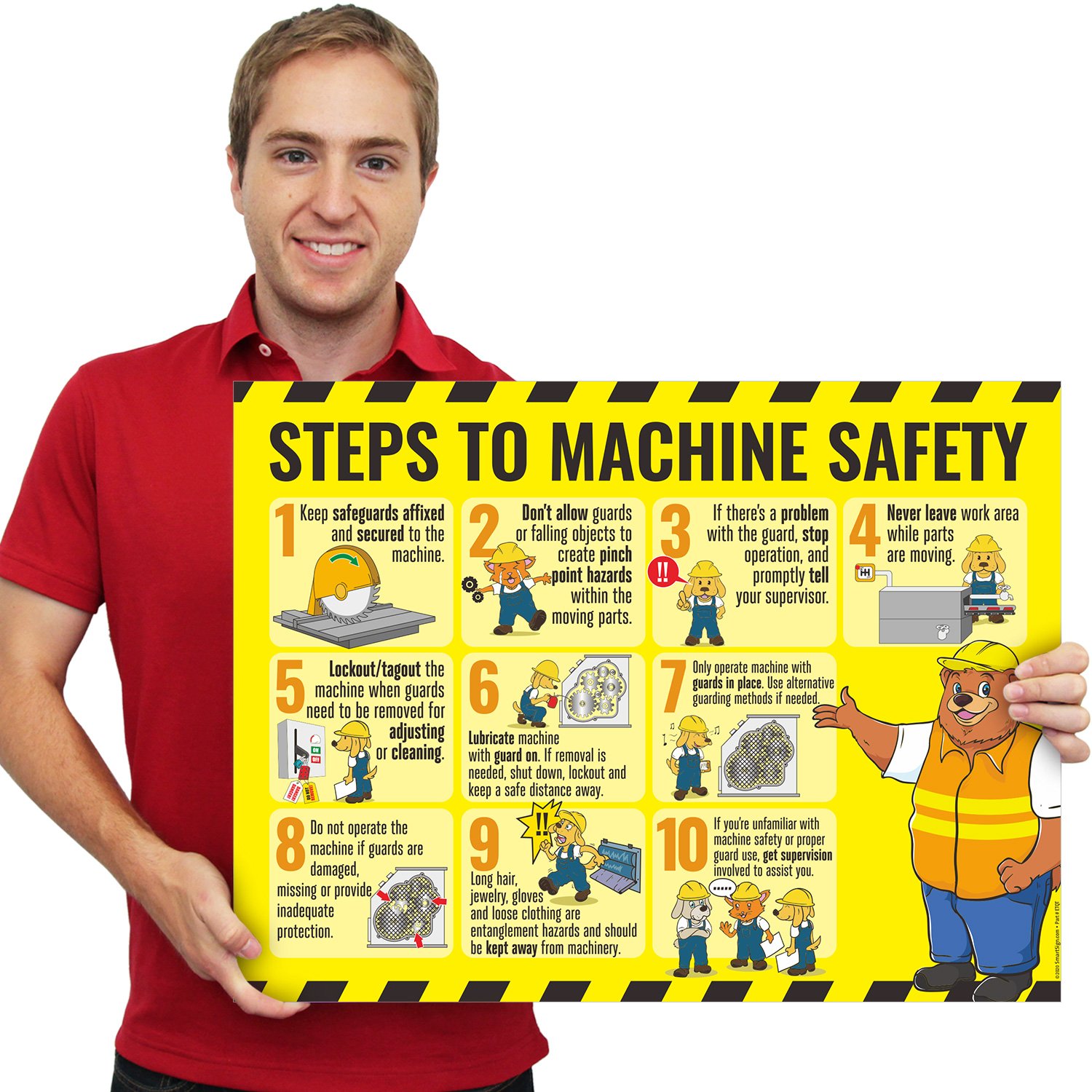
7. Lockout, Tagout and Electrical Safety
Workers who clean, maintain, repair or enter hazardous areas of machinery may need lockout and energy-control training.
Instruction should cover:
- Identifying energy sources
- Equipment shutdown
- Electrical isolation
- Hydraulic and pneumatic energy
- Stored or residual energy
- Applying locks and tags
- Verifying zero-energy state
- Restart and communication procedures
- Group lockout responsibilities
Electrical safety training must reflect the worker’s role. A general worker, machine operator, maintenance employee and qualified electrical worker will not require the same level of instruction.
Lockout training should be based on the actual machinery and energy-isolation procedures used at the workplace, not only a generic classroom example.
8. Personal Protective Equipment
Providing safety glasses, gloves or hearing protection is not enough. Workers must know when PPE is required, how to wear it and what its limitations are.
PPE training may include:
- Eye and face protection
- Hearing protection
- Respiratory protection
- Protective footwear
- Gloves and hand protection
- Head protection
- High-visibility clothing
- Harnesses and fall-protection equipment
Employers should select PPE through a hazard assessment. Workers should also be trained to inspect, clean, store and replace equipment correctly.
PPE is usually the final level of protection after hazards have been eliminated or controlled through engineering and administrative measures.
9. Hand and Power Tool Safety
Hand and power tools can expose workers to cuts, crushing injuries, kickback, electrical contact, noise, vibration and airborne particles.
Training should address:
- Selecting the correct tool
- Inspecting tools before use
- Machine guards
- Damaged cords and plugs
- Grinding wheels and discs
- Kickback prevention
- Disconnecting power before adjustments
- Securing materials
- Required eye, face and hearing protection
- Removing defective tools from service
Instruction should be specific to the tools workers use. A short toolbox talk cannot replace practical instruction for specialized equipment.
10. Fire, Spill and Emergency Response
Workers need to understand what to do when an emergency occurs.
Training may cover:
- Fire alarms and evacuation routes
- Assembly locations
- Emergency contacts
- Spill reporting
- Chemical exposure
- First aid response
- Equipment shutdown
- Workplace violence procedures
- Severe weather
- Rescue and emergency communication
Not every employee should attempt to fight a fire or clean a hazardous spill. Training must clearly explain when workers should intervene, when they should evacuate and who is authorized to perform specialized emergency duties.
How Often Should Workplace Safety Training Be Renewed?
There is no universal renewal period for every safety course.
Refresher or retraining may be needed when:
- A certificate expires
- New equipment is introduced
- A worker changes jobs
- Workplace hazards change
- Procedures are revised
- An incident or near miss occurs
- A worker cannot demonstrate continued competency
- Legislation or training standards change
Employers should maintain a training matrix showing required courses, completion dates, expiry dates and refresher deadlines.
What Should Ontario Employers Keep in Their Training Records?
A clear training record should identify:
- Worker’s full name
- Course or subject
- Training provider
- Training date
- Practical evaluation results
- Equipment type
- Certificate number
- Expiry or review date
- Instructor or evaluator
- Workplace-specific instruction completed
Records help employers identify gaps, schedule refreshers and demonstrate that instruction was provided.
Build a Training Program Around Your Real Workplace Hazards
A list of courses is only a starting point.
A strong safety program connects training to the work being performed. It considers the workplace, machinery, materials, worker experience, emergency procedures and applicable Ontario regulations.
Achieve Safety supports Ontario employers with workplace safety training, program development, implementation monitoring and compliance audits. Training can be aligned with the actual risks workers face rather than treated as a certificate-collection exercise.
Need help identifying which courses your workers require? Contact Achieve Safety at (647) 523-7554 to review your training and compliance needs.
Frequently Asked Questions
Does every Ontario worker require safety awareness training?
Most Ontario workers and supervisors must complete basic occupational health and safety awareness training unless a specific exemption applies. Workplace-specific orientation and hazard training may also be required.
Does every worker need WHMIS training?
WHMIS training is required for workers who work with, handle or may be exposed to hazardous products. The training must reflect the products and procedures used in the workplace.
Is online safety training enough?
Online learning may cover theory, but equipment operation and higher-risk tasks often require practical instruction, hands-on evaluation and workplace-specific training.
Does the free poster prove compliance?
No. The poster is an awareness and planning resource. It does not replace required training, competent supervision, hazard assessments, certificates or training records.
Who is responsible for arranging employee safety training?
The employer is responsible for ensuring workers receive the information, instruction and supervision required to protect their health and safety under Ontario law.
Sources
- Guide to Occupational Health and Safety Awareness Training Requirements
Government of Ontario
https://www.ontario.ca/document/guide-occupational-health-and-safety-act-requirements-basic-awareness-training - Ontario Regulation 297/13: Occupational Health and Safety Awareness and Training
Ontario e-Laws
https://www.ontario.ca/laws/regulation/130297 - Workplace Hazardous Materials Information System (WHMIS)
Government of Ontario
https://www.ontario.ca/page/workplace-hazardous-materials-information-system-whmis - Training for Working at Heights
Government of Ontario
https://www.ontario.ca/page/training-working-heights - First Aid Requirements: Regulation 1101
Workplace Safety and Insurance Board
https://www.wsib.ca/sites/default/files/2025-03/0445A_FirstAidReqs202502.pdf - Guideline for the Safe Operation and Maintenance of Powered Lift Trucks: Operator Competency
Government of Ontario
https://www.ontario.ca/document/guideline-safe-operation-and-maintenance-powered-lift-trucks/competency - Elevating Work Platform Crushing Hazard Alert
Government of Ontario
https://www.ontario.ca/page/alert-elevating-work-platform-crushing-hazard - Ontario Regulation 117/26: Elevating Work Platforms
Ontario e-Laws
https://www.ontario.ca/laws/regulation/260117 - Health and Safety Training in Ontario
Government of Ontario
https://www.ontario.ca/page/health-and-safety-training - Occupational Health and Safety Act, R.S.O. 1990, c. O.1
Ontario e-Laws
https://www.ontario.ca/laws/statute/90o01