- What Forklift Safety Laws Apply in Ontario?
- Who Can Legally Operate a Forklift in Ontario?
- Ontario Forklift Safety Rules Employers Need to Follow
- How Often Must a Forklift Be Inspected in Ontario?
- Forklift and Pedestrian Safety Requirements
- Load Capacity, Stability and Safe Material Handling
- What If the Forklift Operator Cannot See the Travel Path?
- Rules for Parking and Leaving a Forklift Unattended
- Forklift Training and Refresher Requirements in Ontario
- What Changed Under CSA B335:25?
- Ontario Forklift Compliance Checklist for Employers
- Build Forklift Safety Around the Work Being Performed
- Frequently Asked Questions About Forklift Safety in Ontario
Forklift operators in Ontario must be competent to operate the equipment safely, and employers are responsible for controlling the hazards created by powered lift trucks in the workplace.
For most warehouses, manufacturing facilities, distribution centres and other industrial workplaces, the key requirements come from Ontario’s Occupational Health and Safety Act (OHSA) and Regulation 851 for Industrial Establishments. Construction projects are subject to separate requirements under O. Reg. 213/91: Construction Projects.
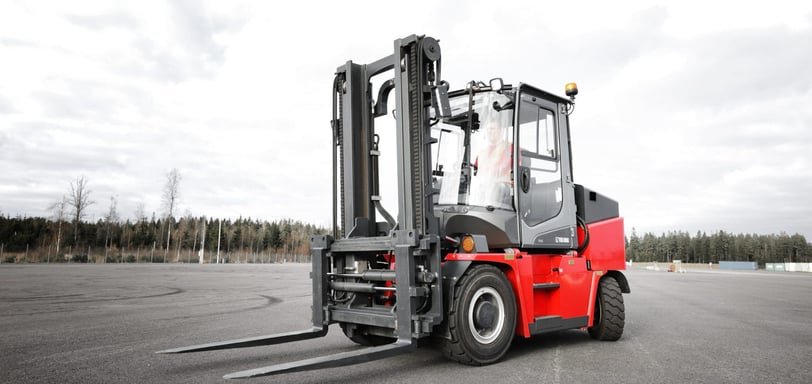
Ontario’s Ministry of Labour, Immigration, Training and Skills Development uses the term powered lift truck for mobile, power-propelled equipment that can lift, transport and stack material. This includes many forklifts, reach trucks and other powered industrial lift trucks used across Ontario workplaces.
A compliant lift-truck safety program goes beyond teaching a worker how to drive. Employers need to consider operator competency, workplace hazards, pedestrian traffic, load capacity, equipment condition, inspections, supervision and safe operating procedures. Ontario’s own powered lift-truck guidance identifies these areas as central parts of an effective workplace program.
The current Canadian standard is CSA B335:25, Safety standard for lift trucks, published in May 2025. It replaced CSA B335-15 and covers lift-truck safety programs, hazard identification, operator training, inspections, maintenance and safe operation.
This guide explains how these requirements fit together and what Ontario employers, supervisors and forklift operators should be doing in 2026.
What Forklift Safety Laws Apply in Ontario?
Ontario does not regulate forklift safety through one stand-alone “forklift law.” Requirements are spread across the Occupational Health and Safety Act and the regulation that applies to the workplace.
For employers, the starting point is identifying which regulation governs the workplace and then applying its equipment, competency, supervision and hazard-control requirements to lift-truck operations.
Occupational Health and Safety Act
The Occupational Health and Safety Act (OHSA) establishes the broader duties that apply to Ontario employers and supervisors.
For forklift operations, these duties include maintaining equipment in good condition, providing workers with appropriate information, instruction and supervision, making workers aware of workplace hazards, and taking precautions reasonable in the circumstances to protect workers.
Ontario’s powered lift-truck guidance specifically connects these OHSA duties with the need for a workplace safety program that addresses hazard identification, operator competency, supervision, operating procedures, maintenance and facility design.
The practical effect is important. Forklift safety has to be considered in the context of the actual workplace.
A worker may understand the controls of a lift truck and still require workplace-specific instruction covering hazards such as:
- pedestrian traffic and shared aisles;
- blind corners and restricted visibility;
- loading docks and trailer loading;
- ramps, grades and uneven surfaces;
- overhead obstructions;
- load types and storage systems;
- battery charging or fuel handling; and
- site-specific traffic rules.
These conditions form part of determining whether the operator can perform the work safely in that environment.
Regulation 851 for Industrial Establishments
For many Ontario workplaces using forklifts, Regulation 851: Industrial Establishments contains the most directly relevant requirements.
Section 51 requires a lifting device to be capable of safely handling its rated load and requires its load-handling capability to be examined by a competent person. The regulation also addresses who may operate lifting devices.
Other sections become relevant depending on how and where the forklift is being used.
For example:
| Regulation 851 provision | Relevance to forklift operations |
|---|---|
| Section 20 | Requires barriers, warning signs or other safeguards where vehicle or pedestrian traffic may endanger workers. |
| Section 51 | Covers lifting-device construction, rated load capability, examinations and competent operators. |
| Section 54 | Requires mobile equipment to be operated by a competent person, subject to the provision for workers being instructed and accompanied by a competent person. |
| Section 56 | Requires a competent signaller where the operator does not have a full view of the intended path of travel or load. |
| Section 57 | Requires an unattended vehicle to be immobilized and secured against accidental movement. |
| Section 58 | Requires forks, buckets, blades and similar parts to be lowered or solidly supported when powered equipment is left unattended. |
| Section 59 | Prohibits loading material-handling equipment beyond its maximum rated load except for testing. |
These requirements connect forklift operation with the wider movement of people, loads and vehicles through the workplace.
This is why forklift compliance should be treated as a workplace traffic and material-handling issue, rather than only as an operator-training requirement.
Forklifts on Ontario Construction Projects
Forklifts and other powered equipment used on construction projects are governed by O. Reg. 213/91: Construction Projects.
Section 96 provides a particularly important rule. A worker may operate a vehicle or powered machine, tool or equipment on a construction project when the worker is competent to do so. A worker who is still being trained may operate the equipment while being instructed and supervised by a competent person.
Construction employers also need to consider the surrounding project conditions, including equipment inspections, material movement, traffic, access routes and interactions between workers and mobile equipment.
These controls become especially important for rough-terrain forklifts, telehandlers and lift trucks operating on changing ground conditions or active construction sites.
Where Does CSA B335:25 Fit?
CSA B335:25, Safety standard for lift trucks, is the current Canadian lift-truck safety standard. It is the fourth edition of B335 and supersedes the 2015 edition.
The standard provides a detailed framework covering:
- lift-truck safety programs;
- hazard identification;
- workplace operating environments;
- traffic management;
- pre-operation inspections;
- safe operating procedures;
- operator training and evaluation;
- trainer qualifications;
- equipment inspections and maintenance; and
- exclusion zones around lift-truck operations.
The 2025 edition also added or updated guidance relating to hazard assessments, operator responsibilities, online and virtual-reality instructional methods, trainer qualifications, maintenance and inspections, and lift-truck exclusion zones.
Is CSA B335:25 Mandatory in Ontario?
Ontario employers should understand the distinction between legislation and a safety standard.
The OHSA and applicable Ontario regulations establish the enforceable workplace duties. CSA B335:25 provides a recognized technical framework that employers can use when developing lift-truck training, operating procedures, inspections and safety programs.
For practical compliance, the two should be considered together. Ontario law establishes responsibilities such as competency, equipment safety and hazard control. CSA B335:25 provides detailed guidance for putting many of those responsibilities into practice.
Employers should also follow the lift-truck manufacturer’s operating instructions and account for hazards specific to their workplace, equipment and work process.
Who Can Legally Operate a Forklift in Ontario?
In an Ontario industrial workplace, a forklift or powered lift truck should be operated by a competent person. Regulation 851 also allows a worker who is still being instructed to operate the equipment when that worker is accompanied by a competent person.
The employer is responsible for establishing that the worker has the knowledge, skills and experience required to operate the lift truck safely in the conditions where it will actually be used. Ontario’s Ministry of Labour guidance specifically places that responsibility on the employer.
What Does “Competent Person” Mean for a Forklift Operator?
Under Ontario’s Occupational Health and Safety Act, a competent person has the knowledge, training and experience needed to organize and perform the work, understands the legislation that applies to the work, and knows the actual or potential workplace hazards involved.
For a lift-truck operator, competency therefore includes more than knowing how to steer, raise the forks and move a pallet.
Ontario’s powered lift-truck guidance says a competent operator should understand:
- the OHSA and regulations relevant to the work;
- the operating principles and limitations of the lift truck;
- the manufacturer’s specifications for the class or type of truck being used;
- load-handling requirements;
- workplace-specific hazards;
- pedestrian risks;
- safe operating procedures; and
- the employer’s own rules for lift-truck operation.
The operator should also be able to demonstrate practical skills using the type of lift truck they will operate. This includes pre-operational checks, starting and stopping, travelling forward and in reverse, turning, parking, operating around people, picking up and placing loads, stacking, loading vehicles and carrying out applicable refuelling or charging procedures.
A training certificate can form part of the employer’s evidence that a worker has received instruction and successfully completed an evaluation. The employer should still establish that the worker can operate the assigned equipment safely in the workplace.
Can Someone Operate a Forklift While Being Trained?
Yes. Ontario Regulation 851 permits a worker who is being instructed to operate a lifting device when the worker is accompanied by a competent person.
Section 54 contains a similar provision for mobile equipment. A worker receiving instruction may operate the equipment while accompanied by a competent person.
For construction projects, O. Reg. 213/91 follows the same competency principle. Section 96 allows a worker who is being trained to operate a vehicle or powered machine while being instructed and supervised by a competent person.
Training should therefore include supervised practical operation. Ontario’s Ministry guidance identifies practice in load handling, manoeuvring, travelling, stopping and starting as part of developing operator competence.
Do You Need a Forklift Licence in Ontario?
Ontario’s forklift rules are based on operator competency.
Regulation 851 requires a lift truck to be operated by a competent person or by a worker receiving instruction while accompanied by a competent person. The Ministry’s guidance places responsibility on the employer to establish that competency.
Employers commonly use forklift training certificates to document completed training and practical evaluation. Ontario’s Ministry guidance also recommends keeping a workplace record of workers who have demonstrated competency. That record can identify the worker’s demonstrated knowledge and skills, the class or classes of truck assessed, the assessor and the assessment date. Employers may issue certificates to help identify competent operators.
For an employer, the useful compliance question is therefore whether the worker has been trained, evaluated and shown to be competent on the lift truck and in the work environment where it will be operated.
An operator who has experience with one type of lift truck may require additional instruction and evaluation before operating equipment with different controls, handling characteristics or hazards.
Ontario Forklift Safety Rules Employers Need to Follow
A forklift safety program should address the way the equipment is operated, maintained and integrated into the workplace.
Regulation 851 contains several requirements that directly affect powered lift-truck operations in industrial establishments. Employers should incorporate these requirements into site procedures, operator training, inspections and supervision.
Control Forklift and Pedestrian Traffic
Forklifts frequently operate in the same areas as pedestrians, production workers, delivery drivers and other mobile equipment.
Section 20 of Regulation 851 requires barriers, warning signs or other safeguards where vehicle or pedestrian traffic may endanger a worker.
Depending on the workplace, suitable controls may include:
- marked pedestrian walkways;
- physical barriers or guardrails;
- controlled crossing points;
- warning signs;
- mirrors at blind intersections;
- restricted forklift zones;
- designated travel routes;
- speed controls; and
- procedures governing interactions between pedestrians and lift trucks.
The appropriate controls depend on the layout, traffic volume, visibility, work process and frequency of pedestrian exposure.
Warehouse aisles, loading areas, dock approaches, production floors and intersections should be considered during the employer’s hazard assessment.
Keep Forklifts Within Their Rated Capacity
A forklift must be capable of safely handling the load being lifted.
Section 51 of Regulation 851 requires lifting devices to be marked with enough information for the operator to determine the maximum rated load under the applicable operating conditions. Section 59 also prohibits material-handling equipment from being loaded beyond its maximum rated load except during testing.
Operators should understand that the rated capacity can be affected by factors such as:
- load weight;
- load centre;
- load dimensions;
- attachment use;
- mast position;
- lift height; and
- equipment configuration.
The manufacturer’s capacity plate or data plate should remain legible and available to the operator.
Attachments can change the truck’s load-handling characteristics. Employers should confirm the permitted capacity and follow the manufacturer’s requirements whenever attachments or equipment configurations change.
Use a Signaller When the Operator Cannot See the Travel Path
Restricted visibility is common when forklifts move large, high or unusually shaped loads.
Under Section 56 of Regulation 851, where the operator does not have a full view of the intended path of travel or the load, the equipment must be operated as directed by a competent signaller.
The signaller must be positioned so they:
- remain in full view of the operator;
- can see the intended travel path and load; and
- remain clear of the equipment’s path.
This requirement is particularly relevant around loading docks, congested storage areas, narrow passages, blind entrances and operations involving oversized loads.
The employer should establish clear signalling methods so the operator and signaller understand the same instructions before movement begins.
Secure a Forklift When It Is Left Unattended
Regulation 851 also sets requirements for unattended mobile equipment.
Section 57 requires an unattended vehicle to be immobilized and secured against accidental movement. Section 58 requires forks and similar parts of powered equipment to be lowered or solidly supported before the equipment is left unattended.
A site procedure for parking a forklift should account for the manufacturer’s instructions and the conditions of the parking area.
Operators should leave the equipment in a condition that prevents unintended travel, movement of the lifting mechanism or exposure created by raised forks.
Provide Adequate Operator Protection
Section 54 requires mobile equipment to have appropriate protection where specific hazards are present.
For example, equipment operated where falling material could strike the operator requires an adequate screen or canopy guard. If lighting conditions make operation hazardous, suitable headlights and tail lights are also required.
The regulation also limits the transport of another person on mobile equipment to situations where that worker is seated in a permanently installed seat.
Forks, pallets or improvised standing areas should never be treated as passenger positions.
Follow Manufacturer Instructions and Workplace Procedures
Safe lift-truck operation should remain consistent with the manufacturer’s operating instructions, rated capacity and equipment limitations.
Ontario’s Ministry guidance also expects operators to understand the workplace-specific procedures established by the employer. Competency is therefore connected to the actual truck, load and environment in which the work takes place.
Employers should review procedures whenever there is a meaningful change in:
- the lift truck being used;
- attachments;
- load characteristics;
- workplace layout;
- pedestrian routes;
- operating surfaces;
- storage systems; or
- the work being performed.
Supervisors should also be capable of identifying unsafe lift-truck practices and responding when operating conditions create new hazards. Ontario’s Ministry guidance identifies competent supervision as part of an effective powered lift-truck safety program.
How Often Must a Forklift Be Inspected in Ontario?
Forklift inspection in Ontario involves more than one type of check.
Operators need a way to identify obvious defects before equipment enters service. Employers also have a separate legal duty under Regulation 851 to ensure that the lift truck’s load-handling capability is thoroughly examined by a competent person.
Under Section 51(1)(b), a lifting device must be examined before it is first used by the employer and afterward as often as necessary. The examination cannot occur less frequently than the manufacturer recommends and must take place at least once a year.
The frequency may need to increase when a forklift sees heavy use, operates in harsh conditions, handles demanding loads or undergoes modifications that could affect its load-handling characteristics. Ontario’s Ministry guidance gives frequent operation, corrosive or hot environments and equipment modifications as examples of circumstances that can justify additional examinations.
Pre-Operational Forklift Checks
A pre-operational check gives the operator an opportunity to identify a problem before the truck enters normal service.
Ontario’s Ministry guidance includes the pre-operational check among the skills a competent lift-truck operator should be able to demonstrate. CSA B335:25 also addresses pre-operation inspection as part of operator training and equipment inspection practices.
The specific inspection points depend on the lift truck and manufacturer’s instructions. Common areas include the forks, mast, chains, tires, steering, brakes, warning devices, hydraulic components, controls, capacity plate and any attachment installed on the truck.
A defect that affects safe operation should be addressed according to the employer’s procedure before the equipment returns to service.
The purpose of this check is operational safety. It does not replace the formal examination required under Section 51.
Annual Load-Handling Examination
Section 51 requires the lift truck to be thoroughly examined by a competent person to determine whether it can safely handle its maximum rated load.
Ontario’s Ministry guidance explains that the examination applies even when equipment is new to the employer. Second-hand equipment also needs to satisfy the requirement.
The competent person carrying out the examination needs appropriate knowledge and experience with powered lift trucks, including the ability to understand manufacturer specifications and assess the components involved in safe load handling.
Ontario’s guideline recommends that examinations follow the manufacturer’s specifications and cover the applicable inspection points identified in the Ministry’s maintenance guidance.
Forklift Inspection and Examination Records
A signed record of the Section 51 examination must be kept.
The record should identify whether the lift truck is capable of handling its maximum rated load and be signed by the competent person who completed the examination. Ontario’s Ministry guidance also recommends documenting relevant inspection findings and repairs.
Employers should maintain inspection and maintenance information in a form that allows supervisors, maintenance personnel and operators to determine the current condition of each lift truck.
Records also provide useful evidence that the employer has established and maintained a functioning lift-truck safety program.
Forklift and Pedestrian Safety Requirements
Pedestrian interaction is one of the most important hazards to address wherever forklifts operate.
A warehouse aisle may be wide enough for the equipment itself while still creating danger when pedestrians, racking, blind corners, staging areas and reversing trucks occupy the same space.
Section 20 of Regulation 851 requires barriers, warning signs or other safeguards where vehicle or pedestrian traffic may endanger workers.
Employers should therefore assess pedestrian exposure as part of the workplace’s lift-truck traffic plan.
Effective controls can include marked pedestrian routes, physical separation, designated crossing points, restricted operating areas, warning devices, intersection controls, visibility aids and site-specific speed rules.
The correct combination depends on the workplace.
A distribution centre with continuous forklift traffic may require greater physical separation than a small facility where lift trucks enter a storage area occasionally. The employer should account for how workers actually move through the site, including temporary activities such as order picking, maintenance, loading and receiving.
CSA B335:25 places additional attention on lift-truck exclusion zones, with new guidance included in Annex G of the current standard.
Workers Around Forklifts Also Need Instruction
A lift-truck safety program concerns more than the person sitting in the operator’s position.
Ontario’s powered lift-truck guideline recommends that supervisors and workers who may work around lift trucks be informed about the hazards and instructed in the workplace’s procedures for avoiding injury.
That instruction can address local conditions such as right-of-way rules, designated pedestrian routes, loading zones, blind intersections and areas where pedestrian access is restricted while lift trucks are operating.
Changes to the facility or work process should trigger a review of these controls. Moving racking, adding production equipment or creating a new shipping area can change sight lines and traffic patterns even when the forklifts themselves remain the same.
Load Capacity, Stability and Safe Material Handling
Every lift truck has limits governing the loads it can safely handle.
Section 51 of Regulation 851 requires a lifting device to be plainly marked with enough information for the operator to determine its maximum rated load under applicable operating conditions. Section 59 prohibits material-handling equipment from being loaded beyond its maximum rated load except during testing.
The capacity information on the truck needs to reflect the equipment as configured.
Forklift stability can change with the weight of the load, its dimensions, load centre, lift height, mast position and attachments. A load that falls within a simple weight limit can still create a stability problem when its centre of gravity extends farther from the truck than the rated configuration permits.
Operators therefore need to understand the truck’s capacity plate and the effect the actual load has on stability.
Loads should also be assessed before movement. Their weight, shape, security and condition can affect how they behave when lifted, turned, elevated or transported across uneven surfaces.
Pallet condition deserves attention as well. CSA B335:25 added guidance relating to single-use pallets, reflecting the role that pallet integrity can play in safe material handling.
Forklift Attachments Can Change Capacity
Attachments can alter a lift truck’s weight distribution and load centre.
Side shifters, clamps, fork extensions and other attachments can affect the amount and type of load the truck can safely handle.
Any modification that affects load-handling characteristics needs to be considered when determining safe capacity. Ontario’s Ministry guidance also states that a modification capable of affecting load handling should be followed by a Section 51 examination.
Operators should have access to accurate capacity information for the configuration they are using.
What If the Forklift Operator Cannot See the Travel Path?
Ontario has a specific requirement for situations where the operator cannot obtain a full view of the intended path of travel or the load.
Under Section 56 of Regulation 851, the equipment must be operated as directed by a competent signaller when the operator lacks the required view.
The signaller needs to remain visible to the operator, see the intended path and load, and stay clear of the equipment’s travel path.
This can become relevant when a forklift handles oversized loads, enters congested areas, moves through restricted openings or operates where workplace structures obstruct the driver’s view.
Employers should establish a signalling procedure before the task begins. The operator and signaller need to understand the signals being used and maintain effective communication during movement.
Travel direction and load positioning should also follow the manufacturer’s instructions and the site’s established operating procedures.
Rules for Parking and Leaving a Forklift Unattended
A forklift can continue to create a hazard after the operator leaves the equipment.
Section 57 of Regulation 851 requires an unattended vehicle to be immobilized and secured against accidental movement.
Section 58 addresses raised equipment components. Forks, buckets, blades and similar parts of powered equipment must be lowered or solidly supported when the equipment is left unattended.
The employer’s shutdown procedure should also incorporate the manufacturer’s instructions for the specific lift truck.
CSA B335:25 updated its guidance concerning operator responsibilities when leaving the operating position, making this another area employers should review when updating older forklift procedures written around B335-15.
Parking locations also matter. A parked lift truck should not create a new obstruction in a pedestrian route, emergency access area or other space where workers could be exposed to the equipment.
Forklift Training and Refresher Requirements in Ontario
Ontario forklift training should provide the worker with the knowledge and practical skills required to demonstrate competency on the equipment they will operate.
The Ministry’s powered lift-truck guidance identifies both knowledge and practical ability as components of operator competency. Operators should understand the applicable legislation, truck characteristics, manufacturer specifications, workplace hazards and site procedures. They should also be able to demonstrate safe operation under typical workplace conditions.
Practical evaluation is particularly important because forklift operation is a physical skill.
An operator needs to demonstrate tasks such as pre-operational inspection, starting and stopping, travelling, turning, parking, load handling, stacking and operation around workers using the appropriate class of lift truck.
How Often Is Forklift Refresher Training Required?
Ontario legislation centres on maintaining a competent operator.
CSA B335:25 provides additional guidance on retraining. Where the authority having jurisdiction does not establish another requirement, the standard specifies retraining at intervals not exceeding three years. The retraining includes knowledge verification and practical skills evaluation.
The three-year interval should not become the only trigger an employer watches.
Changes in the work can create a need for additional instruction or evaluation before the scheduled retraining date.
Examples can include an operator moving to another class of lift truck, use of a new attachment, significant changes to the workplace, new operating tasks or a situation that raises concerns about the worker’s continued competency.
Supervisors also play an ongoing role. Ontario’s Ministry guidance says competent supervision of powered lift-truck operations includes recognizing unsafe acts and conditions and taking corrective action.
Does Forklift Training Need a Practical Evaluation?
A practical component is important for establishing operator competency.
Ontario’s Ministry guidance says an employer should be satisfied that the worker has demonstrated the required operating skills to a person with expert knowledge of safe powered lift-truck operation.
CSA B335:25 also includes practical skills training and practical evaluation within its operator-training framework. Its training provisions cover pre-operational inspection, travel, pedestrian safety, load handling, workplace-specific hazards, shutdown and refuelling or recharging.
Employers should therefore be cautious about treating theory-only instruction as sufficient evidence that a worker can safely operate a forklift in the workplace.
Achieve Safety provides Forklift Training in Ontario with theory instruction and practical evaluation designed to help employers develop competent lift-truck operators.
What Changed Under CSA B335:25?
CSA B335:25, Safety standard for lift trucks, was published in May 2025 and replaced CSA B335-15. It is now the current edition of the Canadian lift-truck safety standard.
The revised standard contains several changes that Ontario workplaces with older forklift programs should review.
| Area | What changed in CSA B335:25 |
|---|---|
| Hazard assessment | Added guidance for conducting hazard assessments during hazard identification. |
| Operating practices | Updated general safety practices for lift-truck users and operators. |
| Leaving the operator position | Updated operator responsibilities when leaving the operating position. |
| Training delivery | Added online and virtual-reality simulation to recognized instruction and evaluation methods within the standard’s requirements. |
| Trainers | Added updated guidance concerning lift-truck operator trainers. |
| Inspection and maintenance | Added further guidance relating to maintenance and inspections. |
| Exclusion zones | Added Annex G covering lift-truck exclusion zones. |
| Pallets | Added Annex H addressing single-use pallets. |
| Fuel systems | Added guidance concerning hydrogen fuel-cell refuelling. |
These changes are relevant for employers whose forklift policies, training materials or maintenance procedures were created around the previous B335-15 edition.
A useful review should examine the entire workplace program rather than changing the standard number on a certificate or policy.
CSA B335:25 treats operator training as one component of a broader lift-truck safety system that also includes hazard identification, operating environment, equipment selection, pre-use practices, supervision, maintenance and repair.
Ontario Forklift Compliance Checklist for Employers
A practical employer review should confirm the following:
- Identify the legislation that applies to the workplace. Determine whether the operation falls under Regulation 851, the Construction Projects regulation or another applicable regulatory framework.
- Assess forklift hazards in the actual workplace. Review pedestrian interaction, blind intersections, docks, ramps, floor conditions, storage areas, traffic routes and the loads being handled.
- Use competent operators. Maintain evidence that operators have received appropriate instruction, completed practical evaluation and demonstrated competency for the equipment and work they perform.
- Control pedestrian exposure. Establish barriers, warning systems, travel routes, exclusion zones or other safeguards appropriate to the site’s traffic hazards.
- Complete pre-operational checks. Provide operators with a clear procedure based on the truck type and manufacturer’s requirements.
- Arrange the Section 51 examination. Have the lift truck’s load-handling capability examined by a competent person before first use by the employer and thereafter at the required frequency, with at least one examination each year.
- Maintain examination records. Keep the signed documentation associated with the required load-handling examination and maintain useful maintenance and repair records.
- Verify rated capacity. Make sure capacity information is legible and reflects attachments or modifications that affect load handling.
- Maintain the equipment. Establish procedures for regular inspection, repair and maintenance according to manufacturer requirements and the conditions in which the truck operates.
- Review competency over time. Address equipment changes, workplace changes and unsafe performance when they occur. Where no different authority requirement applies, CSA B335:25 establishes a retraining interval not exceeding three years.
A documented program helps employers connect training, equipment condition and workplace controls into one functioning system.
Build Forklift Safety Around the Work Being Performed
Forklift safety in Ontario begins with competent operators and extends into equipment condition, traffic management, supervision, inspections and the physical design of the workplace.
The requirements also need to match the operation.
A counterbalance forklift moving pallets through a busy manufacturing facility presents different hazards from a reach truck working inside narrow warehouse aisles or a rough-terrain lift truck operating on a construction project.
Employers should review their lift-truck program whenever equipment, workplace conditions or operating tasks change. Procedures written years ago should also be checked against the current CSA B335:25 standard and the Ontario legislation that applies to the workplace.
For employers who need to train or evaluate lift-truck operators, Achieve Safety’s Forklift Training Ontario program provides operator instruction with practical evaluation for workplace lift-truck use.
Frequently Asked Questions About Forklift Safety in Ontario
How long is forklift certification valid in Ontario?
Ontario’s legal framework focuses on whether the worker remains competent to operate the lift truck safely. CSA B335:25 states that, where the authority having jurisdiction does not establish another retraining requirement, lift-truck operators should receive retraining at intervals not exceeding three years. Retraining includes knowledge verification and practical skills evaluation.
Changes in equipment, work duties, workplace conditions or an operator’s demonstrated performance may require additional training or evaluation before that interval is reached.
Can I operate a different type of forklift with the same training?
An employer needs to establish competency for the equipment and work the employee will actually perform.
Ontario’s Ministry guidance recommends recording the class or classes of truck on which the operator was assessed.
An operator moving from one lift-truck class or substantially different equipment configuration to another may therefore need additional instruction, familiarization and practical evaluation.
Experience on a counterbalance forklift, for example, does not automatically establish competency on every reach truck, order picker, rough-terrain forklift or other powered lift truck.
Does online forklift training meet Ontario requirements?
Online instruction can deliver part of the knowledge component of forklift training. Competency still involves demonstrating practical operating skills on the equipment.
CSA B335:25 now recognizes online and virtual-reality methods within its instructional and evaluation framework, while continuing to require practical skills training and evaluation for operator qualification.
For an employer determining competency, theory completion alone does not demonstrate that a worker can safely manoeuvre, inspect and handle loads with the assigned lift truck under workplace conditions.
Do employers need to keep forklift training records?
Ontario’s Ministry guidance recommends maintaining a workplace record of workers who have demonstrated competency to operate powered lift trucks.
The record should identify the skills and knowledge demonstrated, the class or classes of lift truck involved, the assessor and the date of assessment. Certificates may also be issued to help identify competent operators.
These competency records are separate from the signed Section 51 examination record required for the lift truck itself.
Is a daily forklift inspection the same as the annual inspection?
No. They serve different purposes.
The pre-operational check is part of determining that the truck appears safe for use before operation. The Section 51 examination is a formal examination by a competent person to determine whether the lifting device can handle its maximum rated load.
Regulation 851 requires the Section 51 examination before first use by the employer and thereafter as often as necessary, following manufacturer frequency requirements and at least once every year.
A routine operator check does not replace that examination.