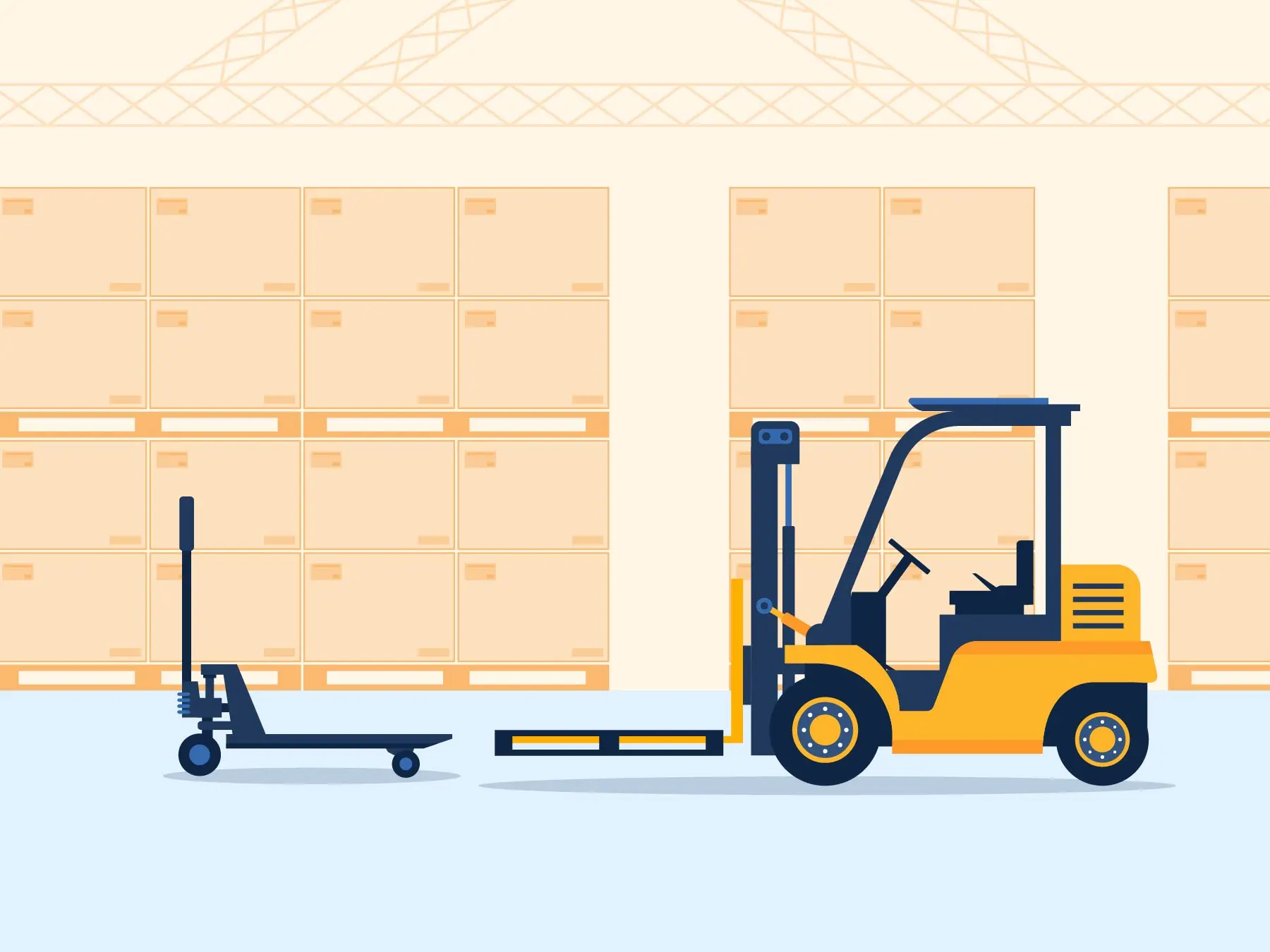
Although pallet walkies and forklifts are both used to move materials in warehouses and industrial workplaces, they are not the same equipment and do not share the same training requirements.
In Ontario, treating pallet walkie training as interchangeable with forklift training is a common compliance mistake that can lead to unsafe operation and regulatory exposure.
- Pallet Walkie vs Forklift Training – Equipment Difference
- Pallet Walkie (Powered Pallet Jack)
- Forklift (Powered Industrial Lift Truck)
- Why Training Is Not Interchangeable
- Key Differences in Operator Risk Exposure
- Pallet Walkie Hazards
- Forklift Hazards
- Training Focus: Pallet Walkie vs Forklift
- What Ontario Inspectors Expect to See
- When Separate Training Is Required
- Key Takeaway
Pallet Walkie vs Forklift Training – Equipment Difference
Pallet Walkie (Powered Pallet Jack)
-
Walk-behind or walkie rider operation
-
Designed for horizontal load movement
-
Lower lift height
-
Operated in tight, pedestrian-heavy areas
Forklift (Powered Industrial Lift Truck)
-
Sit-down or stand-up operator position
-
Designed for vertical lifting and stacking
-
Greater load capacity and reach
-
Operated in wider aisles and racking systems
Although both are powered, their controls, stability principles, and hazards are different.
Why Training Is Not Interchangeable
Ontario safety expectations require equipment-specific training.
This means:
-
Forklift certification does not automatically qualify a worker to operate a pallet walkie
-
Pallet walkie operators must be trained on walk-behind controls, pedestrian interaction, and load stability at ground level
-
Each equipment type presents unique risk profiles
-
CSA B335-15 reinforces that operators must be trained and evaluated on the specific powered truck they use.
Key Differences in Operator Risk Exposure
Pallet Walkie Hazards
-
Pedestrian strikes in tight spaces
- Crushing injuries between equipment and structures
-
Load instability during turns
-
Battery and electrical hazards
Forklift Hazards
-
Tip-overs due to elevated loads
-
Falling loads from height
-
Overhead obstructions
-
Racking system impacts
Because the hazards differ, training objectives and evaluations must also differ.
Training Focus: Pallet Walkie vs Forklift
| Training Focus Area | Pallet Walkie Training | Forklift Training |
|---|---|---|
| Equipment Controls | Walk-behind / rider controls | Seated or stand-up controls |
| Load Handling | Ground-level loads | Elevated loads |
| Pedestrian Safety | High Priority | Moderate priority |
| Stability Training | Turning & stopping | Load center & mast tilt |
| Practical Evaluation | Walk-behind operation | Lift and stacking tasks |
What Ontario Inspectors Expect to See
During inspections, Ministry of Labour officers may ask for:
-
Proof of equipment-specific operator training
-
Records showing practical evaluation
-
Evidence that training aligns with CSA B335-15
-
Documentation that operators are competent for each powered truck used
Generic “forklift training” records may not be sufficient for pallet walkie operation.
When Separate Training Is Required
Separate training is required when:
-
A worker operates both forklifts and pallet walkies
-
New equipment types are introduced
-
An operator switches from walk-behind to walkie rider units
-
Workplace conditions change
Each change introduces new risks that must be addressed through training.
Key Takeaway
Pallet walkie training and forklift training serve different safety purposes. While both fall under powered industrial truck safety, they are not interchangeable.
Clear separation between training programs helps ensure:
-
Operator safety
-
Regulatory compliance
-
Reduced incident risk
-
Stronger due diligence
Understanding this difference supports the need for formal pallet walkie training, even in workplaces where forklift training already exists.