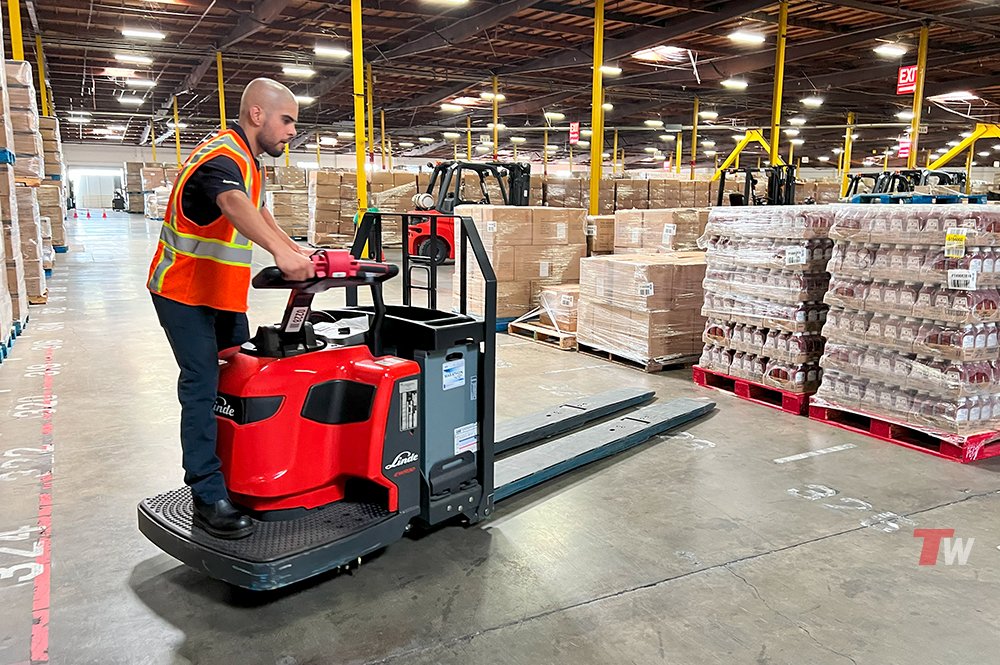
A pallet walkie is a powered material-handling device designed to move palletized loads over short distances. Commonly used in warehouses, distribution centres, and industrial facilities, pallet walkies are compact, efficient, and widely misunderstood in terms of risk.
Despite their size, pallet walkies are classified as powered industrial trucks, which means improper operation can lead to serious workplace injuries and regulatory non-compliance.
- What Is a Pallet Walkie?
- Types of Pallet Walkies
- 1. Walk-Behind Pallet Walkie
- 2. Walkie Rider Pallet Truck
- 3. High-Lift Pallet Walkie
- Common Uses of Pallet Walkies in Workplaces
- Workplace Hazards Associated With Pallet Walkies
- Pedestrian Strikes
- Crushing and Pinch Points
- Load Instability
- Loss of Control on Ramps or Slopes
- Battery and Electrical Hazards
- Why Pallet Walkie Hazards Are Often Underestimated
- Safety Expectations for Pallet Walkie Operators
- Key Takeaway
What Is a Pallet Walkie?
A pallet walkie, also referred to as a powered pallet jack or walkie pallet truck, is a motorized lift truck operated by a walking operator. It uses electric power to raise, lower, and transport palletized loads horizontally.
Key characteristics:
-
Walk-behind operation
-
Electric motor and battery power
-
Designed for short-distance material movement
-
No elevated lifting like forklifts
In Ontario workplaces, pallet walkies fall under powered industrial equipment and require operator training and competency evaluation.
Types of Pallet Walkies
1. Walk-Behind Pallet Walkie
-
Operator walks behind or beside the unit
-
Most common type in warehouses
-
Used for loading, unloading, and short transfers
2. Walkie Rider Pallet Truck
-
Equipped with a rider platform
-
Designed for longer travel distances
-
Higher speed increases risk exposure
3. High-Lift Pallet Walkie
-
Can raise loads higher than standard pallet jacks
-
Used for work positioning and light stacking
-
Increased stability and crushing hazards
Each type presents different operational risks, which is why equipment-specific safety training is critical.
Common Uses of Pallet Walkies in Workplaces
Pallet walkies are widely used for:
-
Moving palletized goods in warehouses
-
Loading and unloading trailers
-
Transporting materials in manufacturing plants
-
Supporting logistics and distribution operations
They are designed for efficiency, not for operator judgment replacement — improper use is a leading cause of material-handling incidents.
Workplace Hazards Associated With Pallet Walkies
Pallet walkies are often perceived as “low-risk” equipment, which contributes to unsafe behavior. Common hazards include:
Pedestrian Strikes
Limited visibility, shared walkways, and tight spaces increase collision risk.
Crushing and Pinch Points
Hands, feet, or legs can be trapped between the pallet walkie and fixed objects.
Load Instability
Improper pallet positioning or overloading can cause load shift or tip-over.
Loss of Control on Ramps or Slopes
Operating on grades without proper technique can result in runaway equipment.
Battery and Electrical Hazards
Improper charging or damaged batteries pose fire and electrical risks.
These hazards are a primary reason why training and hazard recognition are required before operation.
Why Pallet Walkie Hazards Are Often Underestimated
Many incidents occur because:
-
Equipment appears simple to operate
-
Workers confuse pallet walkies with manual pallet jacks
-
Training is skipped or informal
-
Hazards increase in high-traffic environments
In Ontario, lack of training is not a defense during inspections or incident investigations.
Safety Expectations for Pallet Walkie Operators
Workplace safety standards expect operators to:
-
Perform pre-use equipment inspections
-
Understand load capacity and stability
-
Maintain safe travel speeds
-
Stay alert to pedestrians and obstacles
-
Follow workplace traffic and safety rules
These expectations are formalized in recognized safety standards such as CSA B335-15, which outline operator competency requirements for powered lift trucks.
Key Takeaway
A pallet walkie is not just a convenience tool — it is powered industrial equipment with real hazards. Understanding the types, uses, and risks associated with pallet walkies is the foundation of safe operation and regulatory compliance.
This knowledge directly supports the need for formal pallet walkie operator training, especially in high-risk environments like warehouses and distribution centres.